In 2026 nuclear experts Professors Jeffrey Sachs and Glenn Diesen have warned that nuclear war is closer today than it has ever been in the past.
They have warned that nuclear war is closer than what most people want to believe, and it is looking more likely that all-war globally is verge of happening.
World leading scientists and experts have highlighted the dangers of climate change, artificial intelligence and global war as part of their explanation and warned we are closer to destroying ourselves now than ever before.
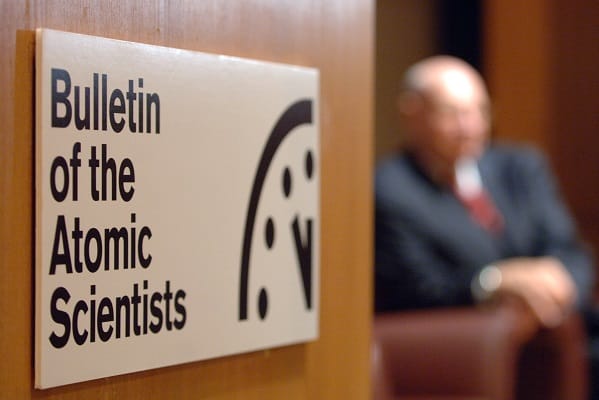
The Doomsday Clock is a powerful symbol which recognises the global risk and turns complex modelling of scientific threats into a visual warning.
The timing of the clock identifies how close the world is to annihilation of a man-made catastrophe to warn global leaders people around the world how close we all are to Armageddon.
In 2026 the Bulletin of the Atomic Scientists said Doomsday clock stood at 89 seconds to midnight, on Tuesday the clock moved to 85 seconds midnight. This means the world is no 85 seconds closer to total Armageddon.
“Humanity has not made sufficient progress on the existential risks that endanger us all,” said Alexandra Bell, president and CEO of the Bulletin of the Atomic Scientists.
“The Doomsday Clock is a tool for communicating how close we are to destroying the world with technologies of our own making.
“The risks we face from nuclear weapons, climate change and disruptive technologies are all growing. Every second counts and we are running out of time. It is a hard truth, but this is our reality.”
“Of course, the Doomsday Clock is about global risks, and what we have seen is a global failure in leadership,” Bell told Reuters.
“No matter the government, a shift towards neo-imperialism and an Orwellian approach to governance will only serve to push the clock toward midnight.”
Alicia Sanders–Zakre, the International Campaign to Abolish Nuclear Weapons head of policy told the Daily Mail, warning, “In my opinion, the clock could be moved forward by at least one second.
“While the risk of nuclear use has been an existential threat for 80 years, it has increased in the last year, due to skyrocketing investments in nuclear arms, increasingly threatening nuclear rhetoric and actions.”


