Research suggests Britain’s entrepreneurial spirit is alive and growing. One in ten adults plan to start a business in 2026, with younger generations leading the charge toward self-employment and side-hustle culture.
But ambition alone does not build a sustainable company.
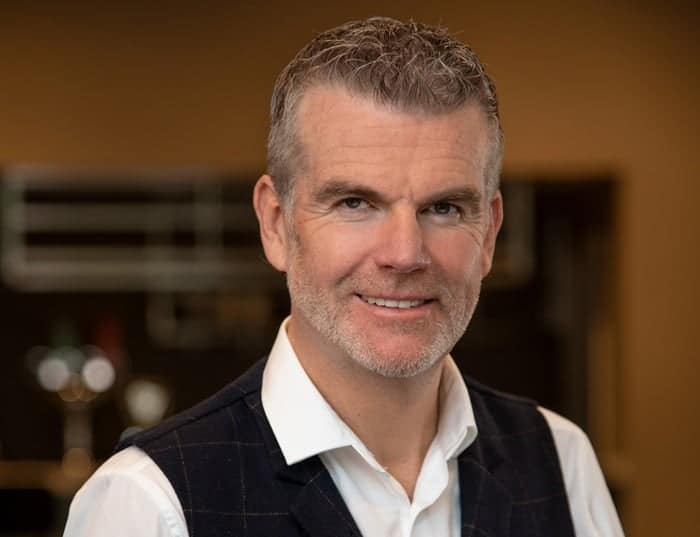
According to entrepreneur and business mentor Mike Foster (https://entrepreneursmentor.co.uk), the real challenge is turning enthusiasm into a profitable, resilient enterprise – and avoiding the early mistakes that cause so many ventures to quietly disappear.
“What’s changed isn’t ambition, it’s permission.”
The “one in ten Brits” figure does not surprise Foster. In fact, he believes the conditions have never felt more accessible.
“What’s changed isn’t ambition, it’s often the permission,” he explains. “More people can now see relatable examples of business owners building something successfully. Technology has reduced barriers and visibility has reduced fear. Owning a business no longer feels reserved for a select few.”
Economic pressure is also fuelling the rise. Rising costs and uncertainty around job security are pushing people to rethink income streams. Add AI-driven tools and remote working into the mix, and entrepreneurship feels within reach.
“In some ways,” Foster says, “it’s never been easier to start.”
But starting and surviving are two very different things.
The gap between wanting a business and running one
Many aspiring founders are drawn to flexibility and financial upside. The reality, Foster warns, is less glamorous.
“Running a business means making difficult decisions, managing uncertainty and solving problems every single day. The gap is often between freedom and responsibility,” says Foster, author of The Financial Times Guide to Starting A Business (Pearson) (https://mybook.to/FTGuideStartingABiz).
Entrepreneurship is not about having an idea. It is about having the confidence to test that idea, take calculated risks and push forward despite uncertainty.
The three mistakes that kill start-ups
After mentoring hundreds of business owners, Foster sees the same early mistakes repeated time and again.
- Ignoring the cash cycle
Founders underestimate how long money takes to flow in versus how quickly it flows out. “Cash flow is oxygen,” he says. “Many businesses fail because the founder didn’t understand the numbers quickly enough to adapt.”
- Building something nobody wants
Poor market research leads to beautifully crafted products that solve no urgent problem. “Too often founders fall in love with the product rather than confirming customers actually want it.”
- Starting with an idea instead of a problem
“If the problem isn’t urgent, the sale won’t be either,” Foster says. “A business without consistent sales activity is simply an expensive hobby.”
Why financial clarity is non-negotiable
In year one, financial understanding is not optional, it is critical.
“Everything comes back to a number,” Foster explains. “Your numbers drive your business model. Financial clarity creates strategic confidence.”
Many founders fail not because their idea was weak, but because they did not understand their margins, pricing, or cash flow quickly enough to pivot.
The rise of the side hustle
Side hustles are playing a growing role in today’s economy, and Foster sees them as a healthy testing ground.
“Most sustainable businesses don’t start with a dramatic leap. They start as controlled experiments,” he says.
Side ventures allow founders to test demand, build skills and develop resilience without immediately sacrificing stable income. However, there comes a point when commitment becomes essential.
What separates businesses that survive
From Foster’s observations, three qualities consistently separate survivors from those that quietly close:
- Relentless focus on sales
• The ability to adapt quickly
• Emotional resilience
“It’s rare to see a business close overnight,” he says. “More often they fade because the founder loses momentum or belief. Survival is less about brilliance and more about disciplined persistence.”
Three practical tips for founders
For anyone considering launching this year, Foster offers three clear pieces of advice:
- Start with a problem, not a product.
If the need is not urgent, demand will be weak. - Get paid early.
Revenue validates reality. - Master one customer acquisition channel before scaling.
“Clarity and focus outperform complexity in the early stages.”
How to test an idea without risking everything
Testing does not require large capital outlay.
“Have real conversations with your ideal customer,” Foster advises. “See if they lean in. Then try to sell it. That is the ultimate test.”
A soft launch, pilot or pre-sale—even before the product is fully built—can validate demand, provided the timeline is transparent.
The mindset shift that changes everything
Perhaps the most important shift is psychological.
“Stop asking, ‘Will this work?’ Start asking, ‘How do I make this work?’” Foster says.
Entrepreneurship is not about certainty. It is about resourcefulness.
The move from employee thinking to owner thinking—from security to responsibility—is often the real breakthrough.
If you remember one piece of advice…
Clarity changes everything.
When founders are clear about:
• The problem they solve
• The customer they serve
• The numbers that matter
• The actions that generate revenue
Decision-making becomes simpler. Focus sharpens. Momentum builds.
Britain’s entrepreneurial appetite may be growing, but sustainable success still belongs to those who combine ambition with discipline.
As Foster puts it: “Survival is not about having the best idea. It is about having the clarity and resilience to execute when it gets hard.”


