[ad_1]
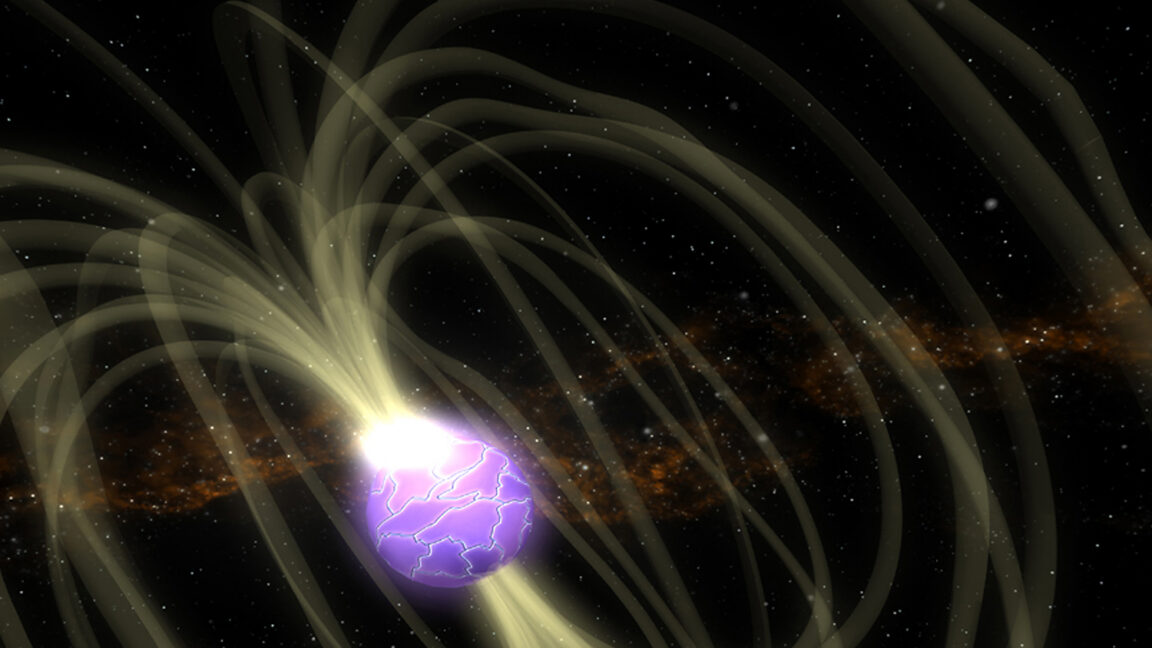
The solution to the strange flickering problem came when the Liverpool Gravitational Wave Optical Transient Observer collaboration detected an object designated SN 2024afav on December 12, 2024. Initially, the object looked like a standard superluminous supernova. “It was as bright and it had bumps in the light curve like many other objects of this kind,” Farah says. But as the telescopes kept watching, it started doing something unprecedented: It started to chirp.
The chirping star
In physics, a chirp refers to a signal with a frequency that steadily increases over time. In the case of SN 2024afav, its emissions were bumping up and down, but the gap between these bumps was shrinking. After a second and third bump both appeared with the gaps between them reduced by roughly 35 percent, Farah and his team realized they could calculate how much the gap between the bumps would decrease next.
The team adjusted their observation schedule, pointed their instruments at SN 2024afav, and discovered the fourth bump appeared exactly when they expected it would. The fifth bump enabled the scientists to narrow down the period reduction to about 29 percent.
The fact that Farah and his colleagues could accurately predict the bumps delivered a massive blow to our existing magnetar models. While a few irregular bumps could be explained away by the supernova ejecta crashing into clouds of gas, it doesn’t explain perfectly timed, cleanly sinusoidal modulations with a steadily decaying period. Random space rubble just doesn’t work that way.
“So, we came up with the new model to describe this behavior,” Farah explains. They proposed a new physical mechanism that relied on the Lense-Thirring effect, otherwise known as frame-dragging. Frame-dragging is a prediction of General Relativity, where a massive spinning object slightly drags the spacetime around with it as it rotates. “We didn’t try this mechanism before because it had never been seen around a magnetar before,” Farah says. But when his team did try it, it turned out to perfectly match what was going on.
[ad_2]
Source link


