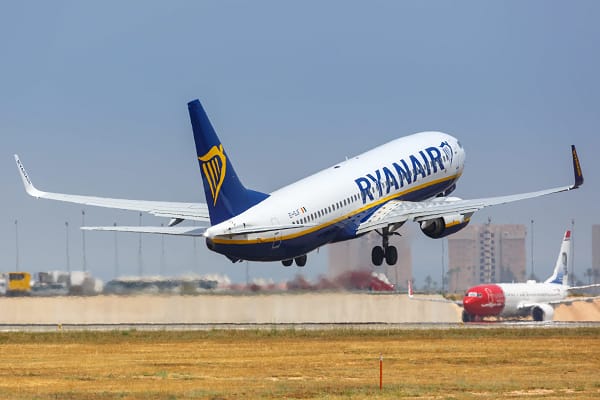
Airlines could face significant disruption to jet fuel supplies as early as May if the conflict involving Iran continues, Michael O’Leary, chief executive of Ryanair, has warned.
O’Leary said he does not expect immediate shortages but cautioned that supply pressures could begin to emerge within weeks, raising concerns for the peak summer travel season. His comments come amid growing fears that the effective closure of the Strait of Hormuz could severely disrupt global fuel flows.
The Strait, through which roughly a fifth of the world’s oil supply typically passes, has been largely blocked following the escalation of hostilities after US-Israeli strikes on Iran earlier this year.
The warning follows remarks by Donald Trump, who said he could withdraw from the conflict within “two to three weeks” if he believed Tehran would be unable to develop a nuclear weapon, even without a formal ceasefire agreement.
However, Micheál Martin dismissed such a timeline as “too long,” urging a more immediate resolution. He said the Irish government is pushing for “as early an end to this as possible,” stressing that the threat to jet fuel supplies is a “very serious” concern.
Industry analysts warn that any sustained disruption could have far-reaching consequences for aviation, potentially driving up ticket prices, reducing flight capacity, and placing additional strain on airlines already grappling with volatile energy costs.
For carriers such as Ryanair, which rely on high aircraft utilisation and low operating costs, even modest increases in fuel prices can significantly impact profitability and fares.
With the summer travel season approaching, the prospect of constrained fuel supplies adds a new layer of uncertainty for both airlines and passengers, as the wider economic fallout from the Middle East conflict continues to ripple across global markets.
O’Leary told Sky News: “The fuel companies are happy there won’t be any disruption until early May.
“But if the war continues, we do run the risk of supply disruptions in Europe in May and June and obviously we hope the war will finish sooner than that and that the risk to supply will be eliminated.”
Asked about the impact of the jet fuel shortages, O’Leary said: “It’s almost impossible to know. If the war finishes and the Strait of Hormuz is opened by the middle or end of April, then there’s no risk to supply.
“If the war continues, and the disruption to supply continues, we think there is a reasonable risk that maybe 10%, 20%, 25% of our supplies might be at risk through May and June.
“So, like everybody else in the industry, we hope this war ends sooner rather than later.”


