[ad_1]
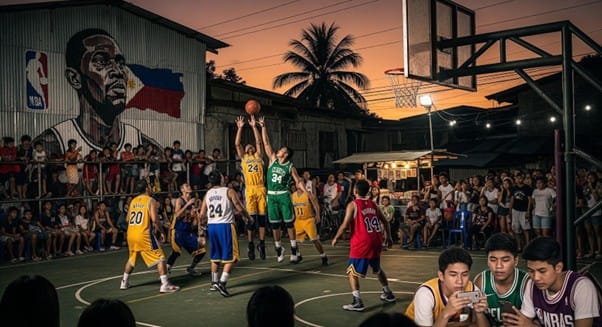
NBA culture in the Philippines has never stopped at the final buzzer. It travels through jerseys on commute routes, caps in school corridors, sneakers in weekend malls, and phone screens filled with new drops before payday. In 2026, the relationship between the nba and Filipino fans looks as much like a retail and identity story as a broadcast one. Official merchandise matters because it lets people wear allegiance in public, not just feel it privately during a live game. That is why the growth of mobile shopping, official online catalogs, and easy browsing across team collections has become part of everyday fan behaviour, not a niche side hobby. The official NBA Store Philippines now operates as both an e-commerce storefront and a retail reference point, with a store locator, a broad jersey catalog, and product updates built around players, teams, and seasonal releases.
Team identity has become visible, wearable, and social
A jersey now does more than mark support for a franchise. It signals taste, era, and even the kind of basketball a fan respects. Someone in a classic Mitchell & Ness cut is often saying something different from someone choosing a current City Edition drop. That split matters because nba culture in the Philippines is deeply conversational; what people wear becomes a shortcut for debates about team history, player loyalty, and style. Merchandise works because it turns a media relationship into something tactile and public.
The official catalog reflects that wider fan language. NBA Store Philippines lists Nike Association, City, and Icon jerseys, Jordan Statement editions, and Mitchell & Ness swingman and authentic formats, alongside apparel, footwear, accessories, and collectibles. That range matters because fandom is no longer limited to the full uniform look. Some fans buy a jersey to wear on game day, while others build their identity through caps, jackets, or small collectible pieces that fit more easily into daily life. The store’s structure suggests that official merch is being treated as a lifestyle category, not just event-specific memorabilia.
Why the nba store now matters beyond simple retail
The appeal of the nba store in 2026 is partly about trust. Fans want cleaner sizing information, recognizable product lines, and a more direct route to team-branded gear without having to guess whether a seller is reliable. The official Philippine store foregrounds customer service, a size chart, order tracking, and a store locator, indicating that the shopping process is meant to be navigable on both mobile and desktop. That might sound procedural, but it matters in a market where convenience often decides whether a purchase happens at all.
That convenience lands in a country already shaped by strong mobile habits. DataReportal says the Philippines had 142 million cellular mobile connections at the start of 2025, with 97.5 million internet users and 83.8 percent internet penetration, while 98.2 percent of mobile connections were broadband-capable. Those numbers help explain why merch discovery now starts on a phone as often as in a mall. For many fans, the nba store ph experience begins with a scroll, not a storefront window.
What fans tend to look for first
A few product categories consistently carry the strongest identity value:
- Jerseys tied to current stars or classic eras
- Caps and outerwear that fit everyday use
- Footwear linked to signature athletes
- Collectibles that turn fandom into display culture
Those patterns make sense because not every fan wants a full uniform look. Many want something that slips into ordinary style without losing its basketball meaning.
Mobile commerce changed how merch circulates
The old model was simple: fans saw gear in a department store or picked it up during a special release cycle. The 2026 model is faster and more fragmented. Fans discover items through team news, player trends, store updates, and social posts, then move to checkout when timing feels right. The official store’s emphasis on product updates and broad category browsing fits that pattern because it treats attention as something that builds gradually across repeated visits.
This matters especially in a basketball market where emotion spikes around trades, playoff runs, and standout individual seasons. A strong performance can move directly into shopping intent. The fan who spends the morning watching clips and stat lines is often the same person who spends the evening comparing sizes and editions. Merchandise is no longer separate from media consumption; it sits directly inside the same rhythm of fandom.
Where merch culture meets betting and digital play
That same second-screen rhythm helps explain how fan behaviour has shifted toward a more integrated digital experience. Modern supporters constantly cycle through tabs to track limited sneaker drops while simultaneously monitoring real-time game statistics. This habitual multitasking ensures an NBA betting site feels adjacent to merch culture rather than far removed from it in the current landscape. Both behaviours grow out of the same close attention to teams, players, streaks, and game-day rituals. A fan who checks release calendars, compares jersey editions, and tracks playoff momentum is already participating in a version of basketball culture built on detail.
The overlap becomes clearer when short-form entertainment becomes part of the same mobile routine used for browsing fashion. After scrolling through new arrivals or checking team rosters, some users navigate to a legit online casino because the interface’s logic provides a sense of familiarity. This transition relies on quick navigation, visible categories, and the fast decision-making patterns that define modern app usage. That does not mean merch and gaming activity are the same thing. It means digital leisure in 2026 often runs on similar habits of repetition, availability, and frictionless access.
The vocabulary of modern fandom is increasingly built around a mix of team affiliation and deep data interpretation. Fans do not just wear a team; they follow momentum, injuries, playoff math, and star usage with unusual intensity. This shift in digital context makes sports betting Philippines fit naturally inside the broader conversation without disrupting the flow of information. Such engagement feels less like an outside intrusion and more like another branch of the same information-rich ecosystem. Merchandise still carries the emotional side of identity, but data and probability now sit closer to the surface than they once did.
Official stores still matter in a marketplace full of noise
One reason official retail has become more important is that the market is crowded with imitation, resale, and uncertain sourcing. An official store offers a simpler answer to a basic question: is this item what it claims to be. That answer matters more when a purchase is tied to personal identity rather than utility. Fans do not buy a jersey merely to cover themselves; they buy it to represent memory, loyalty, and style.
The bigger story is that NBA culture in the Philippines now moves seamlessly between game watching, social sharing, and shopping. Official merch is part of how fans stay visible inside that ecosystem. The nba store, the rise of nba store ph browsing habits, and the steady pull of player-linked apparel all point in the same direction: the league lives not only on the screen, but also in how people dress, collect, and signal belonging in daily life.
Please play responsibly. For more information and advice visit https://www.begambleaware.org
Content is not intended for an audience under 18 years of age
[ad_2]
Source link


