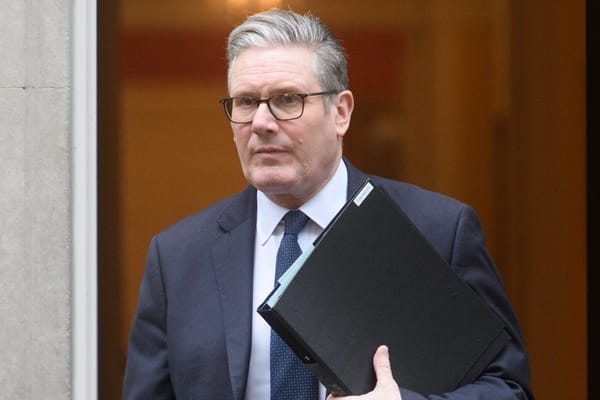
Sir Keir Starmer has urged both Washington and Tehran to “avoid any further escalation” following the collapse of high-level talks, which has renewed uncertainty over a fragile ceasefire arrangement in the Gulf.
The Prime Minister intervened diplomatically after 21 hours of negotiations in Pakistan ended without an agreement on Iran’s nuclear program, raising fears of renewed confrontation between the United States and Iran in one of the world’s most strategically sensitive maritime corridors.
Downing Street reported that Sir Keir spoke over the weekend with the Sultan of Oman, Haitham bin Tarik, to discuss the outcome of the talks and broader regional security, including the safe passage of shipping through the Strait of Hormuz. The Prime Minister expressed gratitude to Oman for its ongoing role in maritime de-escalation and rescue coordination in the region.
The breakdown in negotiations led to fresh warnings from Tehran, which indicated it would respond to the presence of foreign military vessels in the Strait. This waterway is critical, as approximately one-fifth of global oil shipments pass through it, making it a longstanding flashpoint for confrontation between Iran and Western naval forces.
US Vice President JD Vance stated that Iran had failed to provide a “long-term commitment” not to pursue nuclear weapons capability, noting that Washington had presented what he termed a “final and best offer” before the talks ended without agreement.
In Washington, officials indicated that the US delegation left the discussions after clearly stating its red lines; however, neither side has confirmed any formal breakdown of broader diplomatic channels.
Iranian officials described the talks as “intense” and accused the United States of making excessive demands. A foreign ministry spokesman said Tehran had negotiated in good faith but could not accept conditions that it viewed as undermining its security interests.
These negotiations were understood to be the first direct engagement in years involving senior US political figures and Iranian representatives, highlighting both the rarity and fragility of such diplomatic efforts.
Separately, Donald Trump stated that the United States had begun “clearing out” the Strait of Hormuz to ensure that global shipping flows are maintained, a statement that suggested a more assertive stance in the region. Iranian state media warned that any military vessels entering the Strait without authorization could be targeted.
Downing Street noted that the Prime Minister and the Sultan of Oman agreed on the importance of maintaining stability in the Gulf and keeping diplomatic channels open. A No. 10 spokesman remarked, “The Prime Minister emphasized the need for both sides to avoid escalation and to work with international partners to ensure safe maritime passage.”
The closed-door talks in Pakistan lasted nearly a full day before concluding without a long-term framework for either sanctions relief or nuclear restrictions. Analysts warn that this collapse risks further destabilizing an already volatile region, with shipping security and energy markets becoming highly sensitive to developments in the Strait of Hormuz.


