[ad_1]
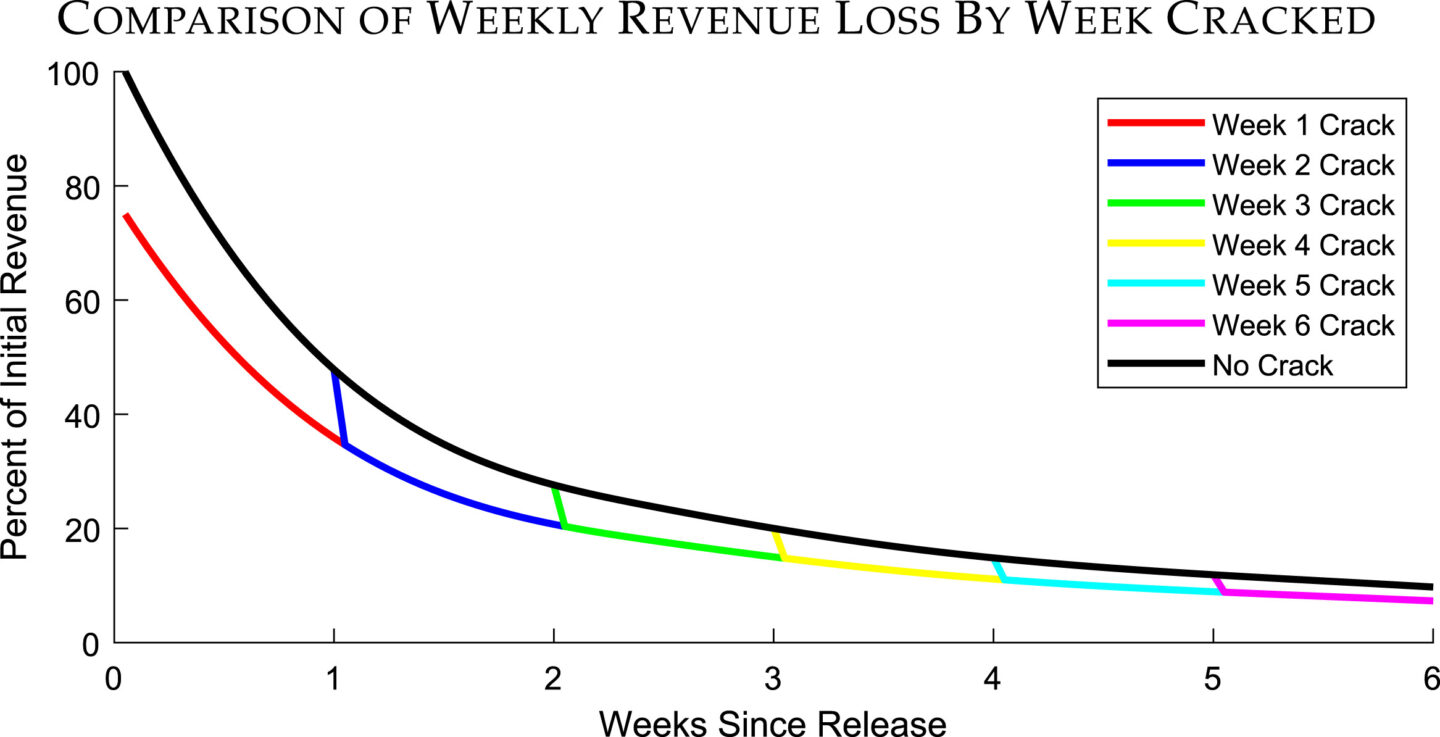
Just how much money a publisher can expect to lose from a Denuvo crack, though, depends heavily on how quickly the game is cracked, Volckmann finds. A Denuvo-protected game cracked in the first week after release can expect to make about 20 percent less revenue than if the DRM had remained in place, according to the study, while a crack six weeks after a game’s release only costs an estimated 5 percent of theoretical total revenue. After 12 weeks, new sales are so negligible that “developers could eventually remove unpopular DRM schemes with minimal losses (and possible gains from strongly DRM-averse consumers),” Volckmann suggests (and some publishers have done just that after Denuvo is no longer effectively protecting new sales).
Volckmann’s data lines up with public statements that Denuvo-maker Irdeto has made regarding the need for DRM to protect a game’s crucial post-launch window. “We don’t position Denuvo Anti Tamper as being uncrackable—no anti piracy solution is,” Denuvo VP of Sales Robert Hernandez told Ars in 2017. “However, our goal is to keep each title safe from piracy during the crucial initial sales window when most of the sales are made.”
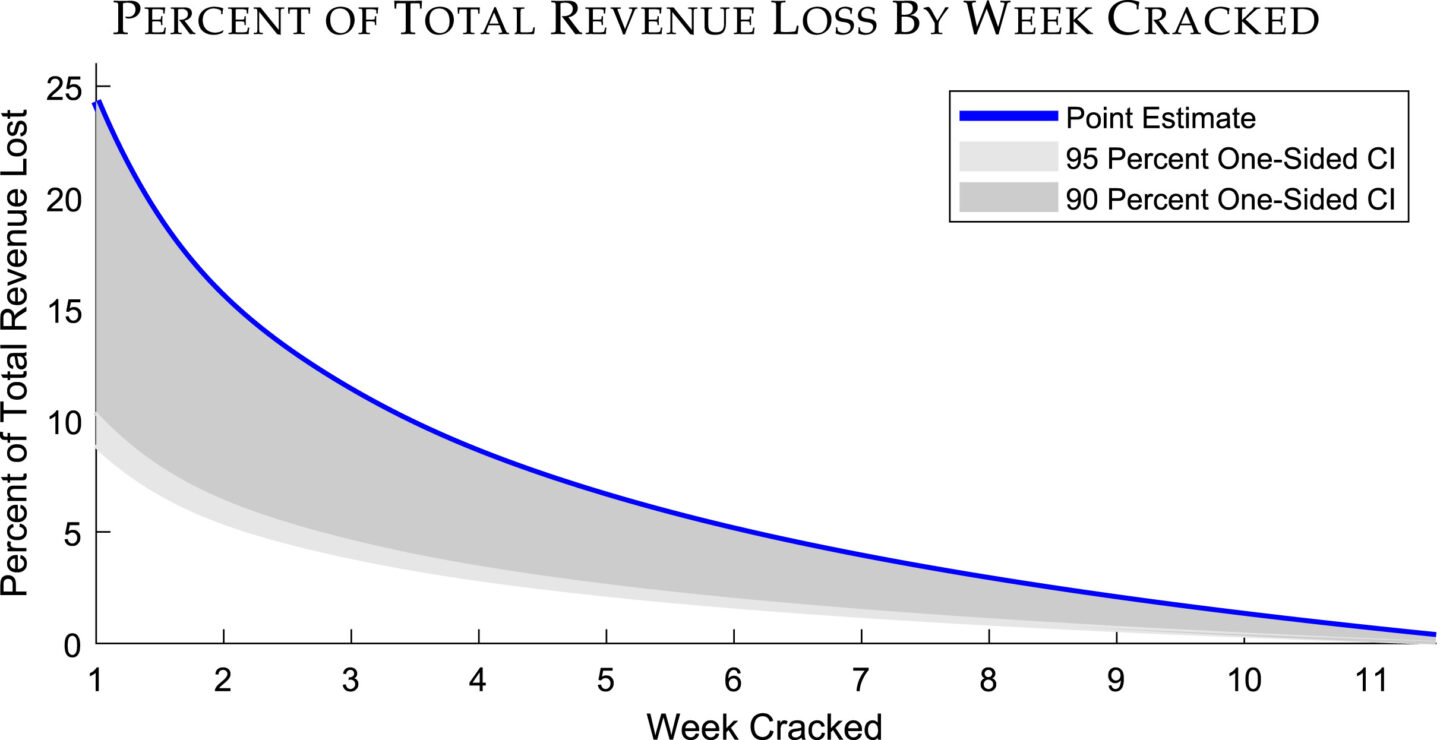
Overall, according to Volckmann’s data, Denuvo is doing just that. The median Denuvo-protected games lose almost no sales to piracy, Volckmann suggests, because the protection “more often than not” goes uncracked in that initial 12-week window. In a world with no DRM, on the other hand, Volckmann projects those games could expect 20 percent less revenue at the median.
Whatever you think of DRM schemes like Denuvo, the potential to protect against that kind of revenue hit is something that major publishers might find hard to ignore. And there are signs that Denuvo’s protection is becoming more crack-resistant in recent months; the CrackWatch subreddit lists 28 Denuvo-protected games released so far in 2024, 26 of which remain uncracked and two of which were cracked well outside the 12-week release window. As we see in this study, that kind of robust protection can be worth a significant amount to a piracy-wary game publisher.
[ad_2]
Source link


