
[ad_1]
Ars Technica descended in force last week upon our nation’s capital, setting up shop in the International Spy Museum for a three-panel discussion on artificial intelligence, infrastructure, security, and how compliance with policy changes over the next decade or so might shape the future of business computing in all its forms. Much like our San Jose event last month, the venue was packed to the rafters with Ars readers eager for knowledge (and perhaps some free drinks, which is definitely why I was there!). A bit over 200 people were eventually herded into one of the conference spaces in the venue’s upper floors, and Ars Editor-in-Chief Ken Fisher hopped on stage to take us in.

DC Event Photojournalism
Looking down one of the tables just before the panel discussions began.
DC Event Photojournalism
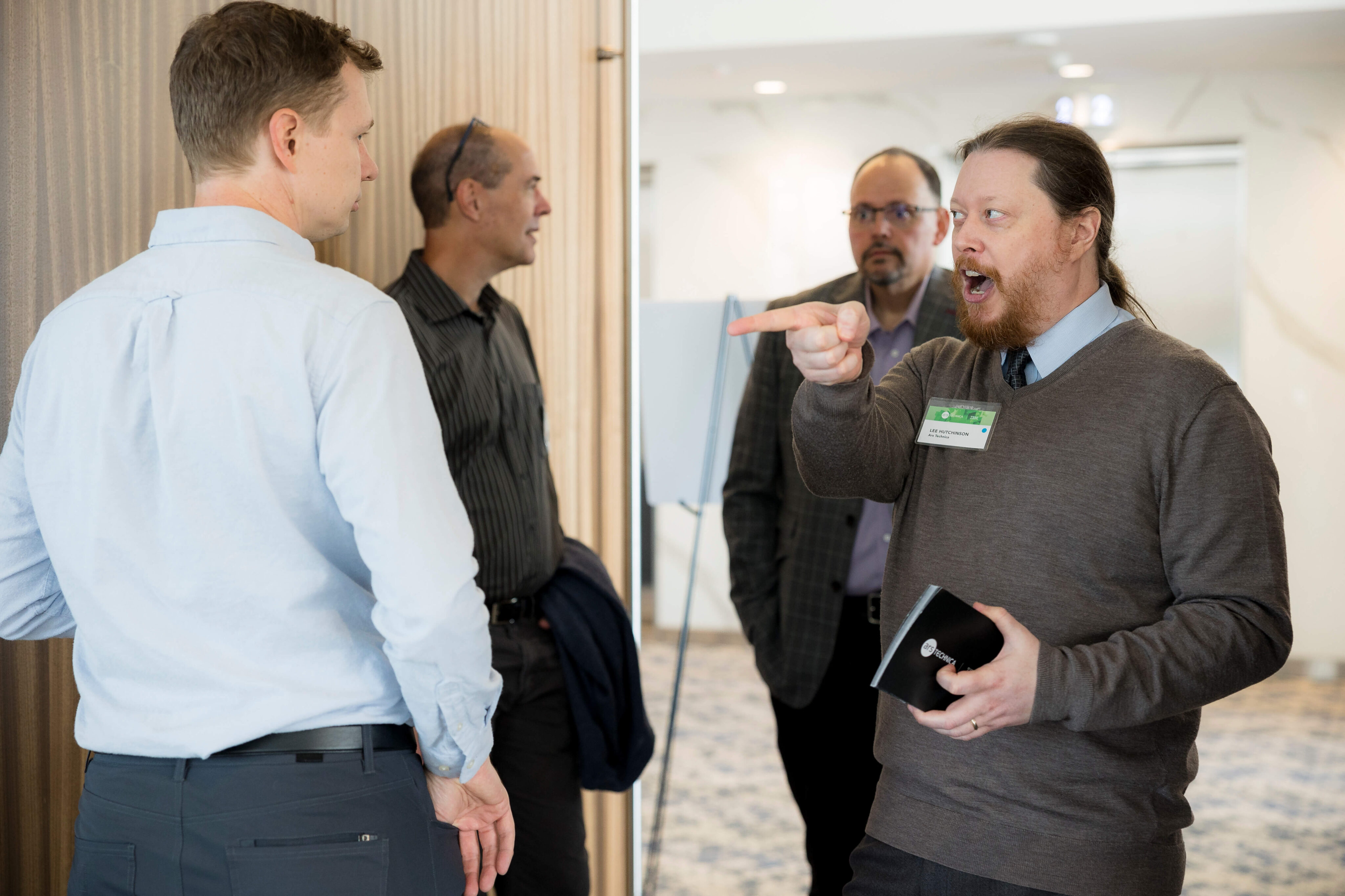
DC Event Photojournalism
From left to right are Ars reporter Kevin Purdy, Ars science-master Dr. John Timmer, security genius Sean Gallagher, and me. Here I’m accusing Kevin—whom I’m meeting in person for the first time—of being unreasonably tall.
DC Event Photojournalism
Looking down one of the tables just before the panel discussions began.
DC Event Photojournalism
From left to right are Ars reporter Kevin Purdy, Ars science-master Dr. John Timmer, security genius Sean Gallagher, and me. Here I’m accusing Kevin—whom I’m meeting in person for the first time—of being unreasonably tall.
DC Event Photojournalism
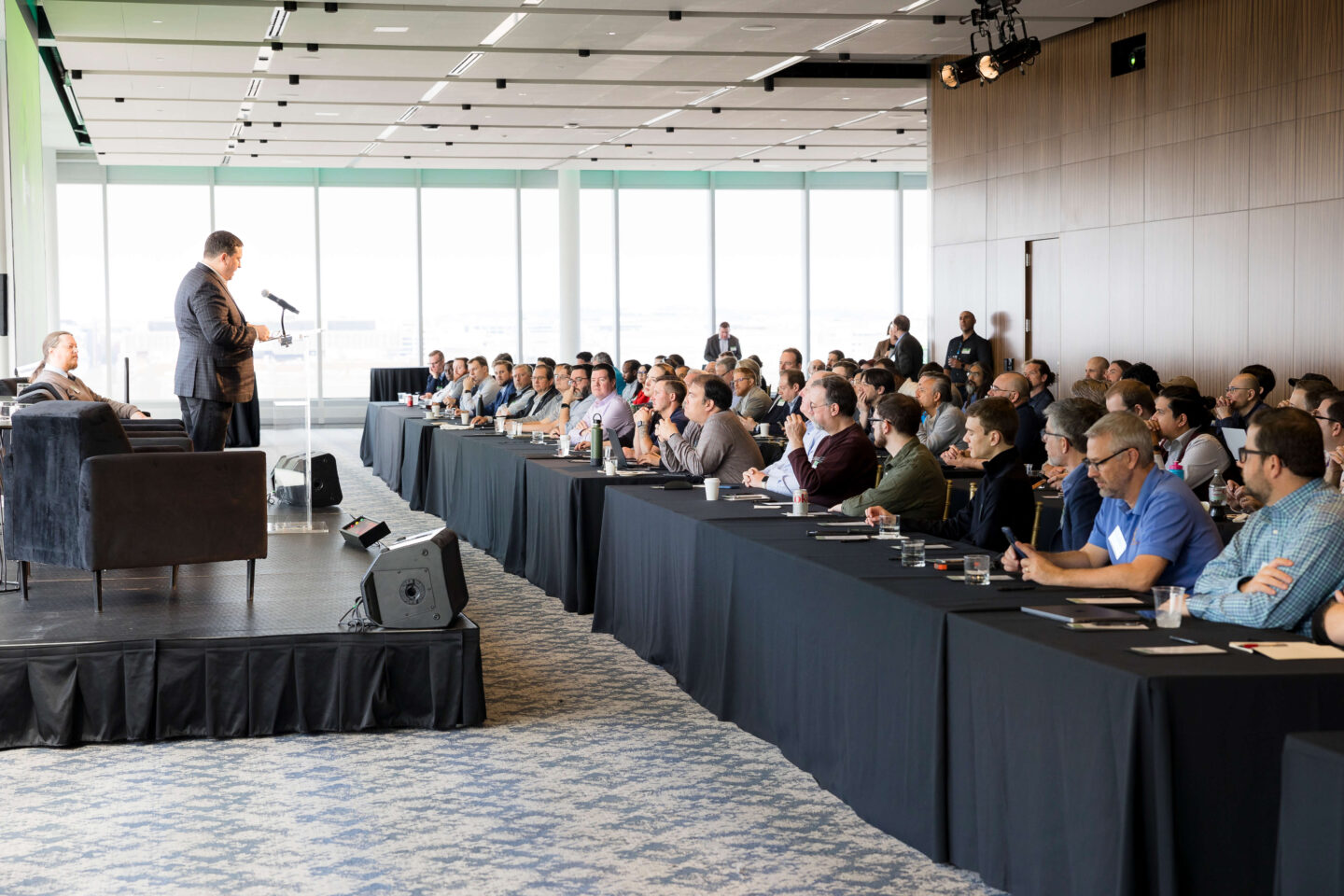
“Today’s event about privacy, compliance, and making infrastructure smarter, I think, could not be more perfectly timed,” said Fisher. “I don’t know about your orgs, but I know Ars Technica and our parent company, Condé Nast, are currently thinking about generative AI and how it touches almost every aspect or could touch almost every aspect of our business.”
Credit:
DC Event Photojournalism
Ars EIC Ken Fisher takes the stage to kick things off.
Credit:
DC Event Photojournalism
Fisher continued: “I think the media talks about how [generative AI] is going to maybe write news and take over content, but the reality is that generative AI has a lot of potential to help us in finance, to help us with opex, to help us with planning—to help us with pretty much every aspect of our business and in our business. And from what I’m reading online, many folks are starting to have this dream that generative AI is going to lead them into a world where they can replace a lot of SaaS services where they can make a pivot to first-party data.”
First-party data and first-party software development, concluded Fisher, will be critically important when paired with generative AI—”table stakes,” Fisher called them, for participating in the future of business.
After Ken, it was on to our first panel!
“The Key to Compliance with Emerging Technologies”
Up first were Anton Dam, an engineering VP with Auditboard; John Verdi of the Future of Privacy Forum; and Jim Comstock, a cloud storage program director at IBM. The main concern of this panel was how companies will keep up with shifting compliance requirements as the pace of advancement continues to increase.
[ad_2]
Source link


