[ad_1]
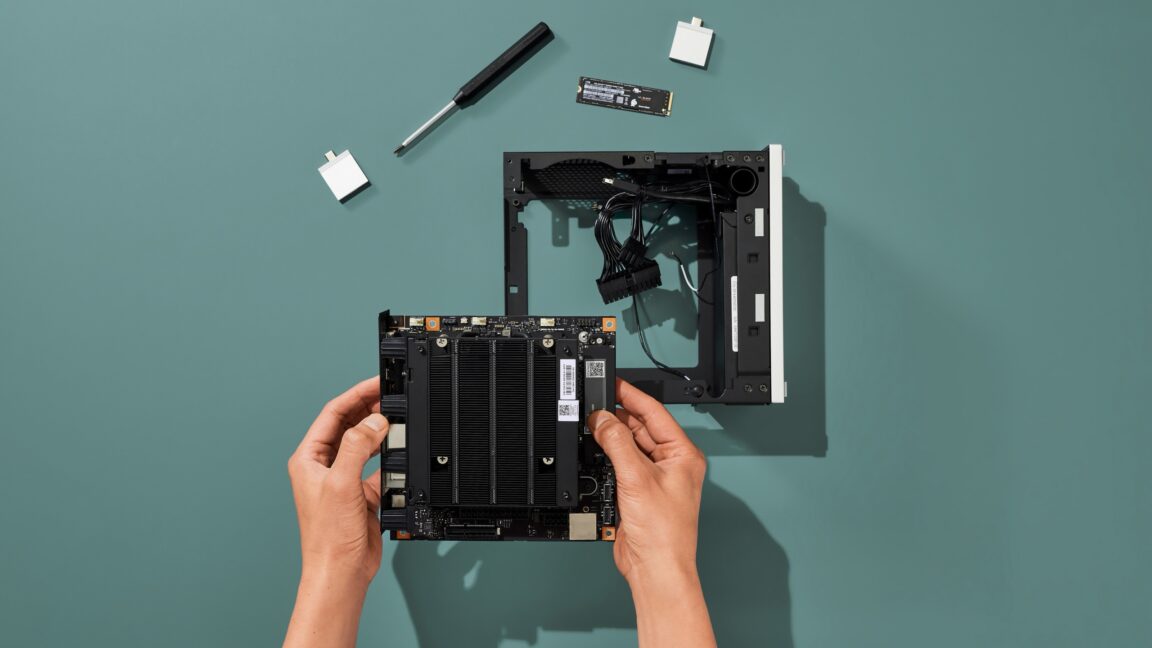
In Framework’s first-party case, the PC starts at $1,099, which gets you a Ryzen AI Max 385 (that’s an 8-core CPU and 32 GPU cores) and 32GB of RAM. A fully loaded 128GB with a Ryzen AI Max+ 395 configuration (16 CPU cores, 40 GPU cores) will run you $1,999. There’s also an in-between build with the Ryzen AI Max+ 395 chip and 64GB of RAM for $1,599. If you just want the mini ITX board to put in a case of your choosing, that starts at $799.
None of these are impulse buys, exactly, but they’re priced a bit better than a gaming-focused mini PC like the Asus ROG NUC, which starts at nearly $1,300 as of this writing and comes with half as much RAM. It’s also priced well compared to what you can get out of a DIY mini ITX PC based on integrated graphics—the Ryzen 7 8700G, an AM5 ITX motherboard, and 32GB of DDR5 can all be had for around $500 collectively before you add a case, power supply, or SSD, but for considerably slower performance.
The volume of the Framework Desktop’s first-party case is just 4.5 liters—for reference, the SSUPD Meshroom S is 14.9 liters, a fairly middle-of-the-road volume for an ITX case that can fit a full-size GPU. An Xbox Series X is about 6.9 liters, and the Xbox Series S is 4.4 liters. Apple’s Mac Studio is about 3.7 liters. The Framework Desktop isn’t breaking records, but it’s definitely tiny.
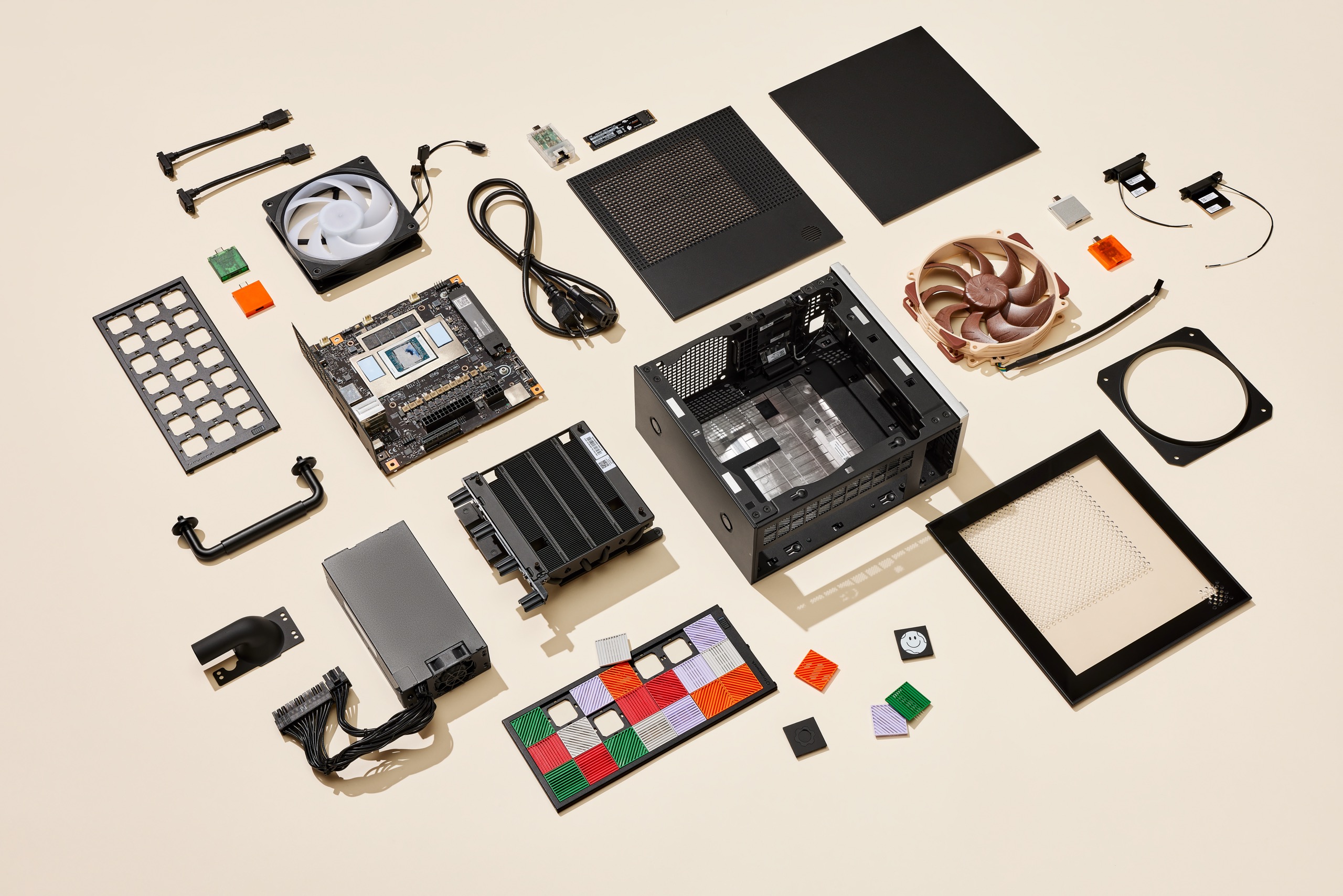
Despite the non-upgradeability of the main components, Framework has tried to stick to existing standards where it can by using a flex ATX power supply, ATX headers on the motherboard, regular 120 mm fans that can be changed out, and of course the mini ITX form factor itself.
Credit:
Framework
So the pitch for the system is easy: You get a reasonably powerful 1440p-capable gaming and workstation PC inside a case the size of a small game console. “If the Series S could run Windows, I’d buy it in a second” is a thought that has occurred to me, so I can see the appeal, even though it costs at least three times as much.
But it does feel like a strange fit for Framework, given that it’s so much less upgradeable than most PCs. The CPU and GPU are one piece of silicon, and they’re soldered to the motherboard. The RAM is also soldered down and not upgradeable once you’ve bought it, setting it apart from nearly every other board Framework sells.
[ad_2]
Source link


