[ad_1]
Printing for the future
Despite the extraordinarily rapid progress overall in 3D printing for health care, major challenges and opportunities remain. Among them is the need to develop better ways to ensure the quality and safety of 3D-printed medical products. Affordability and accessibility also remain significant concerns. Long-term safety concerns regarding implant materials, such as potential biocompatibility issues and the release of nanoparticles, require rigorous testing and validation.
While 3D printing has the potential to reduce manufacturing costs, the initial investment in equipment and materials can be a barrier for many health care providers and patients, especially in underserved communities. Furthermore, the lack of standardized workflows and trained personnel can limit the widespread adoption of 3D printing in clinical settings, hindering access for those who could benefit most.
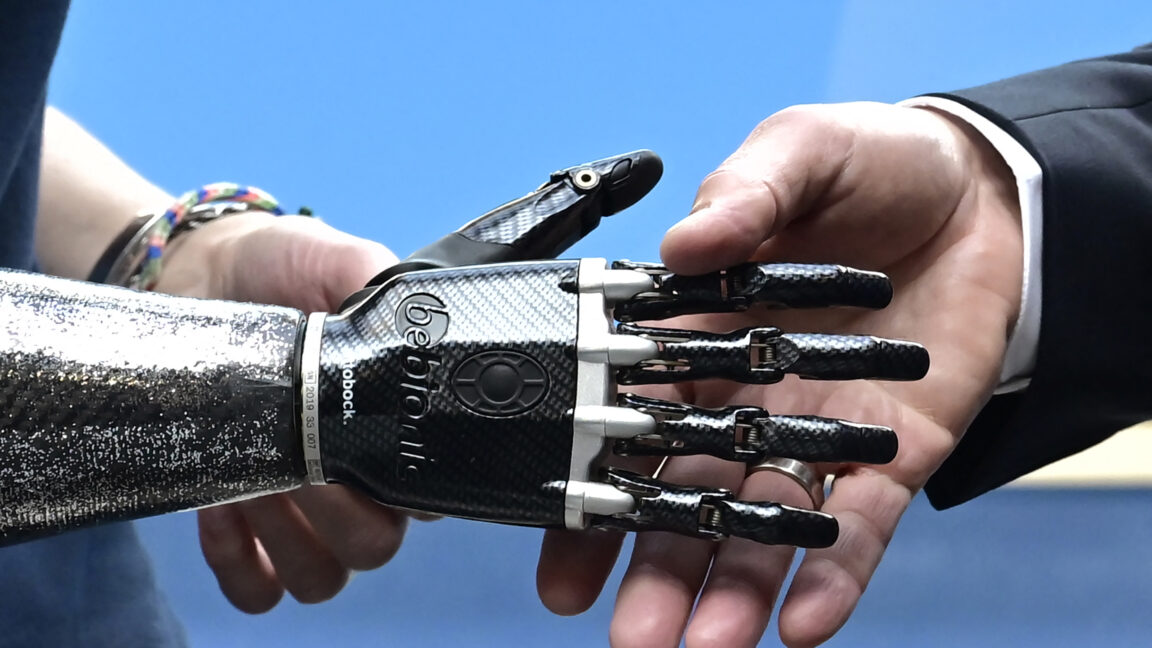
On the bright side, artificial intelligence techniques that can effectively leverage vast amounts of highly detailed medical data are likely to prove critical in developing improved 3D-printed medical products. Specifically, AI algorithms can analyze patient-specific data to optimize the design and fabrication of 3D-printed implants and prosthetics. For instance, implant makers can use AI-driven image analysis to create highly accurate 3D models from CT scans and MRIs that they can use to design customized implants.
Furthermore, machine learning algorithms can predict the long-term performance and potential failure points of 3D-printed prosthetics, allowing prosthetics designers to optimize for improved durability and patient safety.
Three-dimensional printing continues to break boundaries, including the boundary of the body itself. Researchers at the California Institute of Technology have developed a technique that uses ultrasound to turn a liquid injected into the body into a gel in 3D shapes. The method could be used one day for delivering drugs or replacing tissue.
Overall, the field is moving quickly toward personalized treatment plans that are closely adapted to each patient’s unique needs and preferences, made possible by the precision and flexibility of 3D printing.
Anne Schmitz, Associate Professor of Engineering, University of Wisconsin-Stout and Daniel Freedman, Dean of the College of Science, Technology, Engineering, Mathematics & Management, University of Wisconsin-Stout. This article is republished from The Conversation under a Creative Commons license. Read the original article.
[ad_2]
Source link


