[ad_1]
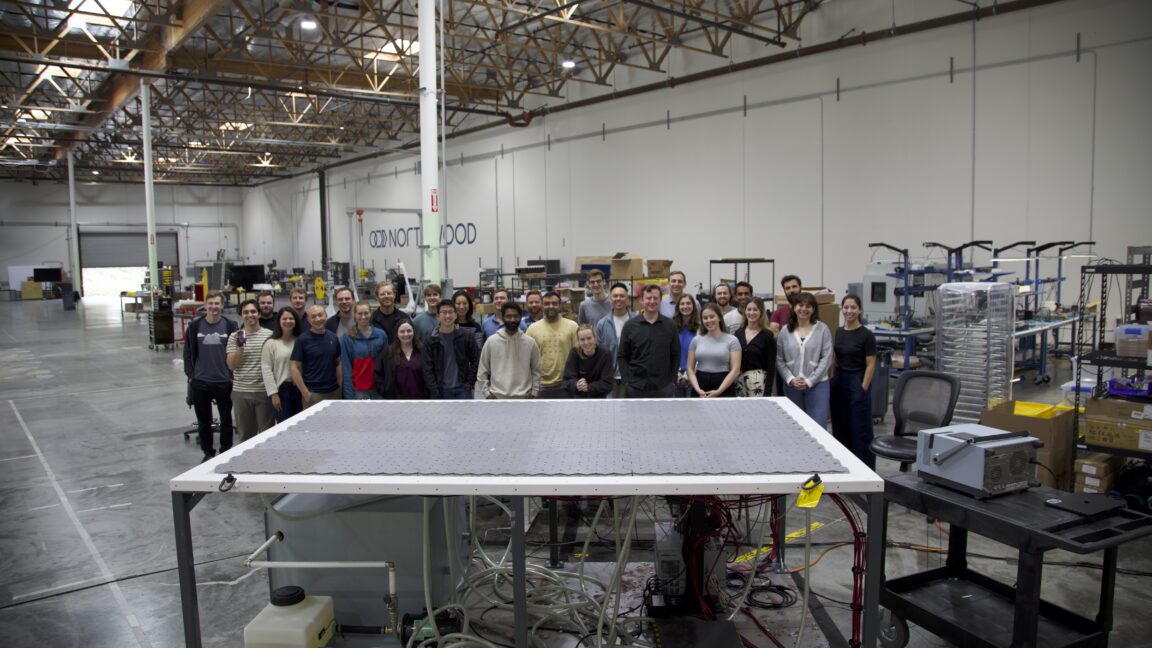
Northwood Space has completed initial testing of the second generation of its phased array antenna technology, which can simultaneously communicate with spacecraft across a range of orbits, from near Earth all the way out to geostationary space.
The prototype gateway was able to connect with several satellites in space during recent testing, said Bridgit Mendler, co-founder and chief executive of Northwood Space. This successful demonstration has given Northwood confidence to move into commercial deployment of the company’s antennas within the coming months.
“This system, with planned multinational deployment this year, will be the first building block in our network that over the next three years aims to support 500 simultaneous spacecraft across multiple frequencies, data rates, and orbits,” she said.
The production-ready antenna system, which will be formally named Portal, is designed to connect with satellites in low-Earth, medium-Earth, and geostationary orbit. Mendler said it has demonstrated the ability to deliver 1 kW of transmit power and receive sub-picowatt signals.
More powerful and durable
The company was founded on the premise that there is presently a bottleneck in the capability of commercial ground stations to download increasing amounts of data gathered by satellites in orbit. Northwood and its investors are betting that these commercially available ground stations, many of which were deployed a decade or longer ago, cannot keep up with the pace of new satellites arriving in orbit.
As Ars reported recently in a feature article on the company, Northwood conducted a field test of its first prototype phased array antenna last October in North Dakota. There were a few struggles in making the first connections with the technology, but the company got everything working after a couple of days.
Since then, Northwood’s small team of engineers has been working on the design of a more capable second-generation antenna, which is more rugged and transportable and more easily produced for commercial deployment. For example, with a liquid cooling system, the Portal antenna can withstand temperatures of up to 50° Celsius (122° F).
[ad_2]
Source link


