[ad_1]
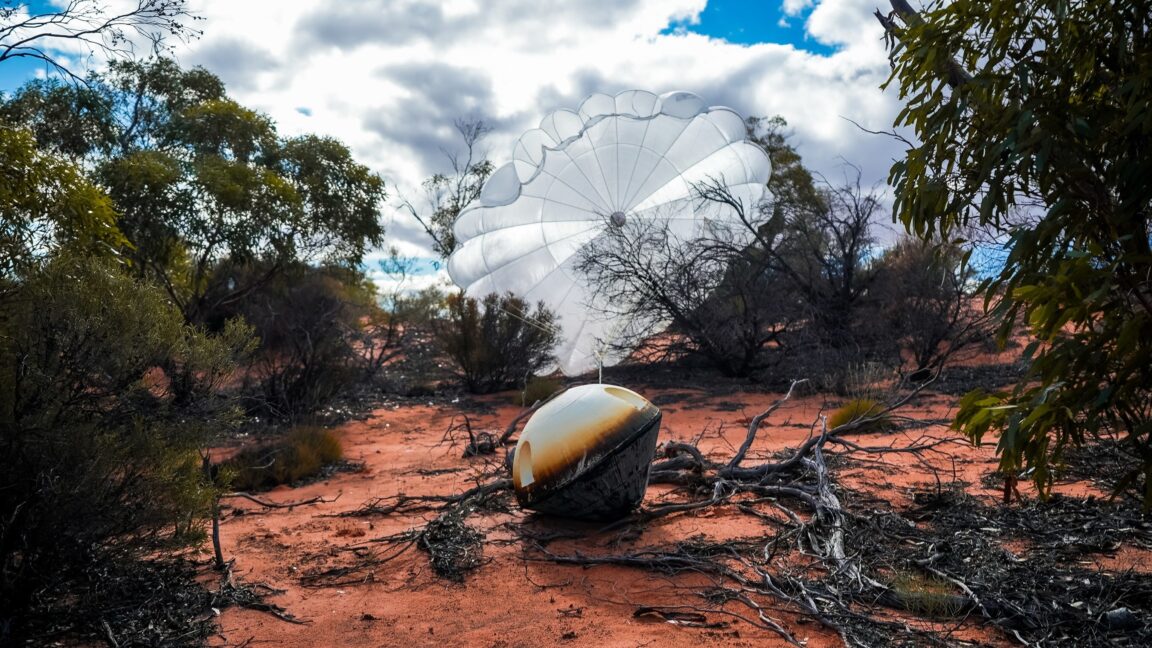
The company has also positioned its W-series of spacecraft, which reenter at a maximum speed of Mach 25, as an ideal test bed for thermal protection materials, navigation, communications, and other sensors that could be flown operationally on hypersonic missiles.
Therefore, Varda’s three main lines of business are military applications, pharmaceutical research and manufacturing, and basic research in microgravity.
The latter is an interesting option at a time when NASA is rushing to manifest research experiments on board the International Space Station—which is due to retire in 2030—and commercial space stations have not yet come online (and may not for several years).
Humans in the loop?
For experiments that can be done without a human astronaut, Varda now offers a less expensive and faster way to get experiments done in space.
It is not difficult to envision an increasingly sophisticated, autonomous spacecraft potentially taking some commercial business away from private space stations (NASA’s program for this is called Commercial LEO Destinations, or CLDs) that are being developed to come online by 2030, or shortly thereafter. However, Varda officials say this is not their intent.
“We don’t view ourselves [as] competitive with those platforms. If anything, we’re a force multiplier,” said Eric Lasker, Varda’s chief revenue officer. “We view ourselves more as the bridge versus some kind of competition to all things CLD.”
Nevertheless, it’s worth noting that Varda is flying missions right now—and quite a lot of them for a small space company. The next five years could see some industries and commercial applications moving toward an autonomous model in space rather than having humans in the loop, simply because that’s the commercial option that exists today.
Despite its autonomous posture, Varda is not actually anti-human spaceflight. Asparouhov said the company would eventually like to build much larger platforms in space that can stay there permanently. Over time, these facilities will naturally need some maintenance.
“Consider an oil rig worker in Dallas where it’s two weeks on, two weeks off. You get to be with your family two weeks, and then you’re at this industrial outpost in the middle of nowhere that’s difficult to get to,” he said. “Ours just happens to be this low-Earth-orbit-based industrial outpost rather than somewhere in the ocean.”
[ad_2]
Source link


