[ad_1]
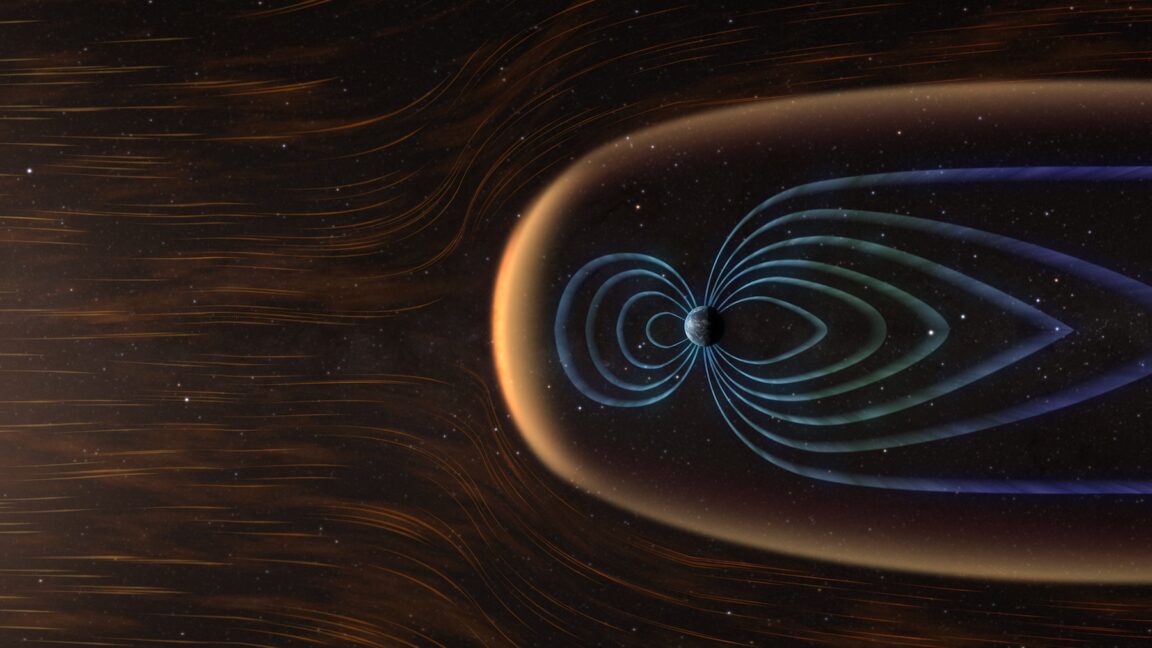
TRACERS, short for Tandem Reconnection and Cusp Electrodynamics Reconnaissance Satellites, will study a process known as magnetic reconnection. As particles in the solar wind head out into the Solar System at up to 1 million mph, they bring along pieces of the Sun’s magnetic field. When the solar wind reaches our neighborhood, it begins interacting with Earth’s magnetic field.
The high-energy collision breaks and reconnects magnetic field lines, flinging solar wind particles across Earth’s magnetosphere at speeds that can approach the speed of light. Earth’s field draws some of these particles into the polar cusps, down toward the upper atmosphere. This is what creates dazzling auroral light shows and potentially damaging geomagnetic storms.
Over our heads
But scientists still aren’t sure how it all works, despite the fact that it’s happening right over our heads, within the reach of countless satellites in low-Earth orbit. But a single spacecraft won’t do the job. Scientists need at least two spacecraft, each positioned in bespoke polar orbits and specially instrumented to measure magnetic fields, electric fields, electrons, and ions.
That’s because magnetic reconnection is a dynamic process, and a single satellite would provide just a snapshot of conditions over the polar cusps every 90 minutes. By the time the satellite comes back around on another orbit, conditions will have changed, but scientists wouldn’t know how or why, according to David Miles, principal investigator for the TRACERS mission at the University of Iowa.
“You can’t tell, is that because the system itself is changing?” Miles said. “Is that because this magnetic reconnection, the coupling process, is moving around? Is it turning on and off, and if it’s turning on and off, how quickly can it do it? Those are fundamental things that we need to understand… how the solar wind arriving at the Earth does or doesn’t transfer energy to the Earth system, which has this downstream effect of space weather.”
[ad_2]
Source link


