[ad_1]
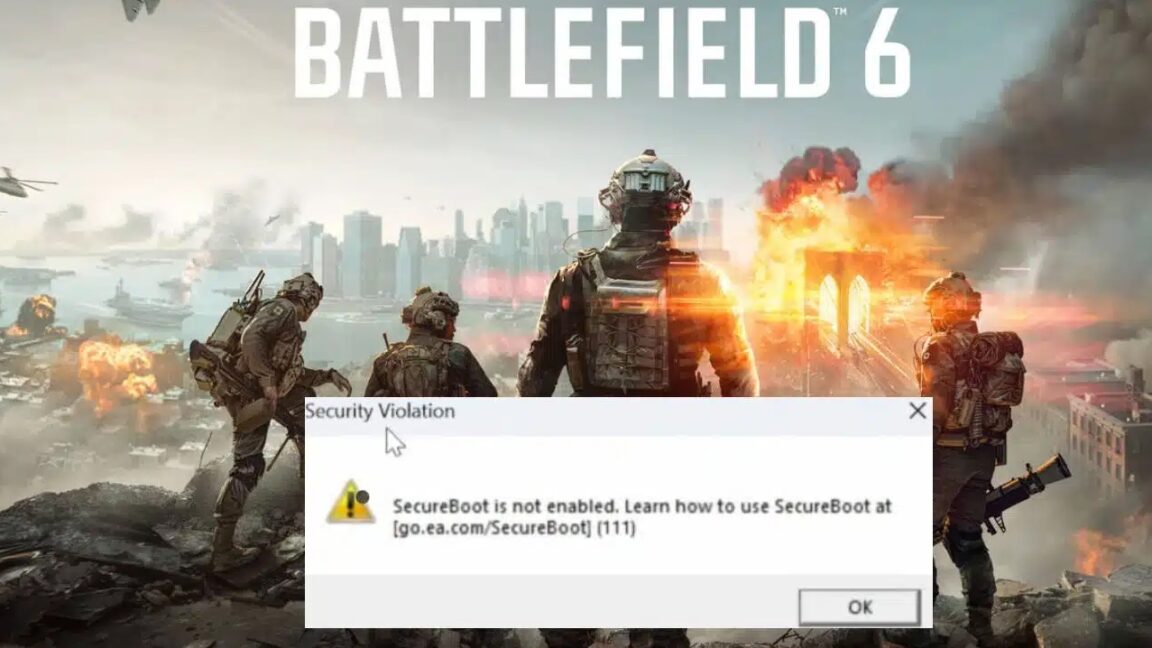
Earlier this month, EA announced that players in its Battlefield 6 open beta on PC would have to enable Secure Boot in their Windows OS and BIOS settings. That decision proved controversial among players who weren’t able to get the finicky low-level security setting working on their machines and others who were unwilling to allow EA’s anti-cheat tools to once again have kernel-level access to their systems.
Now, Battlefield 6 technical director Christian Buhl is defending that requirement as something of a necessary evil to combat cheaters, even as he apologizes to any potential players that it has kept away.
“The fact is I wish we didn’t have to do things like Secure Boot,” Buhl said in an interview with Eurogamer. “It does prevent some players from playing the game. Some people’s PCs can’t handle it and they can’t play: that really sucks. I wish everyone could play the game with low friction and not have to do these sorts of things.”
Throughout the interview, Buhl admits that even requiring Secure Boot won’t completely eradicate cheating in Battlefield 6 long term. Even so, he offered that the Javelin anti-cheat tools enabled by Secure Boot’s low-level system access were “some of the strongest tools in our toolbox to stop cheating. Again, nothing makes cheating impossible, but enabling Secure Boot and having kernel-level access makes it so much harder to cheat and so much easier for us to find and stop cheating.”
Too much security, or not enough?
When announcing the Secure Boot requirement in a Steam forum post prior to the open beta, EA explained that having Secure Boot enabled “provides us with features that we can leverage against cheats that attempt to infiltrate during the Windows boot process.” Having access to the Trusted Platform Module on the motherboard via Secure Boot provides the anti-cheat team with visibility into things like kernel-level cheats and rootkits, memory manipulation, injection spoofing, hardware ID manipulation, the use of virtual machines, and attempts to tamper with anti-cheat systems, the company wrote.
[ad_2]
Source link


