[ad_1]
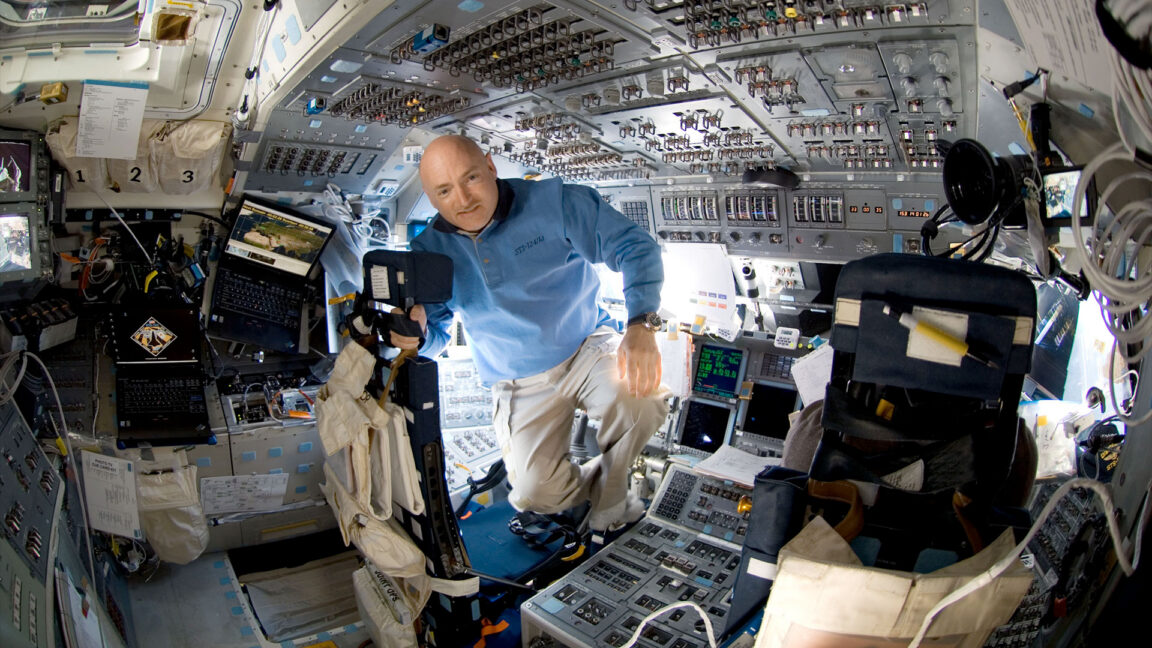
“Houston’s disappointment in not being selected is wholly understandable,” the four senators wrote, “but removing an item from the National Collection is not a viable solution.”
In July, Cornyn and Cruz successfully added language to the “One Big Beautiful Bill Act” championed by President Donald Trump, which enabled acting NASA Administrator Sean Duffy to then identify Discovery for relocation. The provision also called for $85 million to be made available to transport and display the shuttle in Houston.
“There are also profound financial challenges associated with this transfer,” wrote Kelly. Warner, Kaine, and Durbin. “The Smithsonian estimates that transporting Discovery from Virginia to Houston could cost more than $50 million, with another $325 million needed for planning, exhibit reconstruction, and new facilities.”
“Dedicating hundreds of millions of taxpayer dollars to move an artifact that is already housed, displayed, and preserved in a world-class facility is both inefficient and unjustifiable,” the senators wrote.
Risks and rewards
Then there are the logistical challenges with relocating Discovery, which could result in damaging it, “permanently diminishing its historical and cultural value for future generations.”
“Moving Discovery by barge or road would be far more complex [than previous shuttle moves], exposing it to saltwater, weather, and collision risks across a journey several times longer,” the letter reads. “As a one-of-a-kind artifact that has already endured the stresses of spaceflight, Discovery is uniquely vulnerable to these hazards. The heat tiles that enabled repeated shuttle missions become more fragile with age, and they are irreplaceable.”
Kelly, who previously lived in Houston when he was part of the space program, agrees that the city is central to NASA’s human spaceflight efforts, but, along with Warner, Kaine, and Durbin, points out that displaying Discovery would come with another cost: an admission fee, limiting public access to the shuttle.
“The Smithsonian is unique among museums for providing visitors with access to a national treasure meant to inspire the American public without placing economic barriers,” wrote the senators.
Under the terms of the act, NASA has until January 4, 2027 (18 months after the bill’s enactment) to transfer Discovery to Space Center Houston. For its part, the Smithsonian says that it owns the title to Discovery and, as the institution is not part of the federal government, the orbiter is no longer the government’s to move.
[ad_2]
Source link


