[ad_1]
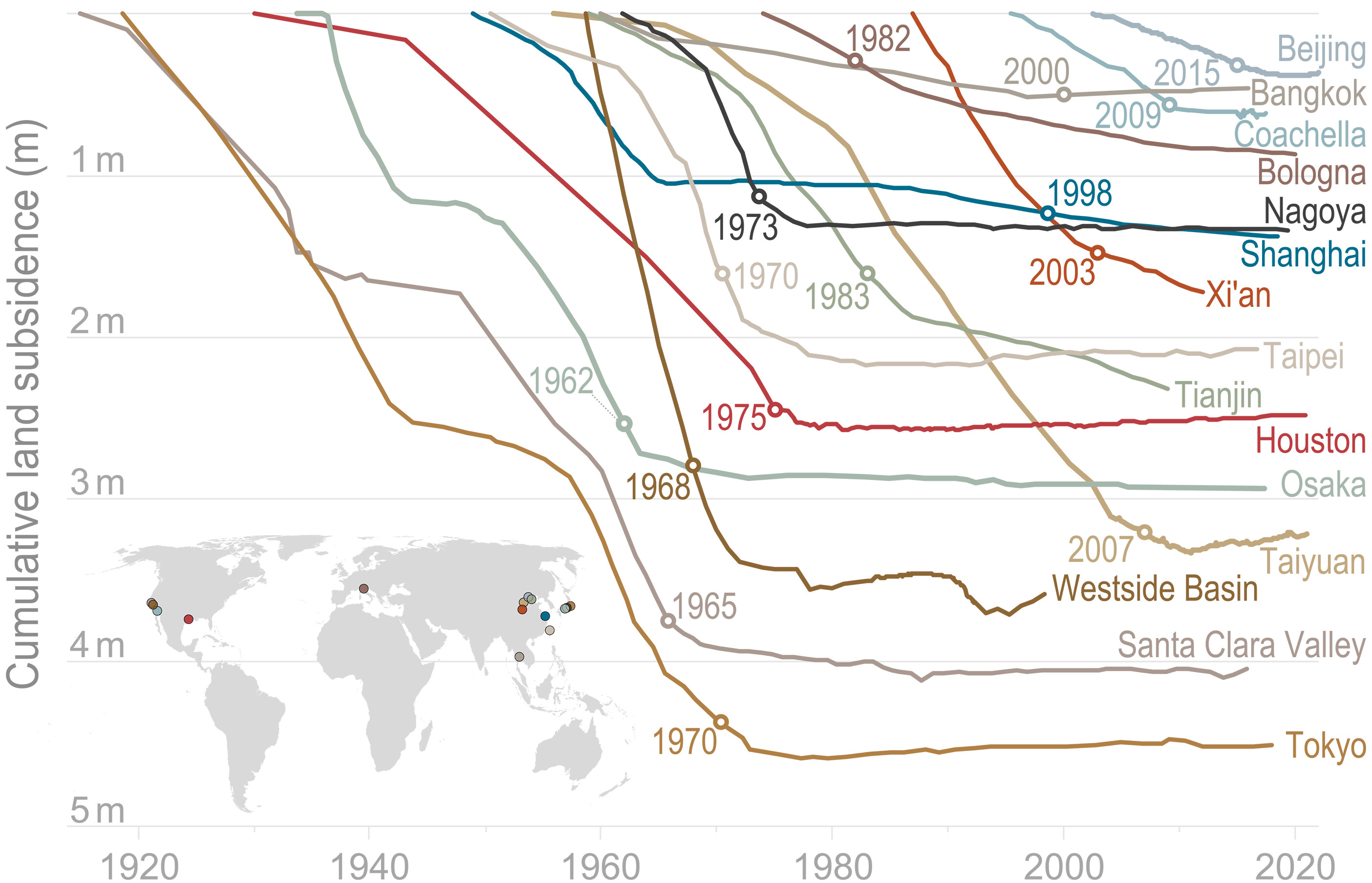
Subsidence often isn’t fully reversible, but groundwater recovery can halt the problem and even cause the surface to rebound somewhat. This was part of the story in 39 percent of the cases studied, including places like Shanghai, Bangkok, and Houston.
So how could groundwater recovery be a problem? Some examples could simply be filed under “too much of a good thing”—flooding of tunnels or particularly low areas and cropland. But there were also structural issues as previously dry sediments saturated and the land surface moved upward. Some seismically active areas have even wrestled with increased liquefaction risk during earthquakes.
Separately, chemistry can cause problems. Shallow pollutants and fertilizers have been mobilized as the water table rose up to meet them, for example. And evaporation from waterlogged agricultural land has caused salts to gradually accumulate in the soil in some areas of Turkey and Iran.
The blueprint
Jasechko identified several lessons from comparing all these cases. First, most included at least two of the three common approaches he identified. Problems with complex causes demand multipronged solutions.
Another lesson is that the amount of time it took to see groundwater trends change direction varied pretty widely. In some cases, water level data showed results within a few years, but others took decades. Bangkok started instituting fees on groundwater use in the late 1970s, for example, but over 20 years passed before the fees were raised high enough to have an impact. And then there’s climate variability—stretches of wet or dry years can obscure the results of your actions.
Another lesson is that the details matter. There may be areas where groundwater rising above a certain level will cause problems, and it would be better to identify them in advance rather than through experience. And since every situation is unique, the best approach in each individual case will be a unique set of solutions.
At a fundamental level, this study reminds us that groundwater recovery has happened, so it is possible for communities to turn things around. So when we learn from history, we can find some parts we’d actually like to repeat.
Science, 2026. DOI: 10.1126/science.adu1370 (About DOIs).
[ad_2]
Source link


