We were always taught in the military: don’t set patterns, predictability gets you killed, & if the enemy can read you, they don’t have to work for it, you become the easy target.
And yet, here we are again.
As winter recedes across Ukraine, a familiar pattern is emerging. Soviet-era doctrine, ingrained and recycled, continues to shape Russia’s approach to this war. If there is one thing Moscow has proven reliable at, it is repetition, the same strategic cycle, year after year, season after season.
Once again, Russia is preparing a major spring offensive, following months of costly, grinding assaults that failed to deliver any decisive breakthrough. The winter campaign of 2025–2026 was supposed to shift momentum firmly in Moscow’s favour. Instead, it reinforced a reality already well understood on the ground, and one I have been reporting on for some time. The bombing of civilian infrastructure and power plants, intended to break the will of the Ukrainian people, has failed. Predictions from some quarters that Ukraine would not even see spring have proven equally misplaced.
Read more related news:
Russian officials accused of downplaying Ukrainian drone strikes
Russia can absorb punishment, but it still struggles to convert mass into effective manoeuvre warfare. Gains have been incremental, casualties remain high, and operational tempo is inconsistent. Even pro-Kremlin messaging has quietly shifted away from promises of breakthrough toward the language of attritional inevitability, and yet, as spring approaches, this is not simply a story of Russian failure.
From winter attrition to spring ambition
Western and Ukrainian assessments indicate that Russia has already begun shaping operations for a renewed spring–summer push. Artillery strikes and drone warfare are intensifying across key sectors of the front, signalling preparation rather than pause.
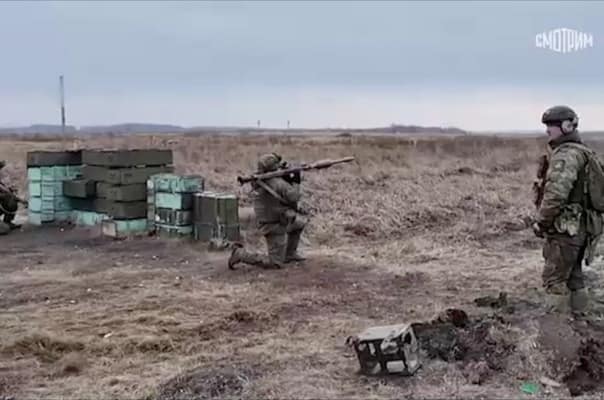
Recent reporting suggests Moscow is refining its approach. Rather than relying on large, exposed formations, Russian forces are increasingly favouring dispersed assault groups, supported by relentless artillery fire and extensive drone reconnaissance.
But while adaptation is clearly taking place, it is far from consistent across the force.
This remains a highly centralised military, where initiative is constrained by rigid command structures. Lessons learned at one level are not always transferred effectively across units, resulting in a patchwork force, some elements evolving, others repeating the same costly mistakes seen since the opening stages of the war in 2022, now reinforced by recruits drawn from some of the poorest regions across Russia and beyond.
Training standards only compound the problem. Language barriers add another layer of friction. From personal experience, having served as a Marine within the Ukrainian military, progress only came once communication became effective. Many of the soldiers now entering the fight are poorly prepared, rushed through shortened training cycles, and deployed into complex combat environments with limited understanding of the battlefield they are entering.
The consequence is stark.
Yes, smaller assault groups are now widely used. Yes, drone integration has improved, but the fundamentals often remain unchanged, many Russian troops will never even reach an enemy trench. They are killed in forming-up points, struck in transit, or identified and targeted long before contact is made or they reach any assault start line.
It is attrition before engagement, a dynamic that increasingly favours a defending force, even one that is outmanned and outgunned, now entering its fifth year of defending sovereignty at immense cost to Russia.
In many ways, what we are seeing is not a new doctrine, but an old one repackaged, Soviet-era mass and pressure adapted to a battlefield now dominated by drones, precision strikes, and persistent surveillance, and no longer the lightning campaign Russia once envisioned. It is a war of grinding adaptation, unevenly applied.
The evolution is happening, but somewhat incomplete:
- Smaller, more flexible assault units
- Sustained artillery pressure
- Drone-led targeting and battlefield awareness
- Continued avoidance of politically risky mass mobilisation
In short, this is a Russian military that has adjusted, but not uniformly. It has hardened tactically in places while remaining structurally rigid at its core. For Western military planners, particularly those contemplating ground operations elsewhere, there is a sobering lesson here: modern battlefields are no longer about reaching the enemy — they are about surviving long enough to even attempt it.
Peace talks in name only
Alongside developments on the battlefield, the diplomatic track has effectively stalled, though few on the ground in Ukraine ever placed much faith in it to begin with. The prevailing mood is one of grim validation, a quiet chorus of “we told you so” among those who never believed these talks were moving toward anything meaningful.
US-brokered negotiations between Ukraine and Russia have now been suspended, with little indication that Moscow is prepared to re-engage in good faith. European leaders increasingly suspect the process has been deliberately drawn out, not to reach a settlement, but to buy time for consolidation on the battlefield. The goalposts have continually shifted, and, at least publicly, pressure has too often appeared directed at the victim rather than the aggressor.
This reflects a long-established Kremlin approach: negotiations are not instruments of resolution, but tools of timing and leverage. For many observers, the question is no longer whether talks were genuine, but how far they may have served Moscow’s broader objectives, and whether figures such as Steve Witkoff, intentionally or otherwise, played into that dynamic.
From Moscow’s perspective, time itself is a weapon, and for now, it appears to be working in its favour.
The external factor: War in Iran
The widening conflict in the Middle East has introduced a significant and potentially decisive variable. Western attention, resources, and critical air defence systems are now divided.
Ukraine is no longer the singular strategic priority it once was with the consequences already visible:
- Missile and interceptor stockpiles are under increased strain
- Financial and military assistance faces delays
- Political focus across allied capitals is diluted
- Media attention has shifted
At the same time, Ukraine’s expertise in air defence and counter-drone warfare is increasingly recognised globally, with Kyiv now contributing knowledge to partners in the Middle East. While this reflects Ukraine’s growing influence, it also highlights the double-edged nature of the moment.
Ukrainian officials have warned that this shift risks creating operational opportunities for Russian forces, precisely the kind of geopolitical distraction Moscow has historically exploited.
Sanctions relief: A strategic lifeline
Perhaps the most consequential development lies not on the battlefield, but in the global economy.
The temporary easing of US sanctions on Russian oil, driven by instability linked to the Iran conflict, has provided Moscow with a significant financial reprieve at a critical moment.
With global oil prices rising above $100 per barrel, Russian revenues are increasing just as preparations for a new offensive accelerate, even limited sanctions relief has tangible effects:
- Increased liquidity within the Russian state budget
- Greater stability in export flows
- Reduced pressure from earlier Western economic measures
European leaders have warned that such steps risk undermining years of coordinated economic containment, particularly at a time when domestic pressure within Russia is already building.
In practical terms, the financial pressure on Moscow has eased just as its military requirements are set to intensify for the spring campaign.
Coincidence?
Not all bad for Russia
Despite the narrative of battlefield struggles, Russia enters spring 2026 with several notable advantages.
Financial breathing space is improving, supported by rising energy revenues and sanctions relief. Strategic patience remains intact, with no immediate domestic pressure forcing the Kremlin toward a negotiated settlement, while Western distraction has diluted focus and stretched resources, particularly in air defence and political capital. Adapted tactics have allowed Russia to settle into a more sustainable, if brutal, model of attritional warfare.
Recruitment without full mobilisation also continues, enabling the Kremlin to sustain manpower while avoiding the political risks associated with mass conscription. However, this masks a more complex reality. Recruitment efforts are operating at near-record levels, driven by financial incentives and regional quotas.
At the same time, for the first time in the war, there are increasing indications that Ukrainian strike capability is beginning to outpace Russia’s ability to replace its losses. In simple terms, more Russian soldiers are being hit than can be effectively recruited, trained, and deployed.
This does not yet translate into immediate collapse, but it does expose a growing strain beneath the surface, one that may become increasingly difficult for the Kremlin to manage over time.
The reality check
None of this suggests that Russia is on the verge of decisive victory. For those who continue to argue this is a stagnated war, that neither side can achieve a breakthrough and Ukraine must concede, the reality is far more complex.
The battlefield remains highly contested. Ukrainian forces continue to disrupt logistics, conduct deep strikes, and impose significant costs on Russian operations. Advances, where they occur, are measured in metres, not kilometres.
However, wars are rarely decided solely on the frontline. A technological breakthrough or a severe economic shock could still shift the balance decisively in favour of either side.
At the same time, Russia is increasingly turning inward. As pressure builds, so too does paranoia, with the system showing signs of reverting toward a more rigid, Soviet-style model, one that ultimately collapsed under its own weight, and that trajectory should not be ignored.
This is not a conventional war in the way many still frame it. It is being fought across multiple domains simultaneously, military, economic, technological, and political. Wars today are rarely decided solely by battlefield performance. They are shaped by global economics, political cohesion, strategic patience, context, and increasingly, technological superiority.
At present, Russia is benefiting, to varying degrees, from the first four.
But not the last.
And that imbalance may prove decisive.
Conclusion: A dangerous moment
I once gave an interview when asked what would happen if Russia invaded. My answer was simple: “We’ll give them a bloody nose.”
The coming months will be critical.
A spring offensive following a failed winter campaign may appear, at first glance, to signal desperation. In reality, it reflects something more dangerous, persistence, now reinforced by improving external conditions.
Russia has not achieved victory, but it is avoiding defeat. and with sanctions pressure easing, oil revenues rising, and Western focus increasingly divided, the Kremlin may calculate that time, and the next offensive, are finally moving in its favour.
But one thing remains unchanged.
We will give them a bloody nose.


