[ad_1]
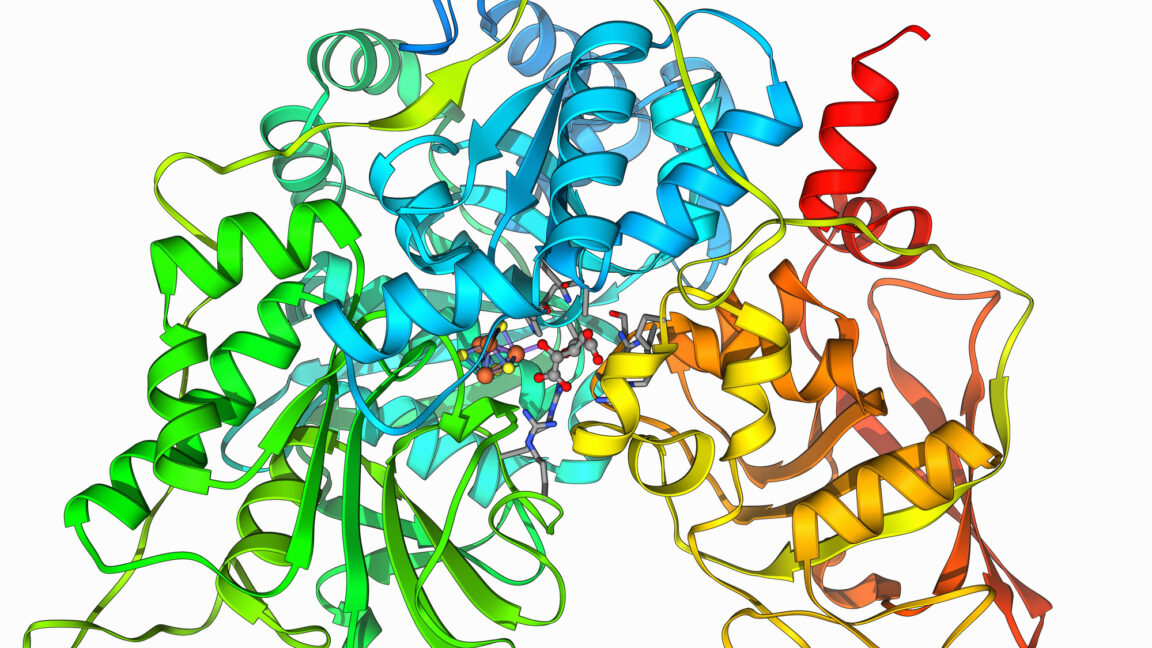
And it worked. Repeating the same process with an added PLACER screening step boosted the number of enzymes with catalytic activity by over three-fold.
Unfortunately, all of these enzymes stalled after a single reaction. It turns out they were much better at cleaving the ester, but they left one part of it chemically bonded to the enzyme. In other words, the enzymes acted like part of the reaction, not a catalyst. So the researchers started using PLACER to screen for structures that could adopt a key intermediate state of the reaction. This produced a much higher rate of reactive enzymes (18 percent of them cleaved the ester bond), and two—named “super” and “win”—could actually cycle through multiple rounds of reactions. The team had finally made an enzyme.
By adding additional rounds alternating between structure suggestions using RFDiffusion and screening using PLACER, the team saw the frequency of functional enzymes increase and eventually designed one that had an activity similar to some produced by actual living things. They also showed they could use the same process to design an esterase capable of digesting the bonds in PET, a common plastic.
If that sounds like a lot of work, it clearly was—designing enzymes, especially ones where we know of similar enzymes in living things, will remain a serious challenge. But at least much of it can be done on computers rather than requiring someone to order up the DNA that encodes the enzyme, getting bacteria to make it, and screening for activity. And despite the process involving references to known enzymes, the designed ones didn’t share a lot of sequences in common with them. That suggests there should be added flexibility if we want to design one that will react with esters that living things have never come across.
I’m curious about what might happen if we design an enzyme that is essential for survival, put it in bacteria, and then allow it to evolve for a while. I suspect life could find ways of improving on even our best designs.
Science, 2024. DOI: 10.1126/science.adu2454 (About DOIs).
[ad_2]
Source link


