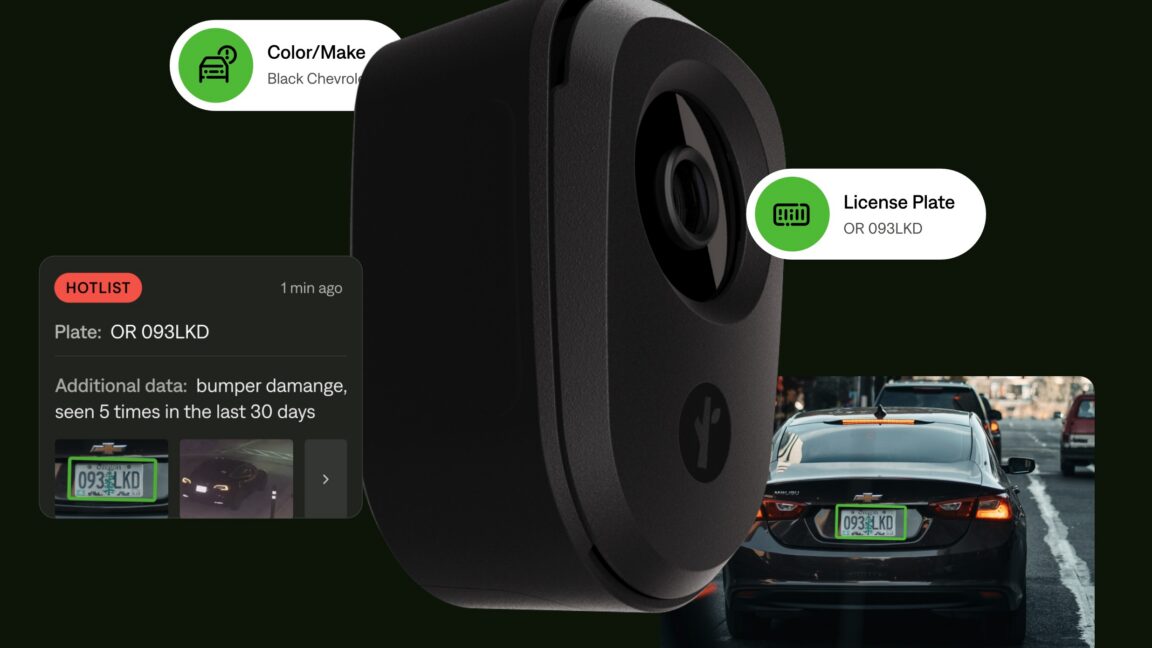
In his Thursday ruling, Judge Davis referenced the family tree of modern surveillance case-law, noting that a 1983 Supreme Court case (Knotts v. United States) found that there is no “reasonable expectation of privacy” when traveling on a public road.
That 1983 case, which centered on a radio transmitter that enabled law enforcement to follow the movements of alleged drug traffickers driving between Minnesota and Wisconsin, has provided the legal underpinning for the use of ALPR technology in the United States over the last few decades.
“Modern-day license plate reader systems, like Norfolk’s, are nothing like [the technology of the early 1980s],” Michael Soyfer, one of the Institute of Justice attorneys, told Ars by email. “They track the movements of virtually every driver within a city for weeks at a time. That can reveal a host of insights not captured in any single trip.”
For its part, Flock Safety celebrated the ruling and wrote on its website that its clients may continue to use the cameras.
“Here, the court emphasized that LPR technology, as deployed in Norfolk, is meaningfully different from systems that enable persistent, comprehensive tracking of individuals’ movements,” the company wrote.
“When used with appropriate limitations and safeguards, LPRs do not provide an intimate portrait of a person’s life and therefore do not trigger the constitutional concerns raised by continuous surveillance,” it added.
But some legal scholars disagree with both the judge’s and Flock’s conclusions.
Andrew Ferguson, a law professor at George Washington University and the author of the forthcoming book Your Data Will Be Used Against You: Policing in the Age of Self-Surveillance, told Ars by email that the judge’s ruling here is “understandably conservative and dangerous.”
“The danger is that the same reasoning that there is no expectation of privacy in public would justify having ALPR cameras on every single street corner,” he continued.
“Further,” he said, “looking at the technology as a mere tool, rather than a system of surveillance, misses the mark on its erosion of privacy. Think how revealing ALPRs would be outside religious institutions, gun ranges, medical clinics, addiction treatment centers, or protests.”


