[ad_1]
For those who missed the Flash era, these in-browser apps feel somewhat like the vintage apps that defined a generation of Internet culture from the late 1990s through the 2000s when it first became possible to create complex in-browser experiences. Adobe Flash (originally Macromedia Flash) began as animation software for designers but quickly became the backbone of interactive web content when it gained its own programming language, ActionScript, in 2000.
But unlike Flash games, where hosting costs fell on portal operators, Anthropic has crafted a system where users pay for their own fun through their existing Claude subscriptions. “When someone uses your Claude-powered app, they authenticate with their existing Claude account,” Anthropic explained in its announcement. “Their API usage counts against their subscription, not yours. You pay nothing for their usage.”
Benj Edwards / Anthropic
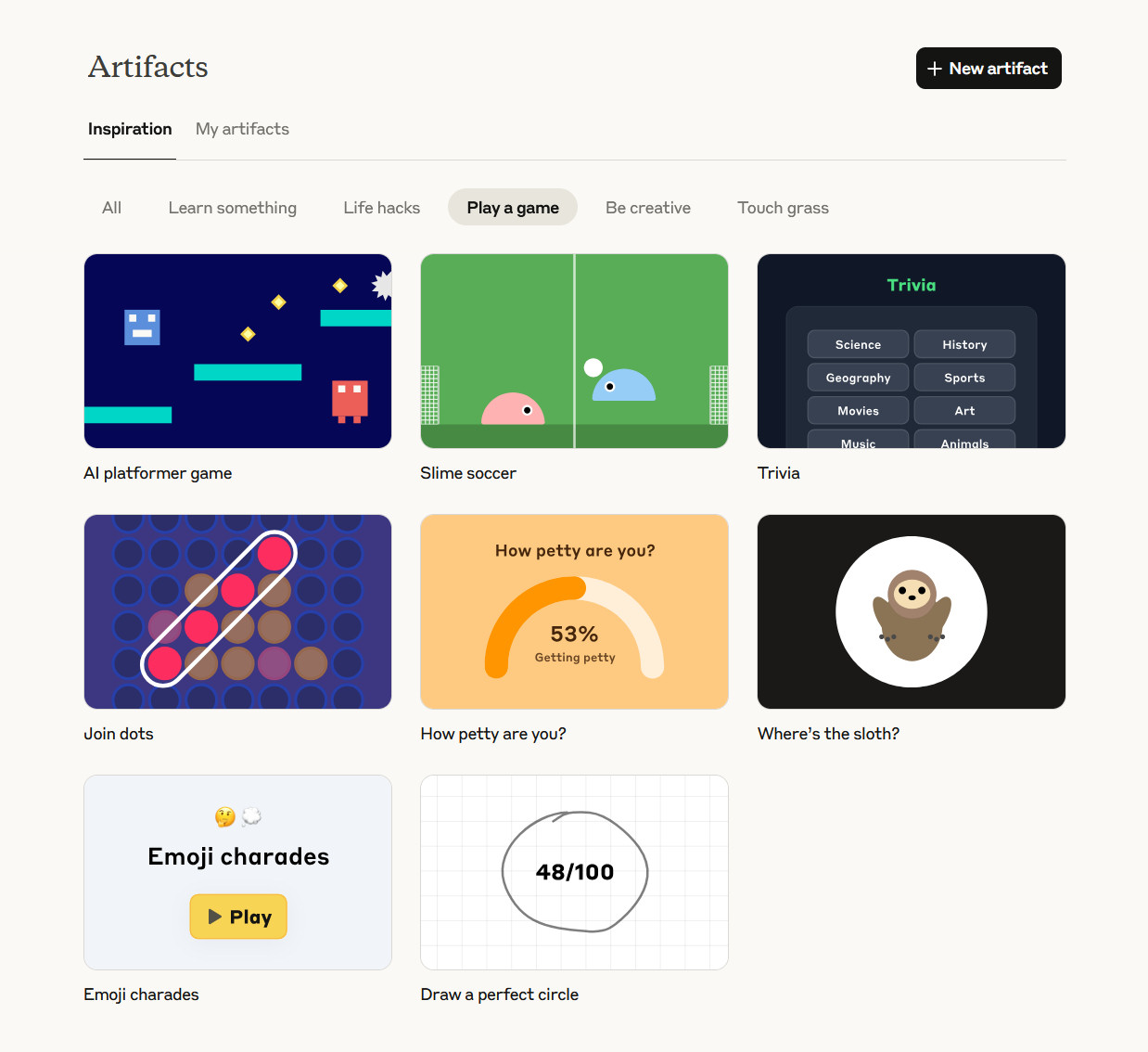
A view of the Anthropic Artifacts gallery in the “Play a Game” section.
Benj Edwards / Anthropic
Benj Edwards / Anthropic
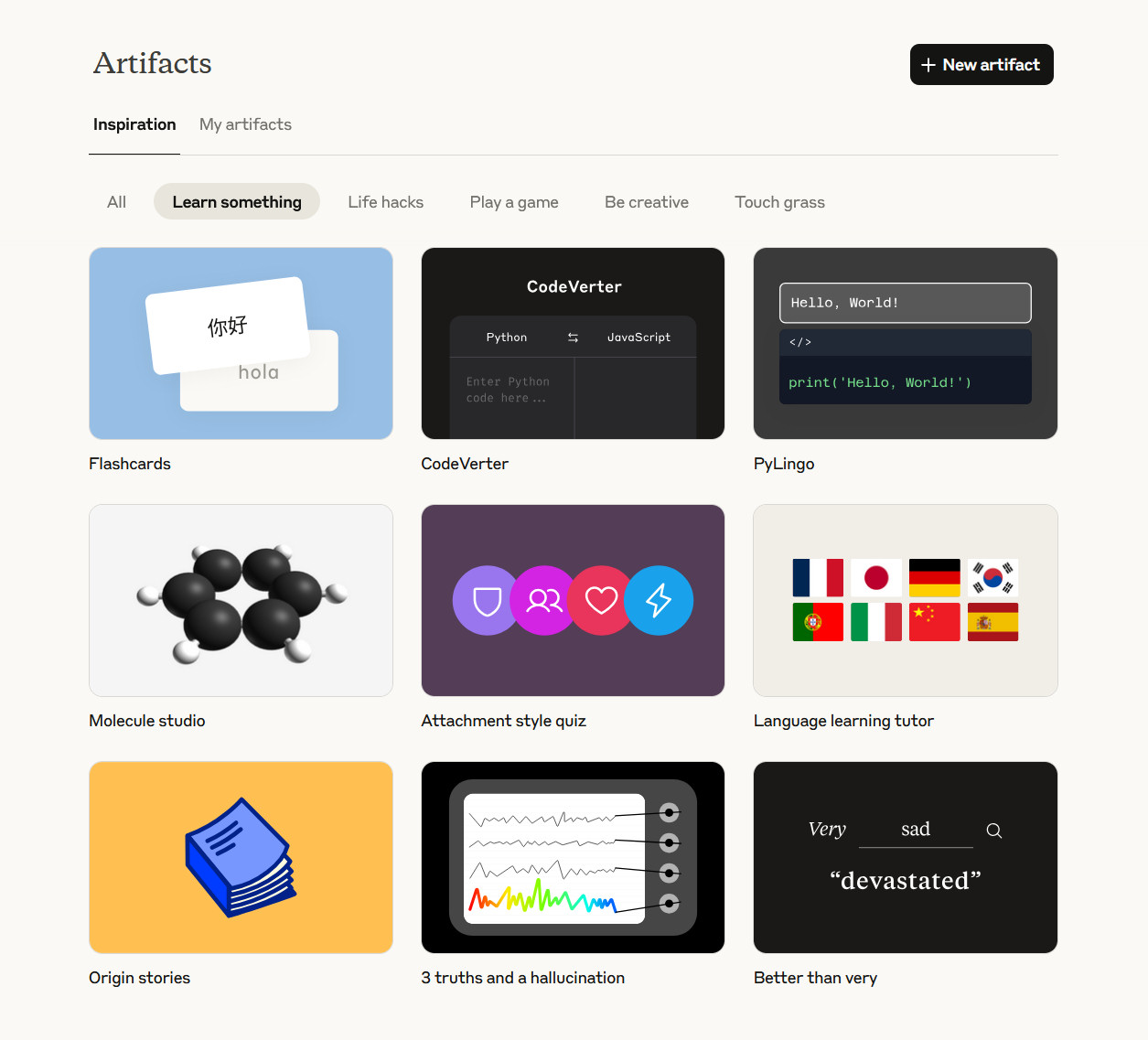
A view of the Anthropic Artifacts gallery in the “learn something” section.
Benj Edwards / Anthropic
Benj Edwards / Anthropic
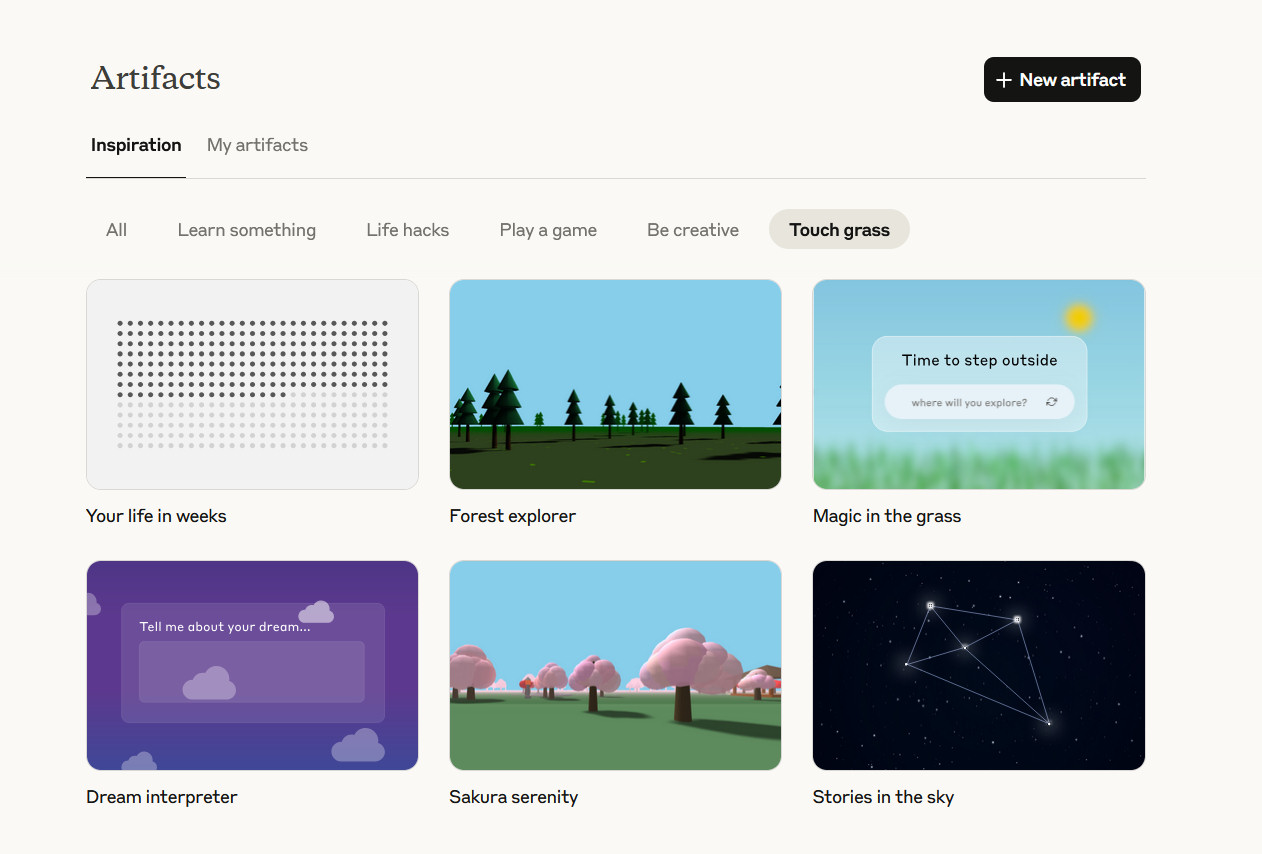
A view of the Anthropic Artifacts gallery in the ironically named “touch grass” section.
Benj Edwards / Anthropic
A view of the Anthropic Artifacts gallery in the “learn something” section.
Benj Edwards / Anthropic
A view of the Anthropic Artifacts gallery in the ironically named “touch grass” section.
Benj Edwards / Anthropic
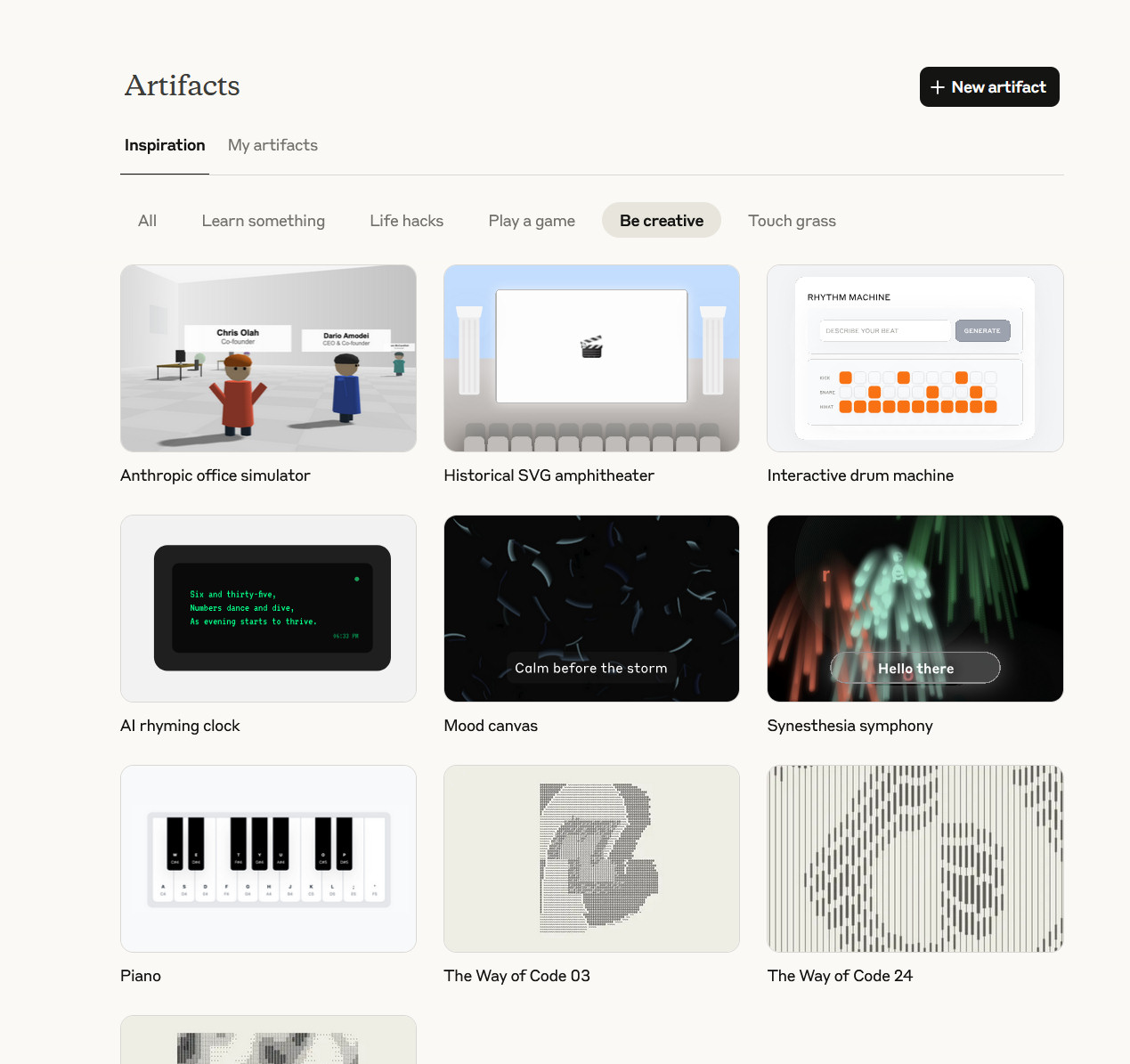
Benj Edwards / Anthropic
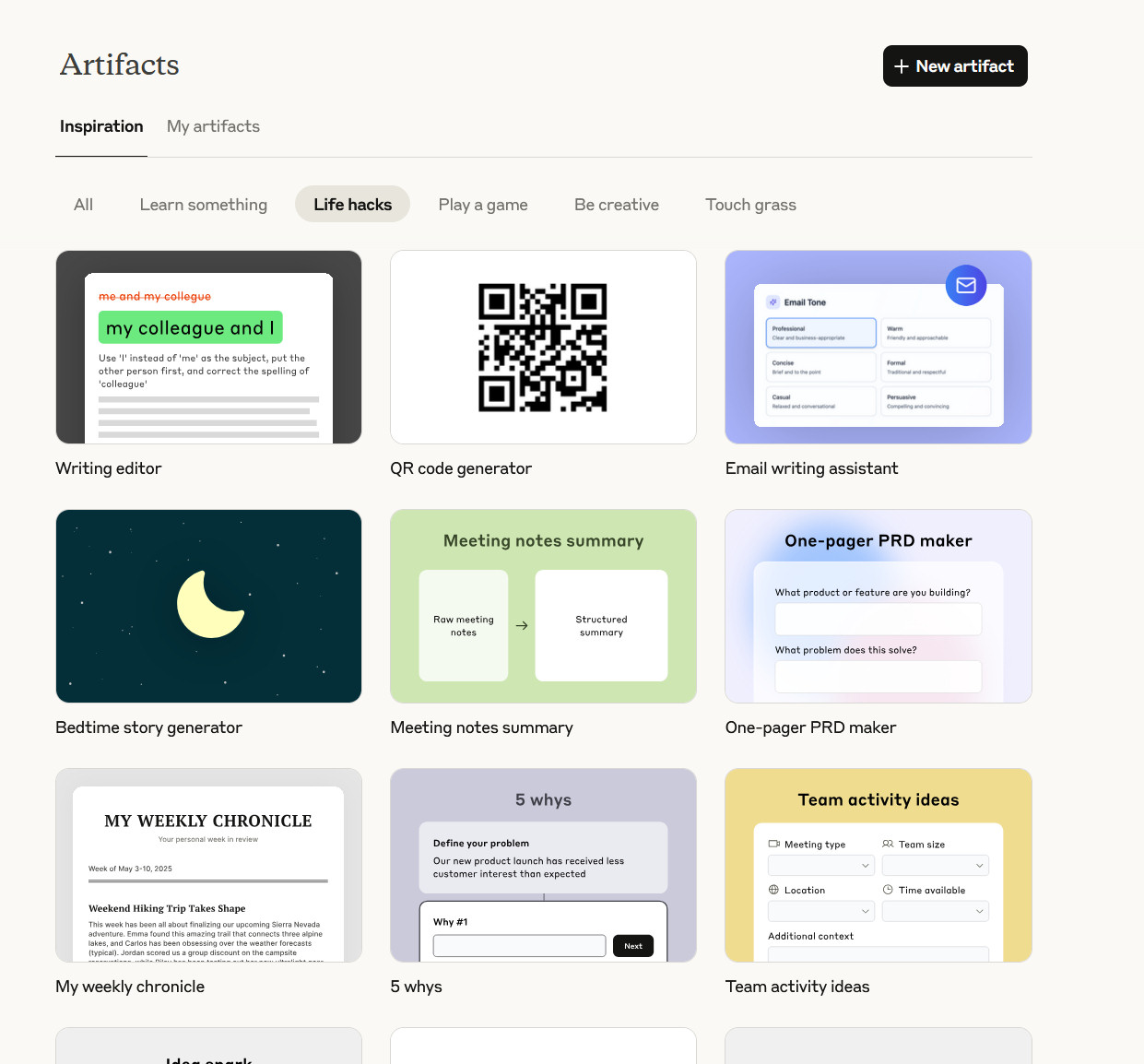
Benj Edwards / Anthropic
Like the Flash games of yesteryear, any Claude-powered apps you build run in the browser and can be shared with anyone who has a Claude account. They’re interactive experiences shared with a simple link, no installation required, created by other people for the sake of creating, except now they’re powered by JavaScript instead of ActionScript.
While you can share these apps with others individually, right now Anthropic’s Artifact gallery only shows examples made by Anthropic and your own personal Artifacts. (If Anthropic expanded it into the future, it might end up feeling a bit like Scratch meets Newgrounds, but with AI doing the coding.) Ultimately, humans are still behind the wheel, describing what kinds of apps they want the AI model to build and guiding the process when it inevitably makes mistakes.
Speaking of mistakes, don’t expect perfect results at first. Usually, building an app with Claude is an interactive experience that requires some guidance to achieve your desired results. But with a little patience and a lot of tokens, you’ll be vibe coding in no time.
[ad_2]
Source link


