[ad_1]
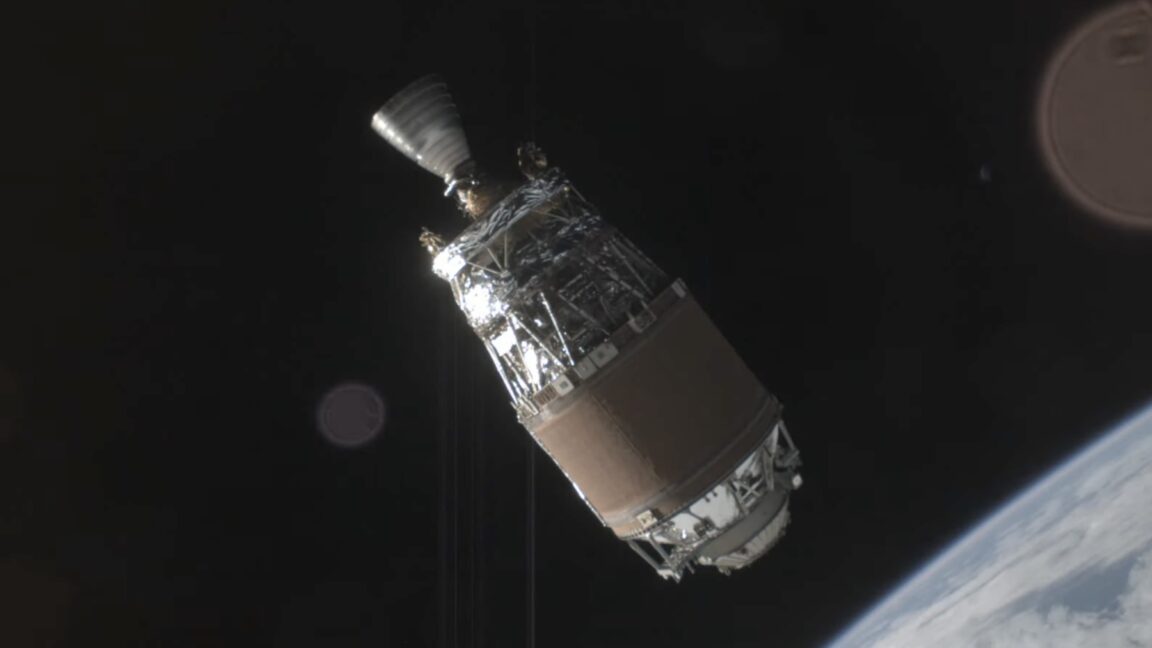
Astroscale’s US subsidiary won a $25.5 million contract from the US Space Force in 2023 to build a satellite refueler that can hop around geostationary orbit. Like the ADRAS-J mission, this project is a public-private partnership, with Astroscale committing $12 million of its own money. In January, the Japanese government selected Astroscale for a contract worth up to $80 million to demonstrate chemical refueling in low-Earth orbit.
The latest win for Astroscale came Thursday, when the Japanese Ministry of Defense awarded the company a contract to develop a prototype satellite that could fly in geostationary orbit and collect information on other objects in the domain for Japan’s military and intelligence agencies.
“We are very bullish on the prospects for defense-related business,” said Nobu Matsuyama, Astroscale’s chief financial officer.
Astroscale’s other projects include a life extension mission for an unidentified customer in geostationary orbit, providing a similar service as Northrop Grumman’s Mission Extension Vehicle (MEV).
So, can Astroscale really do all of this? In an era of a militarized final frontier, it’s easy to see the usefulness of sidling up next to a “non-cooperative” satellite—whether it’s to refuel it, repair it, de-orbit it, inspect it, or (gasp!) disable it. Astroscale’s demonstration with ADRAS-J showed it can safely operate near another object in space without navigation aids, which is foundational to any of these applications.
So far, governments are driving demand for this kind of work.
Astroscale raised nearly $400 million in venture capital funding before going public on the Tokyo Stock Exchange last June. After quickly spiking to nearly $1 billion, the company’s market valuation has dropped to about $540 million as of Thursday. Astroscale has around 590 full-time employees across all its operating locations.
Matsuyama said Astroscale’s total backlog is valued at about 38.9 billion yen, or $260 million. The company is still in a ramp-up phase, reporting operating losses on its balance sheet and steep research and development spending that Matsuyama said should max out this year.
“We are the only company that has proved RPO technology for non-cooperative objects, like debris, in space,” Okada said last month.
“In simple terms, this means approach and capture of objects,” Okada continued. “This capability did not exist before us, but one’s mastering of this technology enables you to provide not only debris removal service, but also orbit correction, refueling, inspection, observation, and eventually repair and reuse services.”
[ad_2]
Source link


