Sadly, the US is unlikely to get the Econeer trim, which uses a seat fabric made entirely from recycled PET bottles (instead, we should be getting an eco vinyl option).
Of course, you need to do more than just pick better materials, some of which have been recycled, if you want to seriously dent the carbon footprint of your new vehicle. That’s especially true if it’s electric—for all an EV’s benefits, they remain significantly more energy-intensive to build than a new internal combustion engine vehicle. And automakers do need to make serious dents in their carbon footprints: BMW has to slash its carbon emissions from a 2019 level of 150 million tons down to 109 million tons in 2030. For 2024, it was down to 135 million tons, the company told us.
Fishing nets are turned into plastic granules, then used to make bits of the car.
BMW
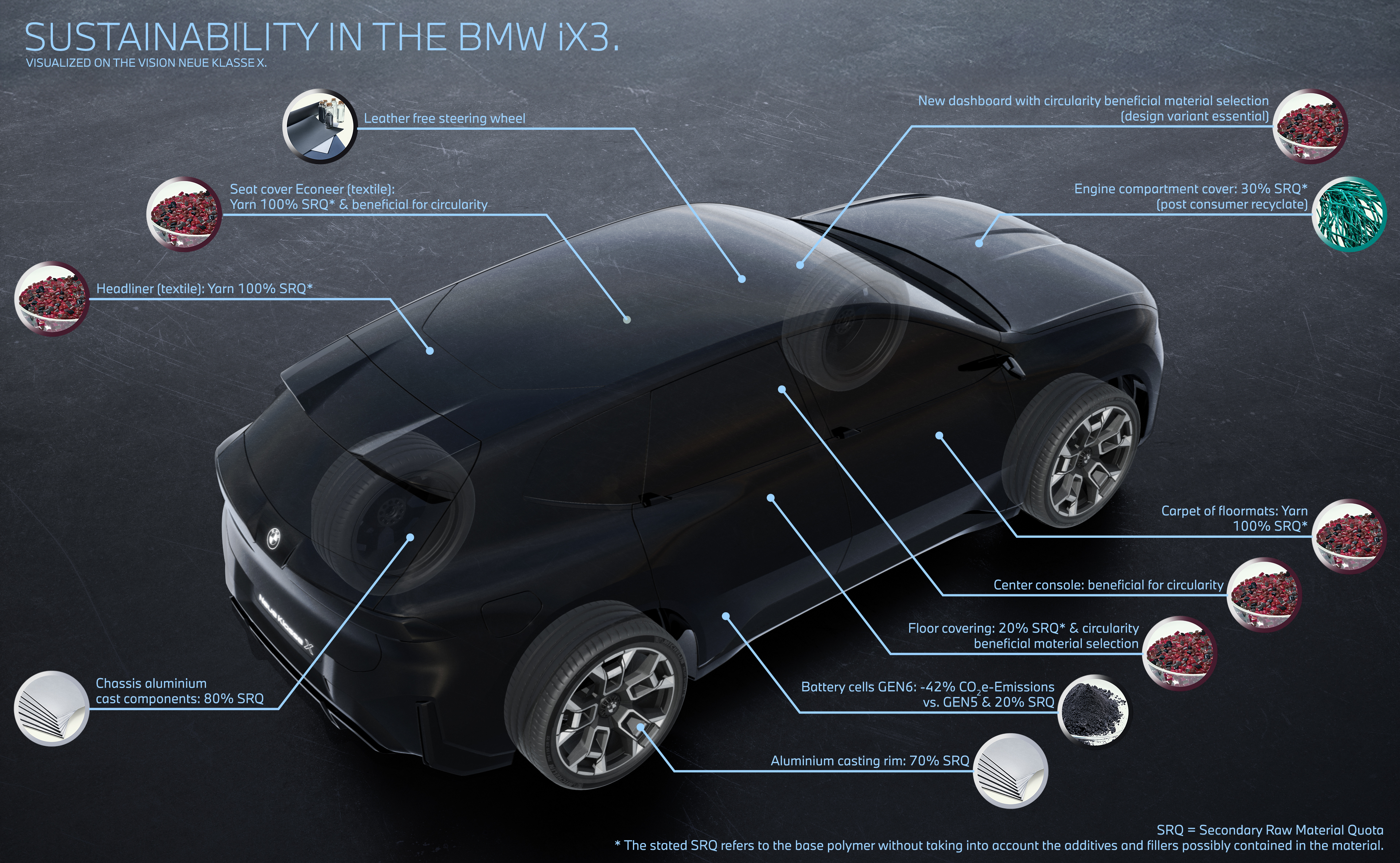
The various sustainability aspects of the BMW iX3.
BMW
BMW
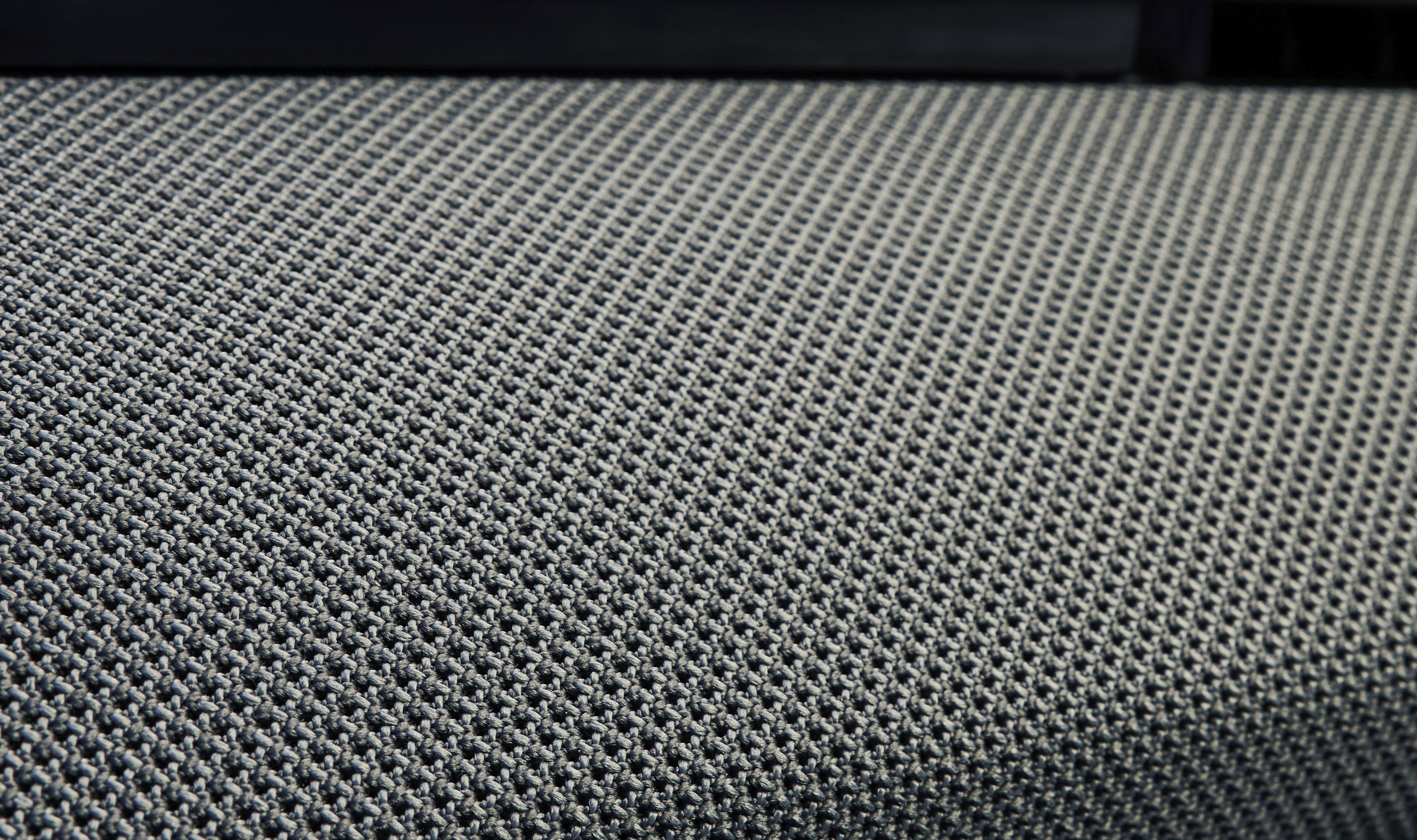
The yarn used to make this trim is made from recycled plastic water bottles.
BMW
The various sustainability aspects of the BMW iX3.
BMW
The yarn used to make this trim is made from recycled plastic water bottles.
BMW
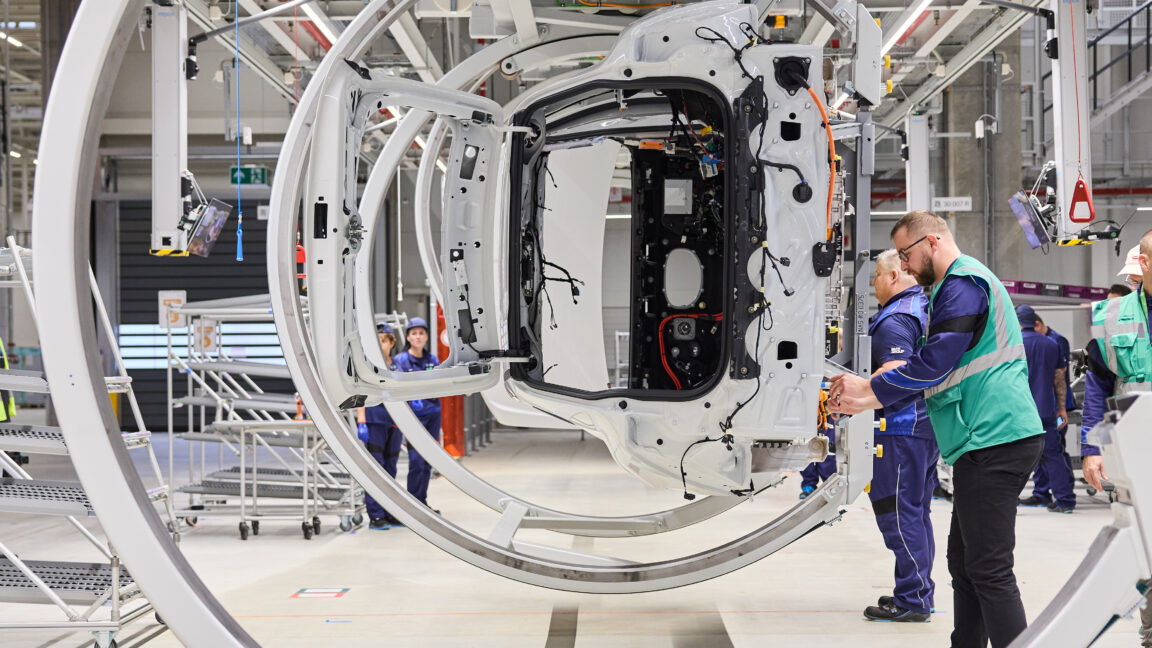
The Neue Klasse is essential to meeting that goal. The factory in Debrecen, Hungary, is powered entirely by renewable energy, including an entirely electric paint shop, and it generates two-thirds the amount of CO2 as one of BMW’s established factories. And the battery pack, which uses an all-new BMW cylindrical cell, has a 42 percent smaller carbon footprint per kWh than the prismatic cells used in BMW’s current 5th-generation EVs.
We can’t say much about the expected efficiency of the new 6th-gen powertrain until later this month, but we can say that BMW calculates that the iX3 can reach its break-even point with an ICE vehicle within just a year. Charge the car with entirely renewable electricity, and within just 10,900 miles (17,500 km), it’s on par with an ICE vehicle; using the normal European energy generation mix, that crossover comes at a little more than 13,300 miles (21,000 km).
At 124,000 miles (200,000 km), the iX3 should have a lifetime carbon footprint of 23 tons (or 14.6 tons exclusively using renewable energy); by contrast, a conventionally powered BMW X3 crossover would have a footprint of 52.8 tons.
Check back on August 25, when we can tell you what else we learned about BMW’s next EV crossover.


