
[ad_1]
“Bouncing” winds
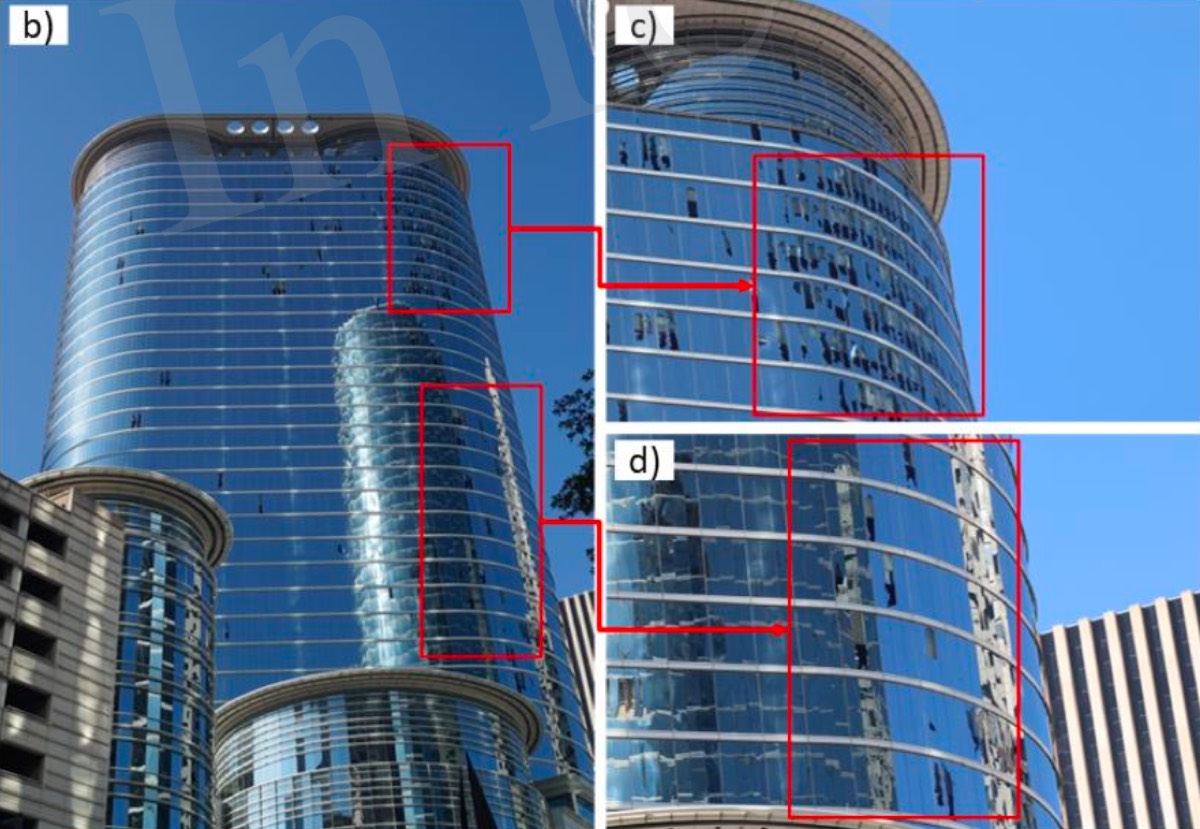
Elawady decided to investigate why the Houston derecho’s structural damage was so much more extensive than one might expect. He and his colleagues analyzed the impact of the derecho on five of the city’s most notable buildings: The Chevron Building Auditorium, the CenterPoint Energy Plaza, the El Paso Energy Building, the RRI Energy Plaza, and the Wedge International Tower.
The Chevron Building Auditorium, for instance, suffered significant damage to its cladding and shattered glass windows, mostly on the side facing another skyscraper: the Chevron Corporation Tower. The CenterPoint Energy Plaza’s damage to its double-skin facade was concentrated on one corner that had two tall buildings facing it, as was the damage to two corners of the El Paso Energy building. This suggested a wind-channeling effect might have played a role in that damage.
Next Elawady et al. conducted wind tunnel experiments at the FIU Natural Hazards Engineering Research Infrastructure’s “Wall of Wind” facility to determine how the winds may have specifically caused the observed damage. They placed a revolving miniature tall building in the tunnel and blasted it with wind speeds of up to 70 meters per second while placing an identical mini-model at increasing distances from the first to mimic possible interference from nearby buildings.
The results confirmed the team’s working hypothesis. “When strong winds move through a city, they can bounce due to interference between tall buildings. This increases pressure on walls and windows, making damage more severe than if the buildings were isolated,” said co-author Omar Metwally, a graduate student at FIU. For example, in the case of the Chevron Building Auditorium, the channeling effects intensified the damage, particularly at higher elevations.
“On top of this, downbursts create intense, localized forces which can exceed typical design values for hurricanes, especially on the lower floors of tall buildings,” Metwally added. The problem is only likely to worsen because of accelerating climate change. Glass facades seem to be particularly vulnerable to this kind of wind damage, and the authors suggest current design and construction guidelines for such elements should be re-evaluated as a result of their findings.
Frontiers in Built Environment, 2025. DOI: 10.3389/fbuil.2024.1514523 (About DOIs).
[ad_2]
Source link


