A brazen killing
Hampshire Archives/Hampshire County Council
A page from the Archbishop of Canterbury’s letters to the Bishop of Winchester on the subject of Ela Fitzpayne, from the register of John de Stratford.
Hampshire Archives/Hampshire County Council
Hampshire Archives/Hampshire County Council
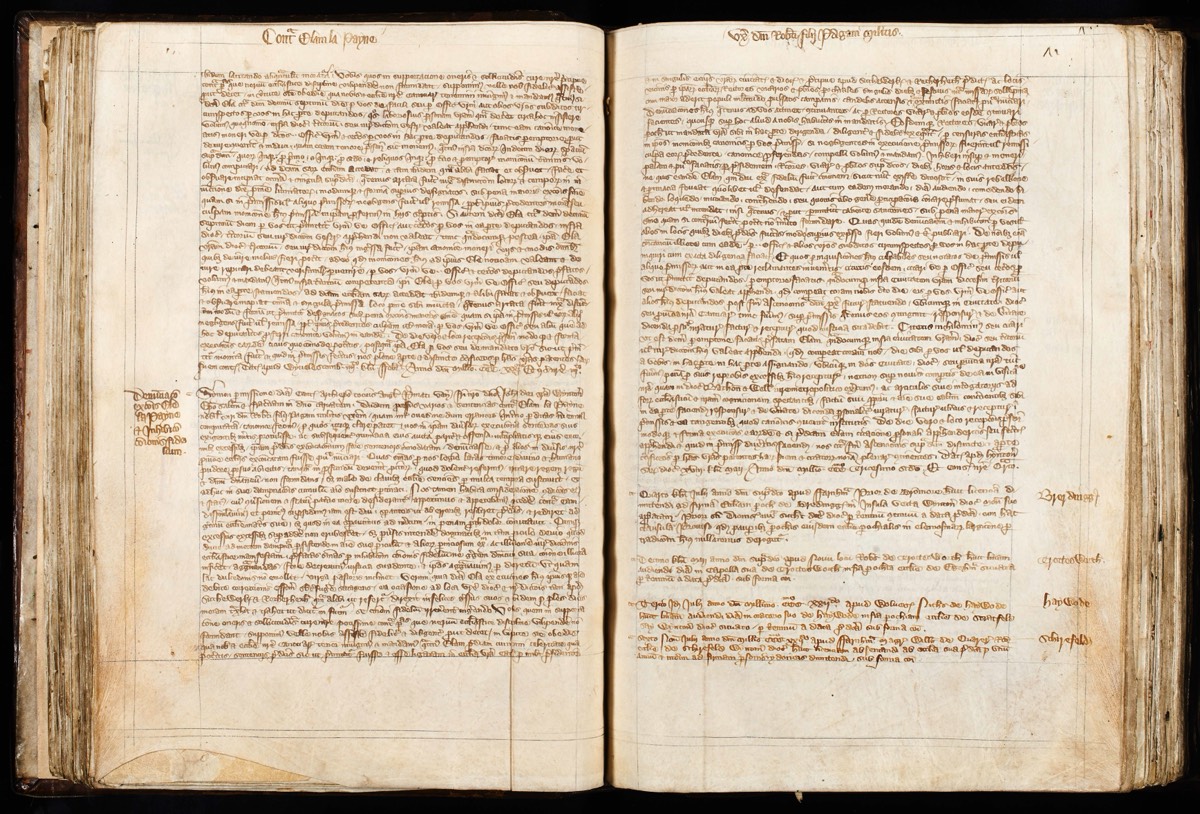
Another page from the Archbishop of Canterbury’s letters to the Bishop of Winchester on the subject of Ela Fitzpayne, from the register of John de Stratford.
Hampshire Archives/Hampshire County Council
A page from the Archbishop of Canterbury’s letters to the Bishop of Winchester on the subject of Ela Fitzpayne, from the register of John de Stratford.
Hampshire Archives/Hampshire County Council
Another page from the Archbishop of Canterbury’s letters to the Bishop of Winchester on the subject of Ela Fitzpayne, from the register of John de Stratford.
Hampshire Archives/Hampshire County Council
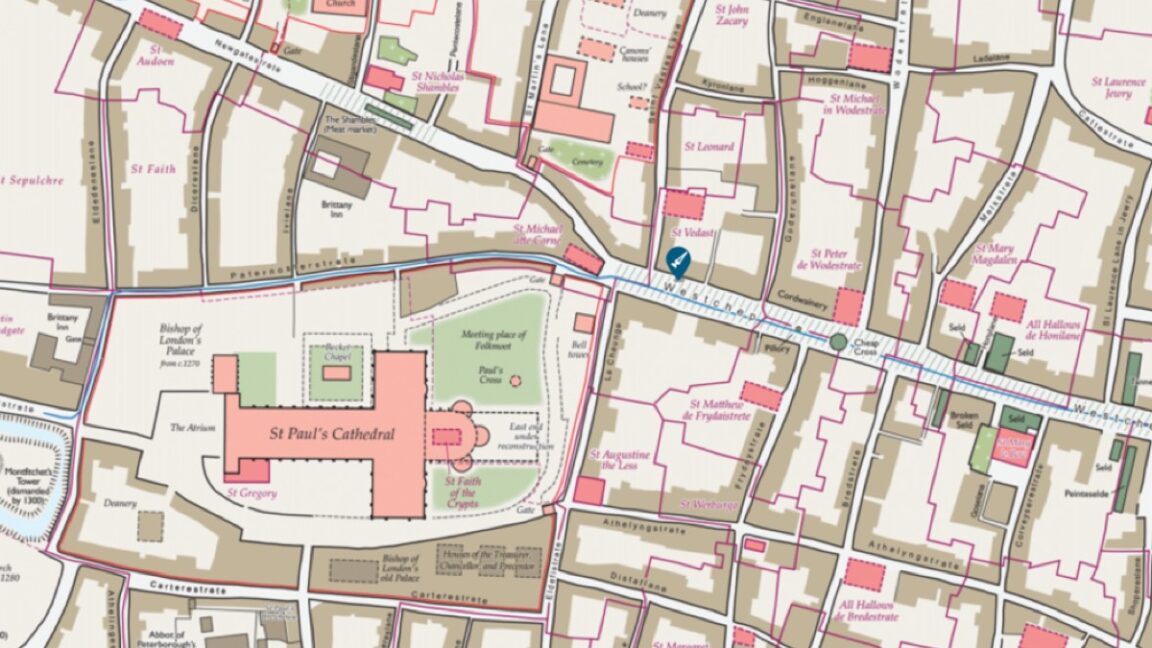
The murder of Forde was one of several premeditated revenge killings recorded in the area of Westcheap. Forde was walking on the street when another priest, Hascup Neville, caught up to him, ostensibly for a casual chat, just after Vespers but before sunset. As they approached Foster Lane, Neville’s four co-conspirators attacked: Ela Fitzpayne’s brother, Hugh Lovell; two of her former servants, Hugh of Colne and John Strong; and a man called John of Tindale. One of them cut Ford’s throat with a 12-inch dagger, while two others stabbed him in the stomach with long fighting knives.
At the inquest, the jury identified the assassins, but that didn’t result in justice. “Despite naming the killers and clear knowledge of the instigator, when it comes to pursuing the perpetrators, the jury turn a blind eye,” said Eisner. “A household of the highest nobility, and apparently no one knows where they are to bring them to trial. They claim Ela’s brother has no belongings to confiscate. All implausible. This was typical of the class-based justice of the day.”
Colne, the former servant, was eventually charged and imprisoned for the crime some five years later in 1342, but the other perpetrators essentially got away with it.
Eisner et al. uncovered additional historical records that shed more light on the complicated history and ensuing feud between the Fitzpaynes and Forde. One was an indictment in the Calendar of Patent Rolls of Edward III, detailing how Ela and her husband, Forde, and several other accomplices raided a Benedictine priory in 1321. Among other crimes, the intruders “broke [the prior’s] houses, chests and gates, took away a horse, a colt and a boar… felled his trees, dug in his quarry, and carried away the stone and trees.” The gang also stole 18 oxen, 30 pigs, and about 200 sheep and lambs.


