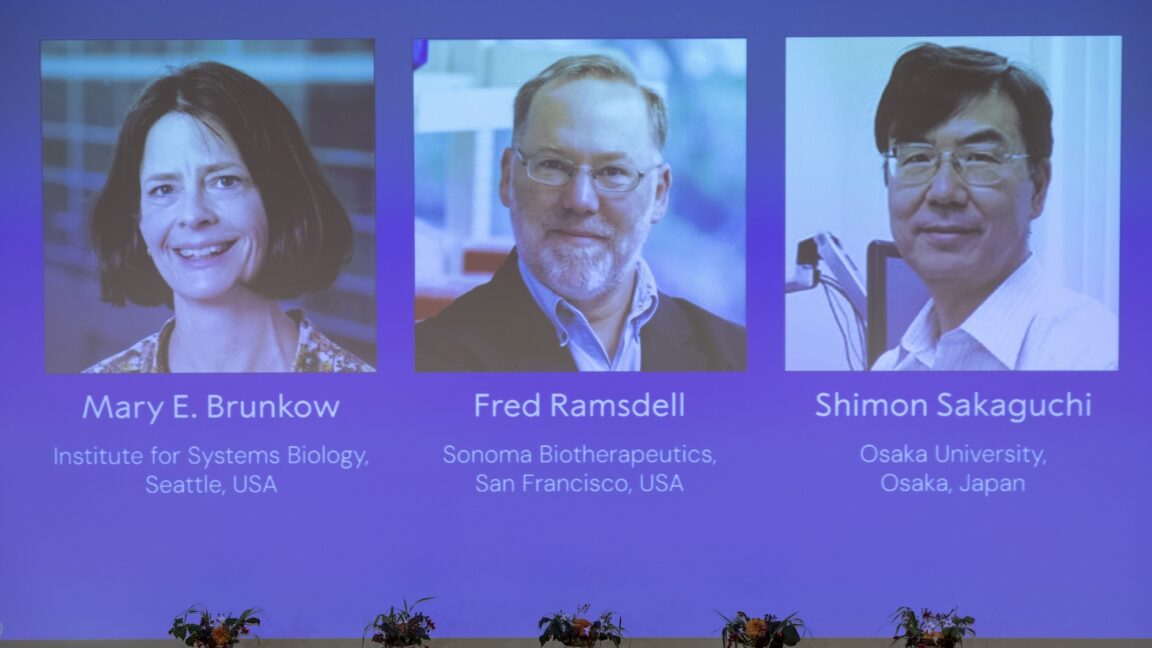
Today, finding a mutation on the X chromosome would be relatively easy. But in the 1990s, it was a labor-intensive effort. After narrowing the mutation’s location down to a stretch of 500,000 nucleotides that included 20 genes, they carefully scanned 19 of them before finding a mutation in the very last one; it was a small, two-base pair insertion that threw the coding out of frame and resulted in a stunted protein. The mutated gene hadn’t been studied before, but it looked like others that were classified as forkhead/winged-helix genes, so Brunkow and Ramsdell called it Foxp3.
The pair then did genetic rescue experiments, putting normal Foxp3 genes back into scurfy mice—doing it in five lines, for good measure. The genetic rescue prevented the severe autoimmune disease in the male scurfy mice and confirmed that the mutant Foxp3 was the source of the problem. The researchers then connected dots between scurfy mice and a disease in humans, called IPEX (immune dysregulation, polyendocrinopathy, enteropathy, X-linked). IPEX causes a fatal autoimmune disease in young boys. Brunkow and Ramsdell demonstrated that mutations in the human version of Foxp3 were also behind IPEX, which they published, along with all of their scurfy findings, in 2001.
Putting it together
Back in Japan, Sakaguchi’s team connected more dots in the two years after that, realizing that Foxp3 was selectively turned on in their regulator T cells. Further, if they forced regular T helper cells to activate Foxp3, those cells then became regulatory T cells.
It turns out the Foxp3 protein is the master control for regulatory T cells. That is, it’s a protein that controls the activity of a large suite of genes that collectively give T cells the ability to halt autoimmune responses and temper strong immune responses after an infection is cleared.
Overall, the findings have opened up new lines of research into peripheral immune tolerance. Researchers are now working on manipulating regulatory T cells for good, such as ensuring they can’t protect cancerous tumors, engineering them to treat autoimmune diseases, and recruiting them to specifically protect transplanted organs and tissues.
The collective work to discover and understand T regulatory cells provided fundamental knowledge on how our immune systems work, the Nobel Committee concluded: “They have thus conferred the greatest benefit to humankind.”


