[ad_1]
Markets are currently facing a “double whammy” of soaring energy prices and renewed global trade tensions, according to Nigel Green, the chief executive of deVere Group.
This warning comes amid rising oil prices due to escalating conflicts involving Iran and the Trump administration’s initiation of extensive new trade investigations that target many of the world’s largest economies.
On Thursday, the global benchmark Brent Crude price briefly surged above $100 a barrel following Iranian attacks on energy infrastructure and shipping in the Gulf, raising fears of supply disruptions.
This price rally occurred despite the International Energy Agency’s announcement of the largest emergency oil release in history—approximately 400 million barrels—which includes around 172 million barrels from the U.S. Strategic Petroleum Reserve.
Green highlighted that the market’s reaction indicates the profound impact of geopolitical risks on prices.
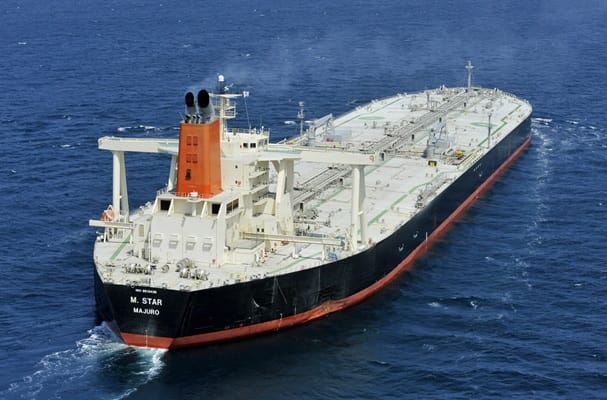
“Oil surging back to $100 a barrel shows that energy markets are reacting to a genuine geopolitical shock,” he stated. He emphasised that the Iranian attacks on tankers, ports, and infrastructure in the Gulf have significantly heightened concerns about disruptions to one of the world’s most critical oil pathways, the Strait of Hormuz. About one-fifth of the world’s oil supply typically passes through this strait, so even minor disruptions can have global repercussions.
“Even partial disruption to shipping through Hormuz has enormous consequences for markets,” Green noted. He explained that energy traders respond quickly to risks, stating, “Every strike on infrastructure, every tanker attack, every threat to shipping feeds directly into oil prices.” Since the conflict began, Brent crude prices have risen over 30%, reflecting the increasing risk premium associated with Middle Eastern oil supplies.
While the energy situation would be unsettling enough, investors are also grappling with renewed uncertainties in global trade. The Trump administration has begun investigations into 16 major trading partners to establish a new tariff framework following a Supreme Court ruling deeming earlier reciprocal tariffs unlawful. Countries under investigation include China, the European Union, Mexico, Japan, India, South Korea, Switzerland, and Norway, among others.
Mr. Green remarked that the scope of these investigations indicates a new escalation in global trade disputes. Washington has opened another broad front across global trade,” he said. He stressed that investigations targeting major economies signal that tariff disputes are once again becoming a central focus of economic policy. Temporary tariffs have already been put in place as these investigations proceed, with officials seeking to develop a long-term tariff framework.
According to Mr. Green, the combination of energy volatility and trade tensions creates an especially challenging environment for investors. “Energy volatility drives inflation pressure and increases production costs across the global economy,” he stated. “Trade conflicts disrupt supply chains, investment flows, and international commerce. Experiencing both forces simultaneously creates a much more complex risk environment.”
Global equities have already reacted cautiously as investors assess the potential impact on growth, inflation, and corporate profitability. Mr. Green explained, “Rising oil prices place immediate pressure on transportation, manufacturing, and logistics costs.” The effects of expanding tariff disputes only add to this complexity, leading companies to face heightened uncertainty regarding supply chains, pricing strategies, and demand.
Businesses with international supply chains could experience particularly difficult decisions if tariffs are implemented while energy costs continue to rise. “Corporate decision-making becomes significantly more complicated,” he noted. Energy shocks influence operating costs, while trade tensions reshape supply chains. Many multinational firms could encounter both pressures at once.”
In conclusion, Mr. Green argued that investors are now facing two powerful global forces concurrently. “Energy instability alone can unsettle markets. Trade disputes alone can weaken growth expectations,” he said. “Together, they create exactly the kind of double whammy that investors are confronting right now.”
[ad_2]
Source link


