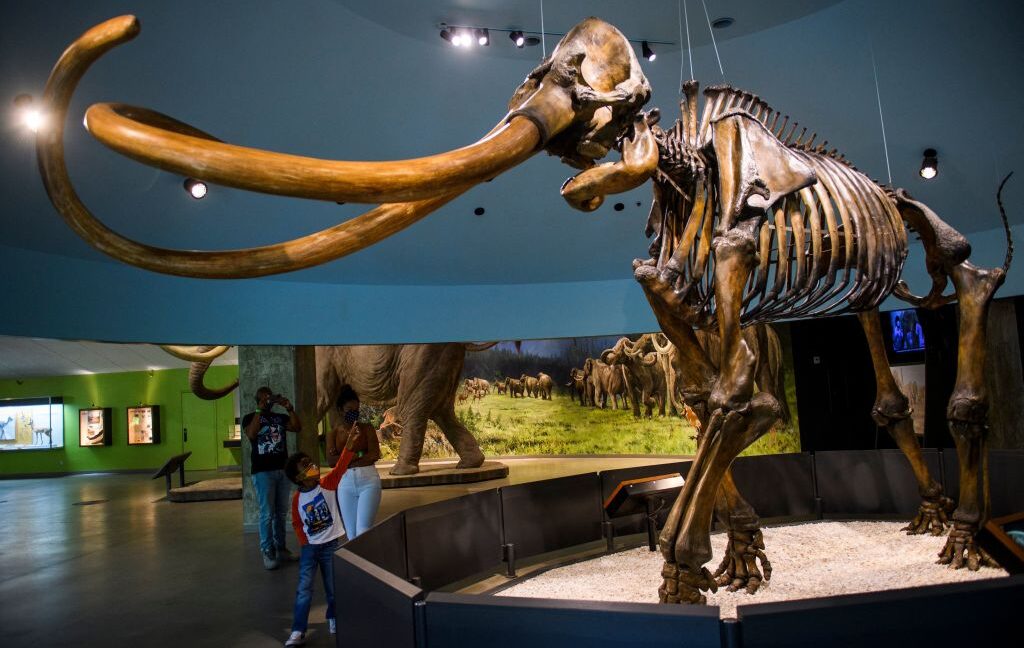
This led a Mexican-European research collaboration to get interested in finding DNA from elsewhere in the Columbian mammoth’s range, which extended down into Central America. The researchers focused on the Basin of Mexico, which is well south of where any woolly mammoths were likely to be found. While the warmer terrain generally tends to degrade DNA more quickly, the team had a couple of things working in its favor. To begin with, there were a lot of bones. The Basin of Mexico has been heavily built up over the centuries, and a lot of mammoth remains have been discovered, including over 100 individuals during the construction of Mexico City’s international airport.
In addition, the team focused entirely on the mitochondrial genome. In contrast to the two sets of chromosomes in each cell, a typical cell might have hundreds of mitochondria, each of which could have dozens of copies of its genome. So, while the much smaller mitochondria don’t provide as much detail about ancestry, they’re at least likely to survive at high enough levels to provide something to work with.
And indeed they did. Altogether, the researchers obtained 61 new mitochondrial genomes from the mammoths of Mexico from the 83 samples they tested. Of these, 28 were considered high enough quality to perform an analysis.
Off on their own
By building a family tree using this genetic data, along with that from other Colombian and woolly mammoth samples, the researchers could potentially determine how different populations were related. And one thing became very clear almost immediately: They were in a very weird location on that tree.
To begin with, all of them clustered together in a single block, although there were three distinct groupings within that block. But the placement of that block within the larger family tree was notably strange. To begin with, there were woolly mammoths on either side of it, suggesting the lineage was an offshoot of woolly mammoths. That would make sense if all Columbian mammoths clustered together with the Mexican ones. But they don’t. Some Columbian mammoths from much further north are actually more closely related to woolly mammoths than they are to the Mexican mammoths.


