The government has paused plans to hand over the Chagos Islands to Mauritius, highlighting a shift in the territorial dispute amid rising international and political uncertainty surrounding the proposed agreement.
The move comes after political figures, including Nigel Farage, suggested that the Maldives could seek a territorial claim to the strategic atoll.
The pause follows a reported reversal of previous US support for the transfer, which could significantly alter the international momentum behind the proposal.
The deal will see the British government cede territory to Mauritius and will pay around £101 million a year to lease back the joint UK-US military base of Diego Garcia.
Donald Trump is said to have changed Washington’s stance on the arrangement, weakening international momentum behind the proposal.
Earlier diplomatic discussions had assumed continued US backing, which maintains strategic interests in the Indian Ocean region.
Foreign Office Minister Hamish Falconer told MPs that following interventions from the US, “we are now discussing those concerns with the United States directly.
He said that the US expressed support for the treaty between the UK and Mauritius last year when it was signed, “There clearly has been a statement from the president of the United States more recently, which is very significant.
He added: “We have a process going through parliament in relation to the treaty.
We will bring that back to parliament at the appropriate time. We are pausing for discussions with our American counterparts.”
Farage gave an emergency question to the Commons, the Reform UK leader told MPs, “I wish to inform the government that we are just a few days away, in my opinion, from the Maldives issuing a counterclaim to the International Court of Justice to say if anybody has the right to the sovereignty of those islands, it is the Maldives and not Mauritius.
I would urge you to pause all of this.
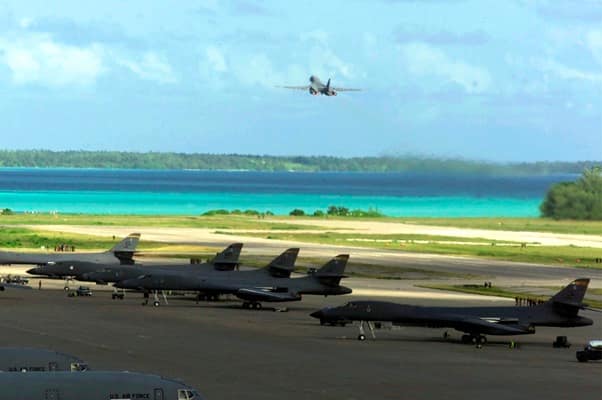
The Chagos Islands host one of the world’s most sensitive military installations at Diego Garcia, a key asset for British and American defence forces, underscoring its strategic importance.
Security analysts say control of the territory is significant for Indian Ocean naval surveillance, global maritime supply monitoring, and long-range military logistics.
International law experts note that competing sovereignty claims are not uncommon in post-colonial territorial disputes. That final resolution would likely require either a bilateral agreement or a judicial determination.


