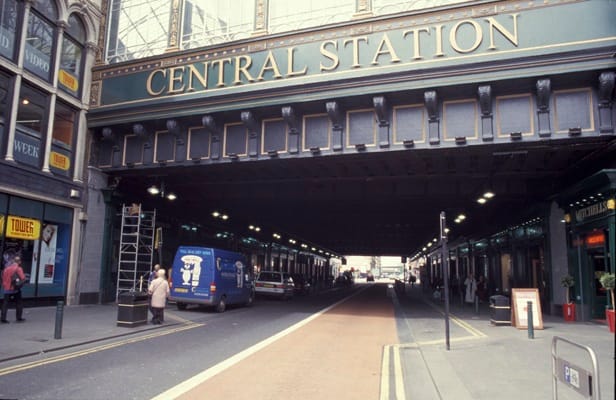
A major fire in the heart of Glasgow has left a historic building destroyed, disrupted travel across Scotland’s busiest rail hub and raised renewed questions about safety in densely packed urban areas. Emergency crews spent hours battling the blaze after flames broke out in a retail unit on Union Street, sending thick smoke into the skyline and forcing the closure of nearby streets and transport links.
The incident unfolded on the afternoon of 8 March when emergency services were alerted to a fire inside a shop located beside Glasgow Central Station. Witnesses reported hearing a loud explosion before flames began rapidly spreading through the lower floors of the building. Within minutes, the blaze had intensified, threatening surrounding businesses and historic structures in one of the city’s busiest districts.
Authorities quickly mobilised a large response, deploying dozens of fire engines and specialist units to the scene. Firefighters worked through the evening and into the night in an effort to prevent the fire from spreading further into neighbouring buildings and the adjoining railway station. Despite the scale of the blaze, emergency services confirmed that no injuries were reported, though several businesses suffered significant damage.
Fire breaks out near Glasgow Central Station
The fire began in a ground-floor retail premises in the Union Corner building, a structure dating back to the nineteenth century and closely connected to Glasgow Central Station. Within a short time, flames had engulfed multiple floors, causing parts of the building to collapse and sending debris across nearby streets.
At the height of the emergency, more than 200 firefighters were involved in the response as crews attempted to control the rapidly spreading flames. Specialist equipment, including high-reach fire appliances and water pumps drawing from the River Clyde, was used to bring the situation under control.
Authorities said the intensity of the blaze surprised even experienced responders, with the fire spreading quickly through the structure. Senior fire officers later emphasised that their priority was to prevent the inferno from reaching nearby historic buildings and the main railway station.
Transport disruption across the city
The location of the fire created major disruption for commuters and travellers. Glasgow Central Station, the busiest railway station in Scotland, was closed as a precaution while emergency services tackled the flames nearby. Rail operators suspended services and diverted trains across the network, leaving thousands of passengers facing delays and cancellations.
Local authorities also cordoned off large sections of the surrounding streets, affecting buses, taxis and pedestrians in the city centre. Businesses in neighbouring buildings were evacuated while smoke spread across the area.
For many commuters, the disruption continued into the following days as engineers assessed potential structural damage and cleared debris from the scene.
Community shock as landmark structure collapses
As the fire raged, residents and workers in the area watched as parts of the historic building collapsed under the intensity of the flames. The structure, originally built in 1851, had stood for more than a century and formed a familiar part of Glasgow’s urban landscape.
Local business owners described scenes of chaos as flames tore through the building. Some said they had only minutes to leave their premises before thick smoke filled the streets. Several small enterprises located within the building lost their premises entirely, including salons, cafés and retail stores.
The event has had a significant emotional impact on the community, with many residents expressing sadness at the loss of another historic structure in the city centre.
Urban retail and safety concerns
Incidents such as this highlight the complex safety challenges faced by retailers operating in busy city locations. Many urban buildings house multiple businesses within older structures that were not originally designed for modern retail use.
In recent years, the retail landscape has also evolved rapidly as specialist stores and new consumer products have become more widely available. Shops offering electronic devices, accessories and alternative lifestyle products have appeared across high streets throughout the UK.
For many adult consumers exploring alternatives to traditional tobacco products, specialist equipment such as refillable vape kits has become increasingly common in retail outlets and online stores. The growth of this market has brought both opportunities and responsibilities for businesses operating in city environments, particularly when it comes to storage, electrical safety and fire prevention.
Safety experts note that devices powered by lithium-ion batteries require careful handling and appropriate storage conditions. When incidents occur, investigations often examine whether faulty batteries, charging equipment or other factors played a role in the initial ignition.
Investigations underway
Authorities have launched an investigation into the cause of the Glasgow fire. While early reports suggested that an explosion occurred inside the premises before the blaze spread, officials have not yet confirmed the exact sequence of events.
Investigators are expected to examine electrical systems, battery-powered devices and other potential sources of ignition. Fire officers will also review building safety measures, including whether existing fire breaks and containment systems helped prevent the blaze from spreading further.
Early assessments suggest that firefighters succeeded in preventing the flames from reaching the adjacent Central Station and nearby hotel complex, which could have led to even greater damage.
Firefighters praised for rapid response
Government officials and local leaders have praised the efforts of emergency services, noting that the rapid response helped protect nearby buildings and infrastructure.
Fire crews worked under difficult conditions as flames tore through the structure and parts of the building began collapsing. Their efforts helped prevent the fire from spreading into neighbouring properties and the main station concourse.
Witnesses described dramatic scenes as firefighters used extended ladders and powerful water jets to tackle the blaze from multiple directions.
The Scottish Fire and Rescue Service has since confirmed that crews remained at the scene for an extended period to ensure the fire was fully extinguished and that surrounding buildings were safe.
Impact on local businesses
For many business owners operating near Union Street, the fire has been devastating. Several enterprises located in the affected building have lost their premises and equipment, leaving owners facing significant financial challenges.
Some business owners have begun fundraising campaigns and community appeals as they look to rebuild after the disaster. Local residents have also offered support, highlighting the strong sense of community in the area.
City officials are now working with property owners and insurers to assess the full scale of the damage and determine whether parts of the building can be preserved or must be demolished.
Wider lessons for urban safety
Major fires in city centres often trigger broader discussions about safety regulations and building standards. Historic structures, while architecturally significant, can pose unique challenges when they house modern businesses using electrical equipment and specialised products.
Urban planners and safety regulators may now review guidelines related to building use, fire prevention systems and storage of electronic devices within densely populated commercial areas.
Experts say the incident serves as a reminder of how quickly fires can escalate in older buildings and how essential early detection and rapid emergency response are in preventing widespread destruction.
City begins recovery
In the days following the blaze, Glasgow officials began assessing the long-term impact on the city centre. Engineers and safety inspectors continue to evaluate nearby structures to ensure they remain stable and safe for the public.
Transport services are gradually returning to normal, though disruption may continue while repairs and inspections take place around the station area.
For many residents, the fire marks the loss of a familiar piece of Glasgow’s architectural history. Yet the rapid mobilisation of emergency services and the resilience shown by the community have also highlighted the city’s ability to respond in times of crisis.
As investigations continue and recovery efforts begin, the focus now turns to rebuilding businesses, restoring infrastructure and ensuring that lessons learned from the incident help improve safety standards across urban retail spaces in the future.


