[ad_1]
Britain’s ability to project military power overseas is under intense scrutiny as the Royal Navy prepares to deploy one of its few advanced air-defence destroyers to the eastern Mediterranean.
Defence sources say the fleet is operating under significant pressure, with critics warning that the service is being pushed close to the limits of its high-end warfighting capability.
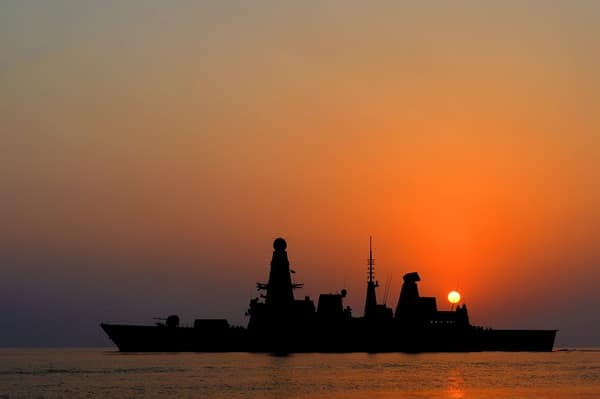
The planned departure of HMS Dragon (D36) from Portsmouth highlights growing concerns about Britain’s ability to sustain global deployments during simultaneous crises.
The Type 45 destroyer, one of only a small number in service, is currently the UK’s primary naval platform capable of intercepting ballistic missiles. The class is equipped with the PAAMS air defence system and advanced multi-target radar tracking technology.
Military analysts warn that the Royal Navy’s limited number of high-end air defence ships means the service has little redundancy if multiple regions require protection simultaneously.
The deployment follows a drone attack on RAF Akrotiri in Cyprus, which is a key British overseas military facility.
Prime Minister Keir Starmer has authorised the reinforcement of Mediterranean defences as tensions escalate between Iran and Western coalition forces led by the United States and Israel.
However, defence insiders acknowledge that assembling escort groups and maintaining readiness across the fleet is becoming increasingly challenging.
Some commentators argue that years of procurement delays, maintenance backlogs and limited platform numbers have left Britain’s surface navy vulnerable to operational overstretch.
The journey to the eastern Mediterranean is expected to take several days once HMS Dragon sets sail, further illustrating the logistical constraints of rapid-response maritime deployments.
[ad_2]
Source link


