[ad_1]
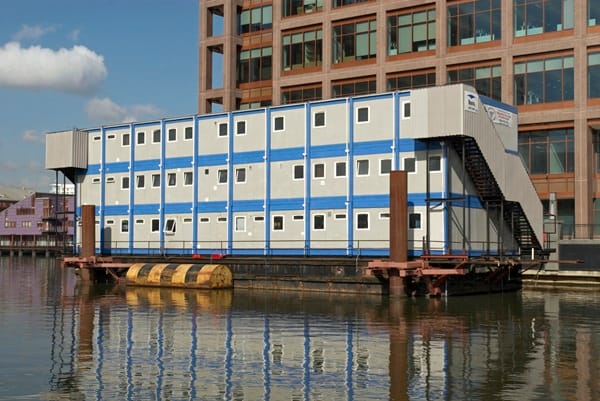
Economic uncertainty often forces businesses to rethink their strategies. When traditional growth methods are not feasible, companies must look for innovative solutions to maintain momentum. Temporary infrastructure offers a practical approach, allowing businesses to adapt quickly to changing circumstances. These structures provide flexibility, reduce overhead costs, and enable companies to seize opportunities without the long-term commitments associated with permanent facilities.
One of the key advantages of temporary infrastructure is its ability to scale operations up or down depending on demand. During economic downturns, businesses can quickly downsize to reduce expenses. Conversely, when opportunities arise, temporary structures can be expanded or modified to meet increased demand. This adaptability is crucial in navigating economic fluctuations, allowing businesses to remain competitive and responsive to market changes.
Flexibility in operations
Temporary infrastructure provides unmatched flexibility in business operations. Unlike permanent buildings, which require significant investment and time to modify, temporary structures can be set up, adjusted, or relocated as needed. This flexibility is particularly beneficial in sectors like manufacturing, retail, and logistics, where operational demands can shift rapidly.
For example, a retail business experiencing a seasonal spike in demand can quickly erect a temporary structure to serve as additional warehouse space. This approach prevents stock shortages without the need for long-term investments. Similarly, manufacturers can use temporary facilities to test new production lines or processes without disrupting existing operations.
This level of operational agility is a significant advantage, particularly during uncertain economic times. By opting for temporary infrastructure, businesses can better manage resources, avoid unnecessary expenditures, and respond swiftly to market demands.
Quick deployment and reduced lead times
In an uncertain economy, speed is often of the essence. The ability to respond quickly to changing market conditions can make the difference between capitalising on an opportunity or missing it entirely. Temporary infrastructure can be deployed rapidly, with lead times significantly shorter than those required for permanent construction.
For instance, in the event of a sudden increase in demand for a product, a company may need additional production or storage space immediately. Temporary structure hire from places such as Lauralu provides an ideal solution, enabling businesses to set up the necessary facilities in a fraction of the time it would take to build a permanent structure. This rapid deployment ensures that businesses can act swiftly to meet demand, without the delays and costs associated with traditional construction.
Additionally, the shorter lead times associated with temporary structures mean that businesses can be more agile in their planning and execution. This agility is crucial in an unpredictable economic environment, where opportunities and challenges can arise unexpectedly.
Cost efficiency and financial prudence
Cost efficiency is another compelling reason for businesses to consider temporary infrastructure. The financial commitment required for permanent buildings can be substantial, encompassing not only construction costs but also ongoing maintenance and operational expenses. In contrast, temporary structures require a much lower initial investment, freeing up capital for other critical areas of the business.
Moreover, the maintenance costs associated with temporary buildings are generally lower than those of permanent facilities. Since these structures are often used for specific, short-term purposes, they do not require the same level of upkeep as permanent buildings. This reduction in overhead costs can significantly improve a company’s financial resilience during periods of economic uncertainty.
Temporary structures also offer the benefit of avoiding property taxes and other expenses tied to permanent real estate. This financial prudence allows businesses to allocate resources more efficiently, ensuring they can maintain liquidity and invest in growth opportunities when they arise.
[ad_2]
Source link


