[ad_1]

Derek Malcolm / Tech Reader
We set up and tear down a lot of home theater and audio/video gear on a daily basis — everything from speakers and subwoofers to amplifiers, receivers, turntables, and everything in-between. And one thing that gets old really fast is cutting, stripping, and winding raw speaker wire. It’s messy, it makes connecting and disconnecting components a chore, and it can leave exposed wire hanging off the back of your speaker or receiver terminals that can result in unwanted noise or poor performance.
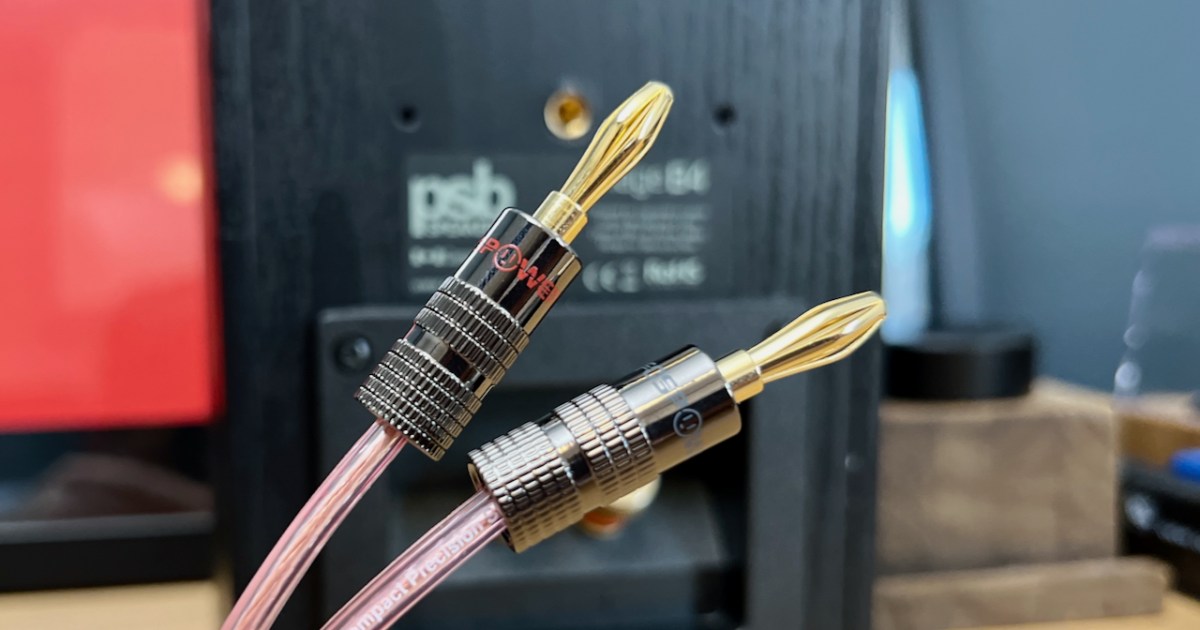
One of the best things you can do to improve your speaker wire situation is to install banana plugs that can be plugged right into compatible speaker or receiver/amplifier terminals, similar to RCA plugs. It’s cheap to do, and they look clean, provide a secure connection, and make connecting and disconnecting your components really easy.
Here’s how to install banana plugs on raw speaker wire.

Derek Malcolm / Tech Reader
Grab a pack of banana plugs
There are a few different types of banana plugs you can find at your local Best Buy, audio shop, or on Amazon, but they’re pretty much the same as far as installing them goes. For our purposes, we’re going to go with the style of banana plugs that you don’t have to solder and that have a small screw that you tighten.
You can find banana plugs with various fastener types and every style from right-angle connectors to ones with dual tips and more. It’s up to you what works best.

Derek Malcolm / Tech Reader
Prepare your speaker wire
After you’ve cut your speaker wire to the length you need, here’s how to prep the ends for the banana plugs.
Step 1: Depending on the speaker wire you’re using, there may be an outer jacket that conceals two separate wires inside, one red and one black. If this is the case, using your wire strippers, carefully strip back around 2 inches of that outer jacket to expose and separate the two wires.
Different types of speaker wire, like the wire we’re using, comes joined together. Use an exacto knife to separate the two wires. They may or may not be color-coded.
Step 2: With your wires separated, use the wire strippers to strip roughly a half-inch of each wire’s insulation from the ends to expose the raw wire. Be careful not to cut or damage any of the wire’s strands.

Derek Malcolm / Tech Reader
Connect the wires to the banana plugs
With the wires exposed, you can now connect them to the banana plugs.
Step 1: First, you may have to prepare the banana plugs to accept the raw wire. In our example, you have to unscrew and separate the outer shell of the plug’s housing from the internal stem. Also make sure to loosen the screws that will hold the wire in place.

Derek Malcolm / Tech Reader
Step 2: Next, insert the raw end of wire into the banana plug’s core and tighten the screws to secure. Do this for both the black and red plugs and then do the same for the other end of the wire, if installing on both ends.

Derek Malcolm / Tech Reader
Step 3: Put the outer casing of the plug back on and screw it tight. That’s it, you’re done.

Derek Malcolm / Tech Reader
Connecting banana plugs to amps and speakers
This is the easy part. Most speakers and receivers/amplifiers will have speaker terminals that have a hole in the middle for inserting banana plugs. Some have little plastic covers over the holes that you just have to remove first. Make sure to save them in a ziploc bag or a container for safe keeping.
Similar to plugging in an RCA cable, all you have to do is plug and play!
Note: Keep in mind, though, that banana plugs will not work with those spring clips found on many speakers and receivers/amplifiers.
With banana plugs installed on all your speaker wires, connecting and disconnecting your components will not only be much easier — especially for those of you with components tucked away in a media unit that you have to pull in and out or crawl under to access — but the electrical connection will be much stronger and more stable than messy raw wire. Plus, it couldn’t be easier to do.
[ad_2]
Source link


