Intel’s 14th-generation desktop processors were a mild update on top of a mild update: a barely faster revision of the 13th-gen Core CPUs, which were themselves a modest tweak to 2021’s 12th-gen Core processors. The new Core Ultra CPUs (and their underlying architectural changes) were exclusive to laptops.
Today, that changes: The Core Ultra 200S processors (codenamed Arrow Lake) will bring to desktops many of the changes Intel has made to its Core Ultra 100- and 200-series laptop CPUs (Meteor Lake and Lunar Lake, respectively). Changes include a new chiplet-based design, new manufacturing technologies, updated CPU and GPU architectures, and a neural processing unit (NPU) for accelerating some AI and machine learning workloads.
All of the new processors launch on October 24th.
As with the Lunar Lake-based laptop chips, Intel has said that power efficiency is a big focus for Arrow Lake—a welcome change after seeing how much power the 13th- and 14th-generation CPUs could consume when they were allowed. But also as with the laptop processors, the Core Ultra desktop CPUs aren’t always a straightforward performance upgrade from their predecessors—they’re usually faster, but how much faster depends a lot on what you’re asking them to do, at least according to the Intel-provided performance figures.
Meet Arrow Lake
Intel
Pricing remains broadly similar to the 14th-generation CPUs when they launched (it’s generally down a few dollars, if anything).
Intel
Intel
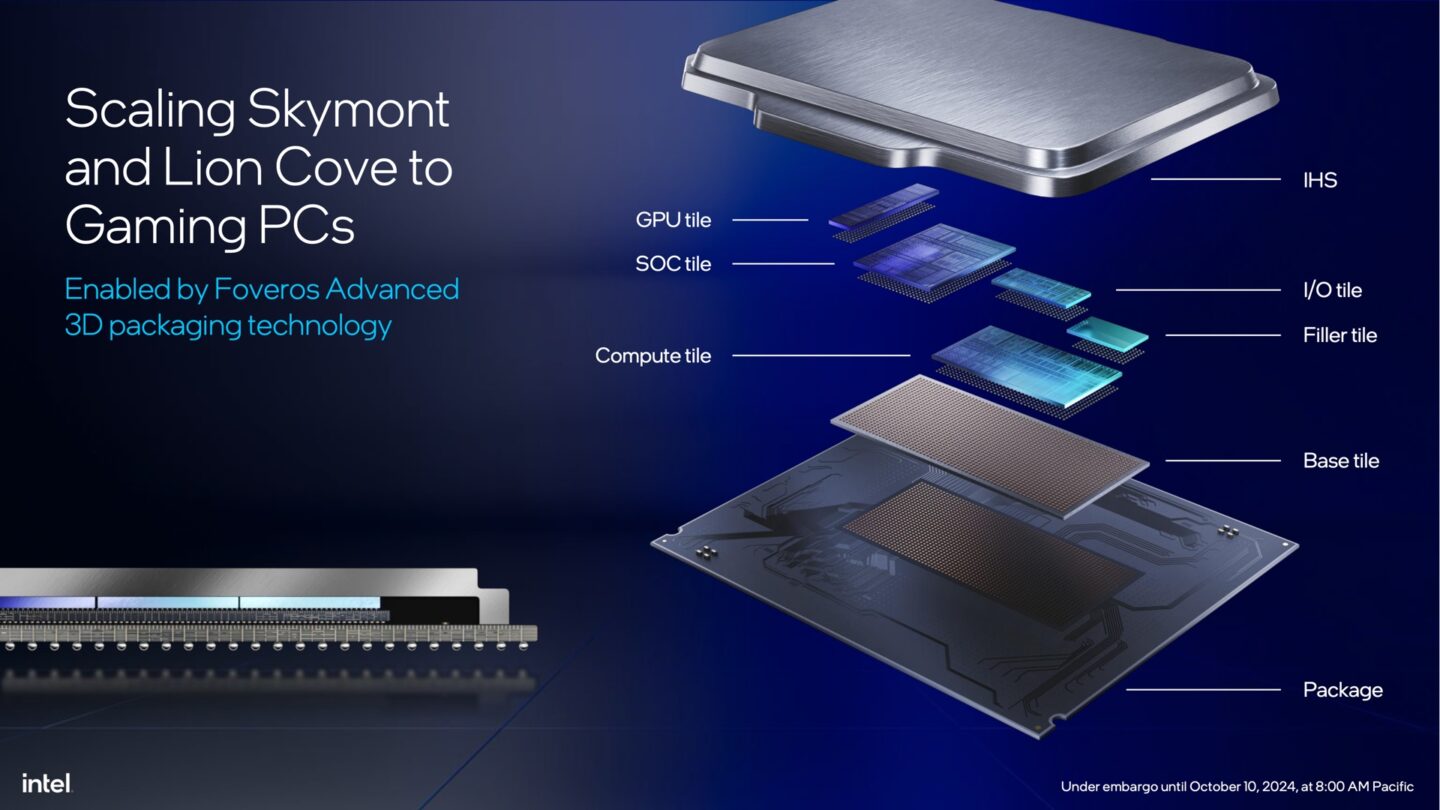
Arrow Lake brings Intel’s chiplet-based CPU designs to desktops for the first time.
Intel
Intel
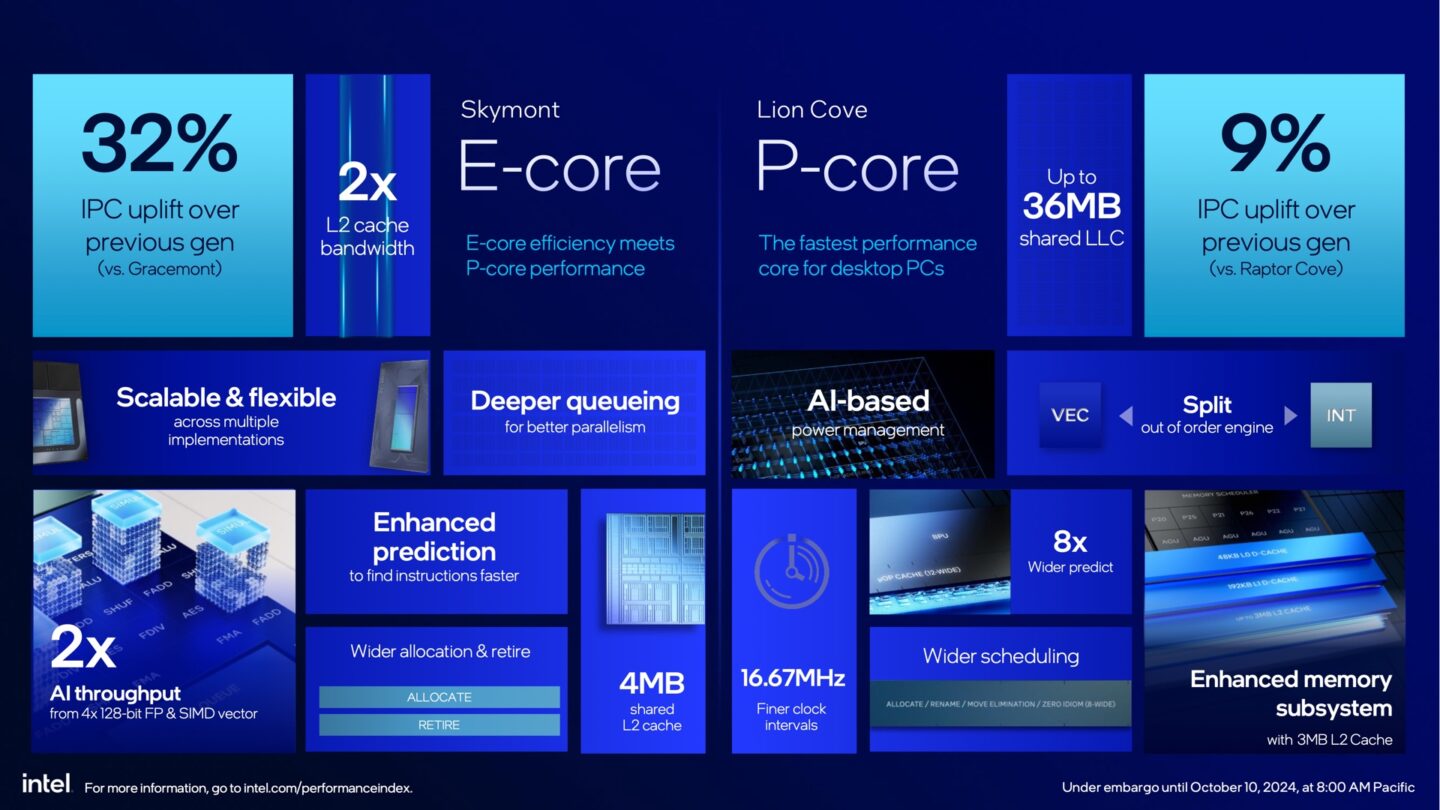
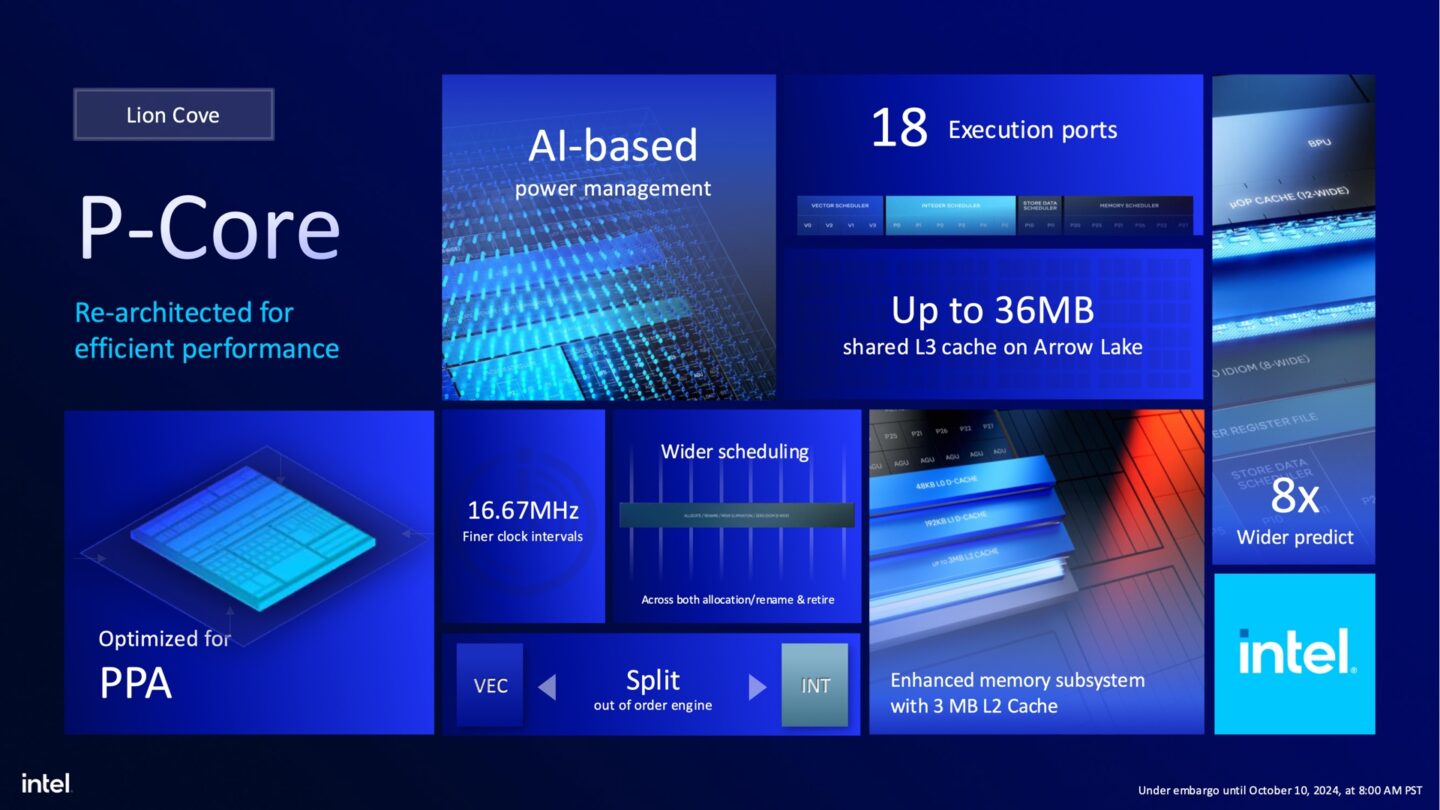
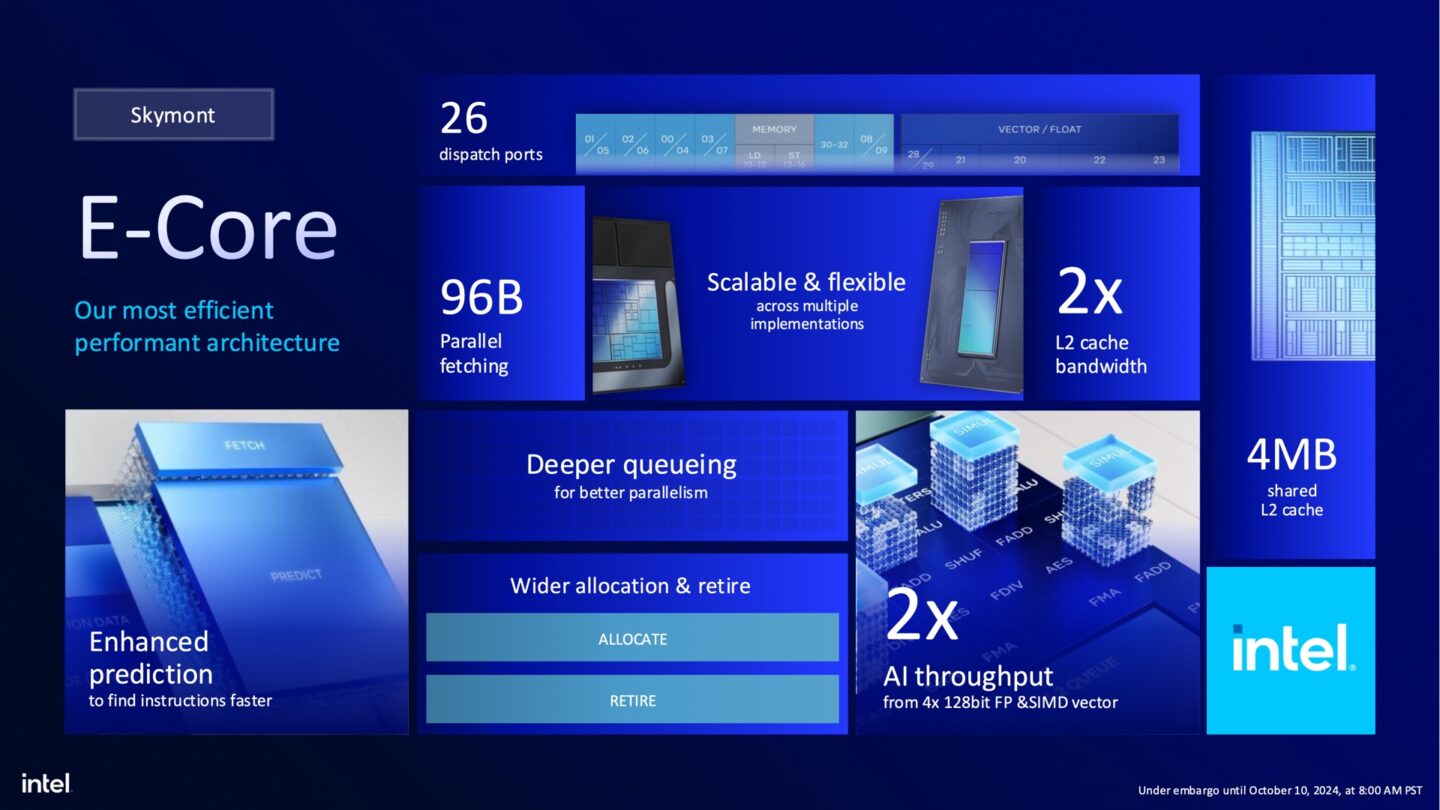
An Arrow Lake P-core and E-core overview.
Intel
Arrow Lake brings Intel’s chiplet-based CPU designs to desktops for the first time.
Intel
An Arrow Lake P-core and E-core overview.
Intel
Intel
Intel
The big under-the-hood change to Arrow Lake is that it shifts to a chiplet-based design, where multiple silicon dies are bound together using Intel’s Foveros packaging technology. Foveros uses an Intel-manufactured “base tile” as an interconnect, allowing for communication between four TSMC-manufactured tiles: a compute tile for the CPU cores; a GPU tile for the graphics cores; an SoC tile that includes the NPU, video encoding and decoding blocks, and display outputs; and an I/O tile that mainly handles the DDR5 memory controller (Core Ultra 200S no longer supports DDR4, following AMD’s lead).
Like the Lunar Lake laptop chips, Arrow Lake will be an Intel-designed processor where most of the silicon won’t actually be made in Intel’s factories, aside from the base tile. The compute tile is manufactured on a 3 nm TSMC process, the GPU is a 5 nm TSMC process, and both the SoC and I/O tiles use a 6 nm process.


