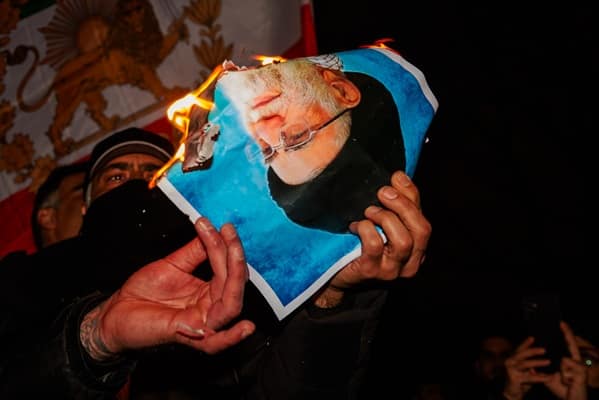
The Islamic Republic of Iran has officially confirmed the death of Supreme Leader Ali Khamenei.
This announcement comes just hours after earlier reports suggested that the 86-year-old cleric was “safe and sound.”
The sudden shift in information has raised many questions among both the Iranian populace and the international community.
According to Iranian state television, Khamenei was killed during an incident that took place at his office on Saturday morning.
The Iranian state media outlet IRINN broadcast images of the late leader, showing him reciting verses from the Qur’an while positioned beneath a black mourning banner, symbolising the national grief following his death.
In light of this significant loss, Iranian authorities have declared 40 days of national mourning. This mourning is expected to be observed across the country, with various public gatherings and memorials likely to take place in honour of Khamenei.
Iranian state TV, said he “was carrying out his assigned duties and was present at his workplace (his office)” when he was killed.
Iran’s Revolutionary Guards said in a statement, “We have lost a great leader and we are mourning him, a leader who was unique in in terms of purity of spirit, strength of faith, resourcefulness in affairs, courage in the face of the arrogant, and jihad in the path of God.”
A presenter on state television conveyed a statement issued by the Supreme National Security Council of Iran, which confirmed Khamenei’s passing and characterised it as a form of “martyrdom.” The statement went further to accuse Israel and the United States of orchestrating the attack that led to his death, claiming that this event signifies the onset of an “uprising against the oppressors” of Iran.
President Donald Trump said: “Khamenei, one of the most evil people in history, is dead.
This is not only justice for the people of Iran, but for all great Americans, and those people from many countries throughout the world, that have been killed or mutilated by Khamenei and his gang of bloodthirsty thugs.
He added: “We are hearing that many of their IRGC, military, and other security and police forces, no longer want to fight, and are looking for immunity from us.”
As of now, the Supreme National Security Council has not announced a successor for Khamenei. Under Iran’s constitutional framework, the responsibility of selecting a new Supreme Leader falls to the Assembly of Experts. This body consists of clerics elected by the Iranian population, but it has not provided any specific timeline for the succession process.
Khamenei has led the country as the Supreme Leader since 1989. During that time, he has played a pivotal role in shaping Iran’s political framework, regional strategies, and nuclear policy, influencing the nation’s direction for more than three decades.
The timing of Khamenei’s death coincides with escalating military tensions between Iran and its various adversaries, heightening concerns about instability within the nation and broader ramifications across the Middle East. Analysts have indicated that the succession process could be critical in determining Iran’s immediate political path and its strategies in response to ongoing conflicts with regional powers and international adversaries. Speculations abound regarding how his death may impact Iran’s internal political dynamics and its relationships with other nations, further complicating an already volatile geopolitical landscape.


