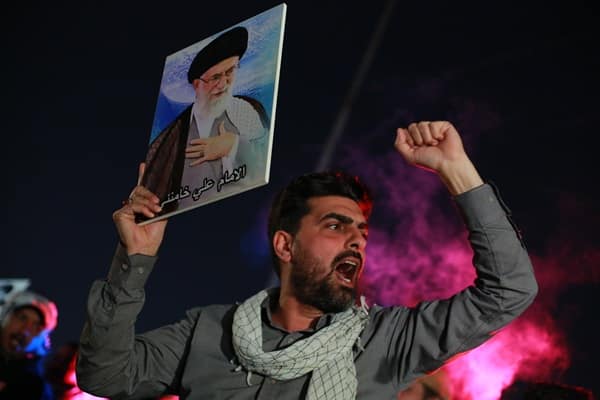
In a dramatic escalation of tensions, Iran has declared its intention to exact revenge on former President Donald Trump following the assassination of Ali Khamenei, the Supreme Leader of Iran.
This high-profile killing occurred as a result of coordinated military strikes conducted by the United States and Israel, triggering immediate outcry and condemnation from the Iranian leadership.
Iranian President Masoud Pezeshkian addressed the nation, characterising Khamenei’s assassination as “an open war against Muslims, especially Shiites, in all corners of the world.”
He emphasised that the Iranian government views retaliation as not only justified but as a moral obligation, stating, “The Islamic Republic of Iran considers bloodshed and revenge against the perpetrators and commanders of this crime to be its legitimate duty and right, and it will fulfil this great responsibility with all its might.”
The death of Khamenei was officially confirmed by Iranian state television and the Islamic Republic News Agency early on Sunday morning. In a tense and provocative announcement made during a live broadcast, a presenter asserted that “Trump will pay a price that no American president in history has ever paid.
Revenge is on the way,” signalling Iran’s commitment to respond vigorously to what they perceive as an act of aggression.
In response to the assassination, President Trump remarked that this development provides the Iranian people with their “greatest chance” to reclaim control of their country from its current leadership, suggesting that the regime’s internal stability could be undermined as a result.
The implications of Khamenei’s assassination have sparked strong international reactions. Russian President Vladimir Putin condemned the act, calling it “a cynical violation of all norms of human morality and international law,” highlighting the seriousness with which the global community views the attack on a state leader.
Additionally, in a statement made during a phone call with Russian Foreign Minister Sergey Lavrov, China’s Foreign Minister Wang Yi condemned the “blatant killing of the leader of a sovereign state” and characterized the incitement of regime change as “unacceptable.”
China’s official news agency reported that Beijing views such actions as violations of international law and the fundamental norms that govern interstate relations, emphasising the need for respect for sovereignty and stability within the region.
With Khamenei’s death, tensions within Iran are expected to rise, leading to further political uncertainty. Analysts warn that the potential for regional conflict has heightened, as the Iranian government navigates internal divisions and pressures. The response from Tehran could take various forms—whether military engagements, cyber operations, or unconventional tactics—as officials weigh their next steps in a rapidly evolving geopolitical landscape. Observers believe that decisions by the Iranian leadership in the coming days will play a crucial role in shaping the trajectory of the ongoing crisis and could spark broader confrontations across the Middle East and beyond.


