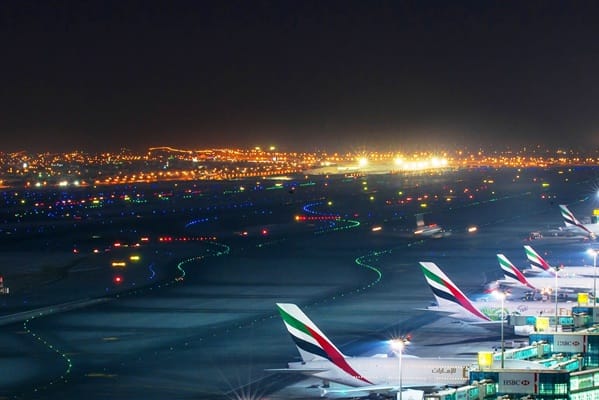
A new wave of Iranian airstrikes struck Dubai International Airport, generating significant plumes of smoke that billowed from the facility.
This attack signals a continuation of aerial bombardments that began over the weekend, marking two consecutive days of hostilities in the Gulf emirate, a crucial hub for international travel and commerce.
The sound of explosions resonated throughout Dubai, a major global transport nexus linking Asia and Europe.
The city is notably home to around 240,000 UK nationals, making the safety of its air and sea transport systems particularly critical.
The escalation in conflict follows a series of joint military operations conducted by the United States and Israel that resulted in the death of Iranian leader Ali Khamenei. In response, Iranian officials have characterised their military campaign as their “most intense offensive operation in history,” indicating an unprecedented level of aggression.
The Foreign Office is strongly urging Brits in the United Arab Emirates to “immediately shelter in place.
“Remain indoors in a secure location, avoid all travel and follow instructions from the local authorities,” the government insists.
According to reports from the United Arab Emirates government, Iranian military forces launched a total of 137 missiles and 209 drones toward various locations within the UAE, with the vast majority of these projectiles successfully intercepted by advanced air defence systems before reaching their intended targets.
However, Dubai International Airport sustained some minor damage to one of its concourses, and four airport staff members were reported to have sustained injuries as a result of the attack.
In a separate incident in Abu Dhabi, local authorities reported that one individual lost their life and seven others were injured at Zayed International Airport amid the ongoing strikes. Several high-profile landmarks and facilities have been affected.
For instance, explosions were recorded near the luxury hotels on Palm Jumeirah, leading to injuries from a resultant building fire.
At the iconic Burj Al Arab, debris from intercepted drones ignited a fire at the base of the structure, though fortunately, there were no casualties reported. Additionally, a fire erupted at the Port of Jebel Ali after debris fell and struck the facility, prompting emergency response teams to act swiftly.
The economic implications of these attacks are substantial, as Dubai’s airport and seaport are responsible for approximately 60% of the emirate’s total revenue. This economic significance has prompted airlines to take immediate action.
Major airlines, including British Airways, announced the cancellation of their UK–Dubai and UK–Abu Dhabi flights until at least early March. Emirates Airlines has also temporarily suspended certain services, and Etihad Airways has halted all departures from Abu Dhabi.
The disruptions have led to cascading effects at airports across the United Kingdom, with Heathrow, Gatwick, and Manchester reporting numerous cancellations and delays as carriers are forced to avoid the closed Gulf airspace.
Given that Dubai houses one of the largest foreign expatriate communities in the region, where approximately 90% of its residents are not Emirati nationals, the international business implications are profound. Over 5,000 British companies are actively operating across the Emirates.
In an interview, one British expatriate described witnessing the interception of missiles and drones overhead during the weekend strikes, which underscores the immediate danger faced by residents and travellers alike.
Iranian authorities assert that their military campaign is a direct retaliation against strikes carried out by the United States and Israel, and they have vowed to continue their offensive operations.
As tensions remain high and the possibility of further attacks looms, local authorities are urging residents and travellers to stay up to date with official guidance. They caution that additional disruptions could ensue if hostilities continue to escalate. The situation is evolving rapidly, and all stakeholders are advised to exercise caution.


