[ad_1]
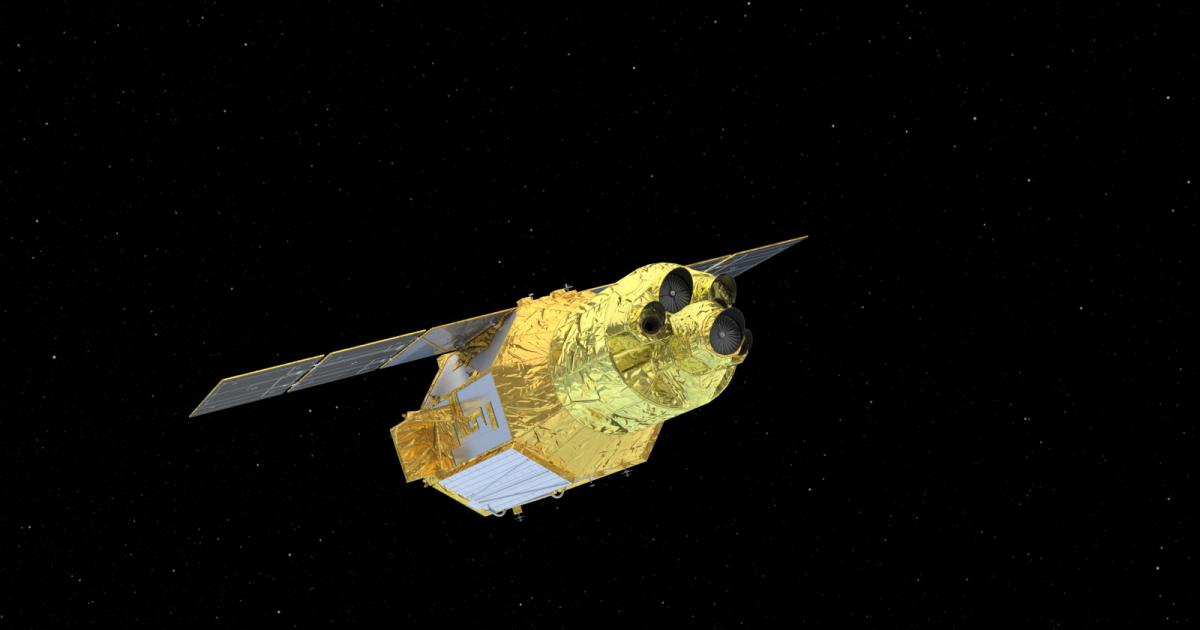
Japan’s space agency has launched a rocket on September 6 at 7:42 PM EDT carrying a telescope that’s more advanced than NASA’s Chandra and other X-ray observatories already in orbit. The X-Ray Imaging and Spectroscopy Mission — or XRISM but pronounced as “crism” — is a mission led by JAXA (Japan Aerospace Exploration Agency) in collaboration with NASA and with contributions by the European Space Agency. Lia Corrales, a University of Michigan astronomer and mission participant, told The New York Times that XRISM represents “the next step in X-ray observations.”
The telescope is considered more powerful than its predecessors because of its tools. One of them, called Resolve, is a microcalorimeter spectrometer with the capability to measure tiny increases in temperature when X-rays hit its 6-by-6-pixel detector. It must operate in an environment that’s a fraction of a degree above absolute zero, enabled by a multistage mechanical cooling process inside its refrigerator-sized container with liquid helium. But so long as it’s working, the tool can measure each individual X-ray energy and can provide information on its source’s composition, motion and physical state.
The Times says the mission team expects Resolve’s spectroscopic data to be 30 times sharper than what Chandra’s instruments can provide. It can detect X-rays with energies that range from 400 to 12,000 electron volts, which NASA says can give us the data needed to know more about the hottest regions, the largest structures and the objects with the strongest gravity pull in the universe. XRISM’s science operations won’t begin until January, though, since scientists still have to switch on its instruments and tune them in the next few months.
In addition to XRISM, the rocket also blasted off to space carrying the Smart Lander for Investigating Moon (SLIM) mission. The small-scale lander was nicknamed “Moon Sniper,” because it was designed to demonstrate that a pinpoint landing within 100 meters of a specific target is possible. Based on the latest information from JAXA, XRISM had already separated from its rocket and had already been inserted into orbit. Meanwhile, SLIM will keep traveling for months until it reaches the moon.
[ad_2]
Source link


