My brief absence over the past week has been for good reason, I’ve just completed a TCCC (Tactical Combat Casualty Care) Combat Lifesaver course here in Ukraine, sharpening skills built over more than 15 years in the military, skills that are valued, very real on today’s battlefield, and in the cities across Ukraine.
It’s the kind of training that quickly reminds you how fast things can deteriorate—unexpectedly and without warning—and how time, pressure, blood, and the decisions you make in those moments are what keep people alive.
I’ll be writing in more detail about that shortly, particularly around the role of volunteers in general, but while I’ve been focused on saving lives, others, it seems, have been busy playing politics with them.
(Back to basics. TCCC training in Ukraine — because out here, the right decision at the right time keeps people alive)
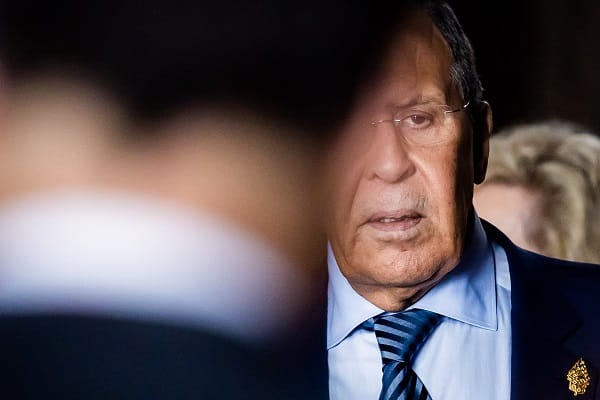
The release of transcripts and recordings of conversations between Péter Szijjártó, Hungary’s long-serving foreign minister and a close ally of Viktor Orbán, and Sergey Lavrov, Russia’s veteran diplomat and chief architect of the Kremlin’s foreign policy, has lifted the lid on something many in Europe have long suspected but rarely seen so clearly documented: Hungary is not simply maintaining diplomatic channels with Moscow, it is actively aligning its political posture with Russian interests.
“If you remove names and show these conversations to any case officer, he will swear that this is a transcript of an intelligence officer working his asset,” one senior European intelligence officer said after reviewing a printout of the conversations. pic.twitter.com/SiINrlMW9q
— Michael Weiss (@michaeldweiss) March 31, 2026
According to reporting by Radio Free Europe/Radio Liberty and investigative outlet VSquare, these conversations go well beyond routine diplomacy. The tone is cooperative, at times sympathetic, and critically framed in a way that appears to undermine the broader European position on Russia’s war against Ukraine. Rather than reinforcing EU unity or sanctions pressure, the discussions reflect a Hungarian leadership more concerned with positioning itself as an intermediary, or worse, a quiet enabler.
Kremlin Hotline: Hungary colluded with Russia to delist sanctioned oligarchs, companies and banks
This matters because, while soldiers on the frontline are dealing with tourniquets and trauma kits, European unity is being quietly eroded in backroom conversations by actors who are, at best, politically ambiguous and at worst, strategically compromised.
Hungary, under Viktor Orbán, has increasingly carved out a role as the outlier within both NATO and the EU. Blocking or delaying aid packages to Ukraine, including most recently vetoing a €90 billion EU financial support package, softening language around sanctions, and repeatedly signalling “fatigue” with the war, Budapest has walked a tightrope between formal alliance commitments and informal alignment with Moscow.
These tapes suggest that tightrope may no longer exist.
If Hungary is privately engaging with Russia in ways that contradict its public obligations, it creates a series of strategic problems for the West.
First, it undermines trust.
Alliances like NATO and the EU depend on shared intent as much as shared capability. If one member state is perceived to be coordinating positions with an adversary, it introduces doubt into every joint decision, Intelligence sharing becomes cautious, strategic planning becomes guarded & cohesion, something Russia has failed to break on the battlefield, becomes vulnerable politically.
Second, it weakens deterrence.
Russia’s strategy is not purely military, it is political, economic, and psychological. If Moscow can exploit fractures within Western institutions, it gains leverage without firing a shot. Hungary risks becoming exactly that pressure point.
Third, it damages credibility.
This is where the hypocrisy becomes impossible to ignore.
The Orbán government has openly welcomed support from Donald Trump and JD Vance, positioning itself as a defender of sovereignty and Western values.
But sovereignty cuts both ways.
You cannot claim to defend national sovereignty while quietly coordinating with a foreign power waging war on your neighbour. You cannot present yourself as a guardian of Western values while engaging in conversations that undermine them. And you certainly cannot claim moral clarity while operating in deliberate ambiguity.
When transcripts emerge, real conversations, not political spin, the narrative becomes harder to control.
That is precisely why the reaction from Budapest has been so sharp. Criticism of the leaks, attempts to discredit reporting, and claims of political targeting follow a familiar pattern, but they avoid the central issue: the content itself.
Because if these conversations are accurate, Hungary is not merely dissenting within the alliance, it is operating alongside its primary adversary.
For Ukraine, every delayed aid package, every diluted sanction, every political hesitation translates into time, and time, in this war, is measured in lives.
On the frontline, there is no ambiguity about who the aggressor is, especially in a week where the Bucha massacre is remembered, when Russian forces, retreating from the Kyiv region in 2022, left behind executed civilians, mass graves, and clear evidence of torture. There is no room for political balancing acts when drones are overhead and artillery is incoming. That contrast, clarity at the front, ambiguity in the rear, is becoming one of the defining features of this war, and it erodes morale quickly. Especially when it feels like nobody truly understands what you’re going through, I speak from personal experience.
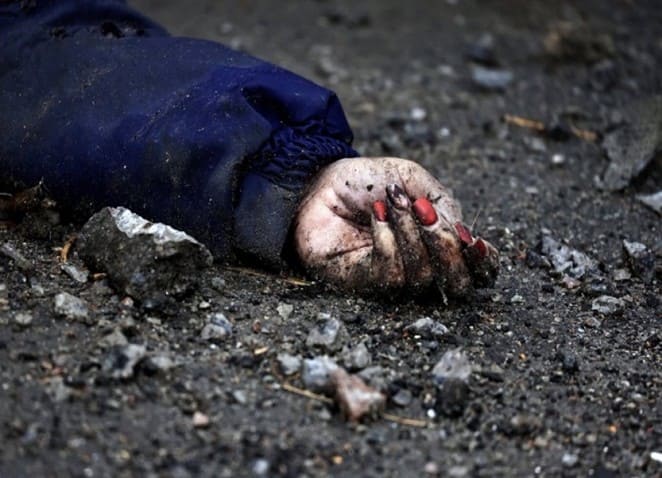
(Remember Bucha. Remember the cost.)
Russia understands this all too well. It may not outpace Ukraine technologically across every domain, nor break hardened defensive lines easily, but it does not need to, if it can slow the political machinery supporting Ukraine from behind.
That is where conversations like these become strategically significant.
Hungary may argue it is pursuing national interests or acting as a bridge, but, intent is only part of the equation. Perception matters, and right now, the perception is clear: a NATO and EU member state is speaking in a tone with Moscow that does not match its commitments to its allies.
That gap is where risk lives, and Hungary appears to be prying the door open.
As I’ll cover in more detail in my upcoming piece on TCCC training, survival on the battlefield often comes down to identifying and controlling bleeding before it becomes fatal.
The same principle applies here. If the West fails to address internal fractures early, if contradictions like this are allowed to persist, the damage won’t be immediate, but it will be cumulative.
And by the time it becomes critical, Europe may have already bled out.


