[ad_1]
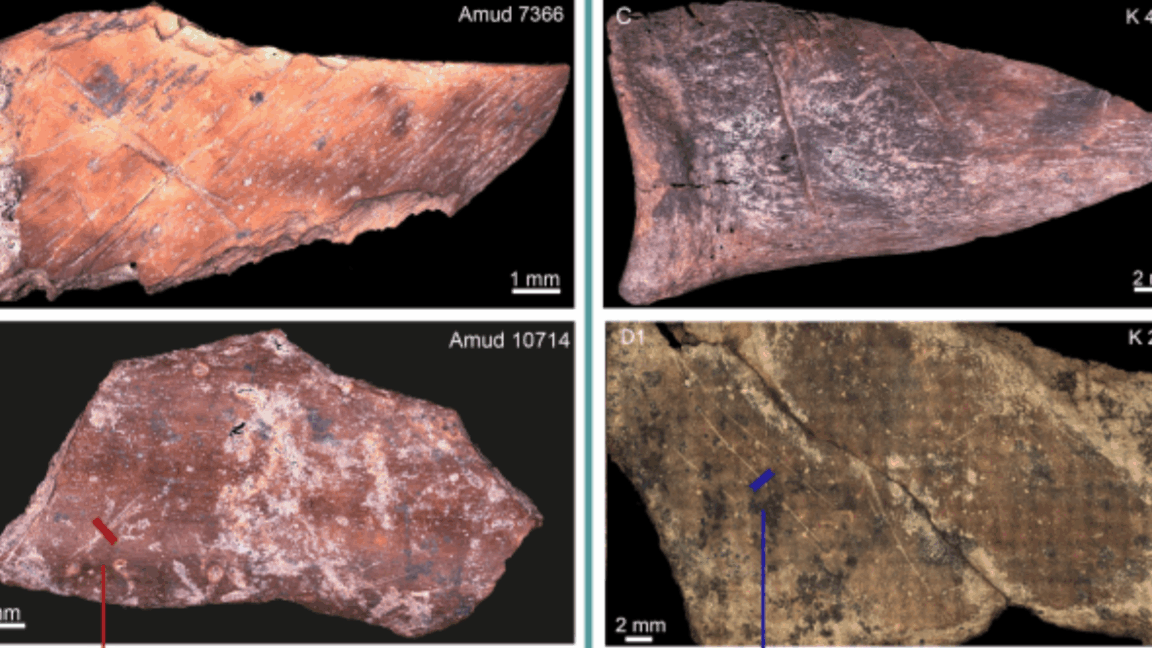
Gazelle prepared “a la Amud,” or “a la Kebara”?
Neanderthals at Kebara had pretty broad tastes in meat. The butchered bones found in the cave were mostly an even mix of small ungulates (largely gazelle) and medium-sized ones (red deer, fallow deer, wild goats, and boar), with just a few larger game animals thrown in. And it looks like the Kebara Neanderthals were “use the whole deer” sorts of hunters because the bones came from all parts of the animals’ bodies.
On the other hand (or hoof), at Amud, archaeologists found that the butchered bones were almost entirely long bone shafts—legs, in other words—from gazelle. Apparently, the Neanderthal hunters at Amud focused more on gazelle than on larger prey like red deer or boar, and they seemingly preferred meat from the legs.
And not too fresh, apparently—the bones at Kebara showed fewer cut marks, and the marks that were there tended to be straighter. Meanwhile, at Amud, the bones were practically cluttered with cut marks, which crisscrossed over each other and were often curved, not straight. According to Jallon and her colleagues, the difference probably wasn’t a skill issue. Instead, it may be a clue that Neanderthals at Amud liked their meat dried, boiled, or even slightly rotten.
That’s based on comparisons to what bones look like when modern hunter-gatherers butcher their game, along with archaeologists’ experiments with stone tool butchery. First, differences in skill between newbie butchers and advanced ones don’t produce the same pattern of cut marks Jallon and her colleagues saw at Amud. But “it has been shown that decaying carcasses tend to be more difficult to process, often resulting in the production of haphazard, deep, and sinuous cut marks,” as Jallon and her colleagues wrote in their recent paper.
So apparently, for reasons unknown to modern archaeologists, the meat on the menu at Amud was, shall we say, a bit less fresh than that at Kebara. Said menu was also considerably less varied. All of that meant that if you were a Neanderthal from Amud and stopped by Kebara for dinner (or vice versa) your meal might seem surprisingly foreign.
[ad_2]
Source link


