[ad_1]
In contrast, a sodium-ion battery relies on an element—sodium—that you can find in table salt and ocean water.
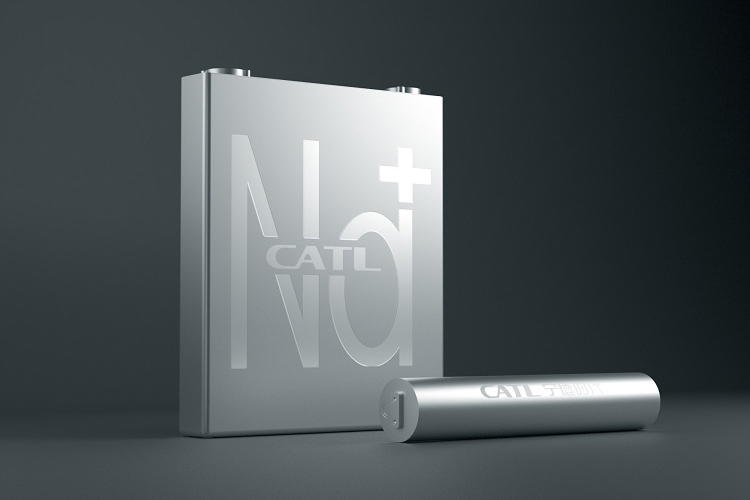
Among the other benefits, sodium-ion batteries perform better than lithium-ion batteries in extreme cold. CATL has said its new battery works in temperatures as low as -40° Fahrenheit.
Also, a sodium-ion battery has much lower risk of fire. When lithium-ion batteries sustain damage, it can lead to “thermal runaway,” which triggers a dangerous and toxic fire.
The process of manufacturing sodium-ion batteries is similar to that of lithium-ion batteries, or at least similar enough that companies can shift existing assembly lines without having to spend heavily on retooling.
But sodium-ion batteries have some disadvantages. The big one is low energy density compared to lithium-ion. As a result, an EV running on a sodium-ion battery will go fewer miles per charge than a lithium-ion battery of the same size.
“That is just what nature has given us,” Srinivasan said. “From a physics perspective, sodium batteries inherently have lower energy density than lithium batteries.”
A typical sodium-ion battery has an energy density of about 150 watt-hours per kilogram at the cell level, he said. Lithium-ion batteries can range from about 180 to nearly 300 watt-hours per kilogram.
I asked Srinivasan what he makes of CATL’s claim of a sodium-ion battery with 200 watt-hours per kilogram.
“We tend to be skeptical of news releases from companies,” he said. He specified that his comment applies to all battery companies.
Credit:
Argonne National Laboratory
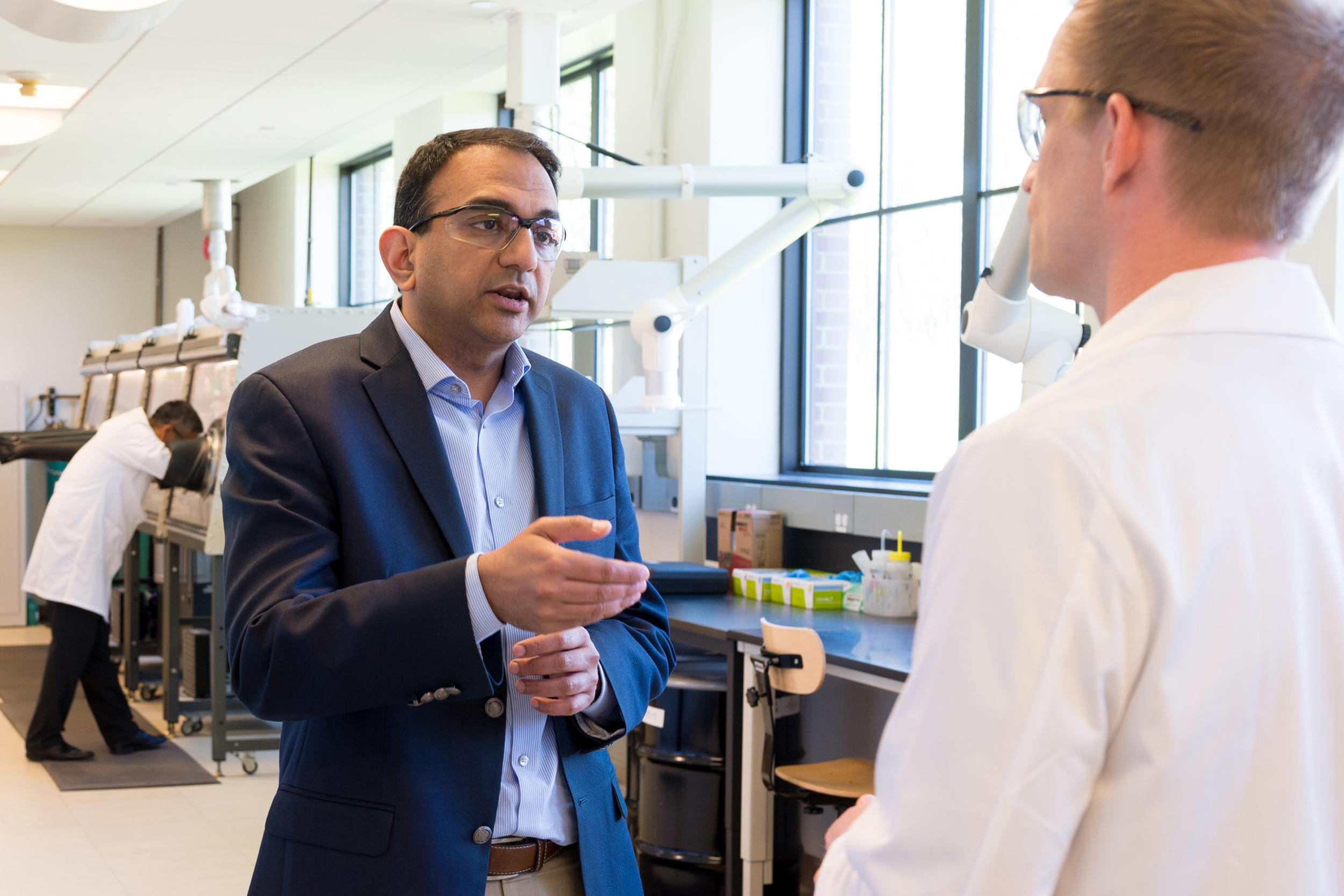
Venkat Srinivasan, director of the Argonne Collaborative Center for Energy Storage Science, discusses battery research with a materials scientist in one of the energy storage discovery labs at Argonne National Laboratory.
Credit:
Argonne National Laboratory
The national labs’ initiative has a five-year timeline, with a goal of developing sodium-ion batteries with energy densities that match or exceed those of today’s iron phosphate-based lithium-ion batteries. Researchers would do this by finding various efficiencies in design and materials.
The project is happening alongside the labs’ ongoing work to develop and improve other kinds of batteries.
Lithium-ion batteries dominate today’s market. This year, global production of lithium-ion batteries was about 1,500 gigawatt-hours, and production of sodium-ion batteries was 11 gigawatt-hours, or less than 1 percent, according to Benchmark Mineral Intelligence.
[ad_2]
Source link


