
[ad_1]
“Windows Diagnostics Data shows that 27 percent of PCs with USB4 have encountered a limited functionality notification, meaning that a customer plugged a USB-C device in, but a feature (alternate mode) that device needs was not implemented on the PC and Windows notified the user,” wrote Microsoft Senior Product Manager Ugan Sivagnanenthirarajah. “The reversible USB Type-C connector isn’t the problem, the inconsistent implementations of USB-C port capabilities across the PC ecosystem is.”
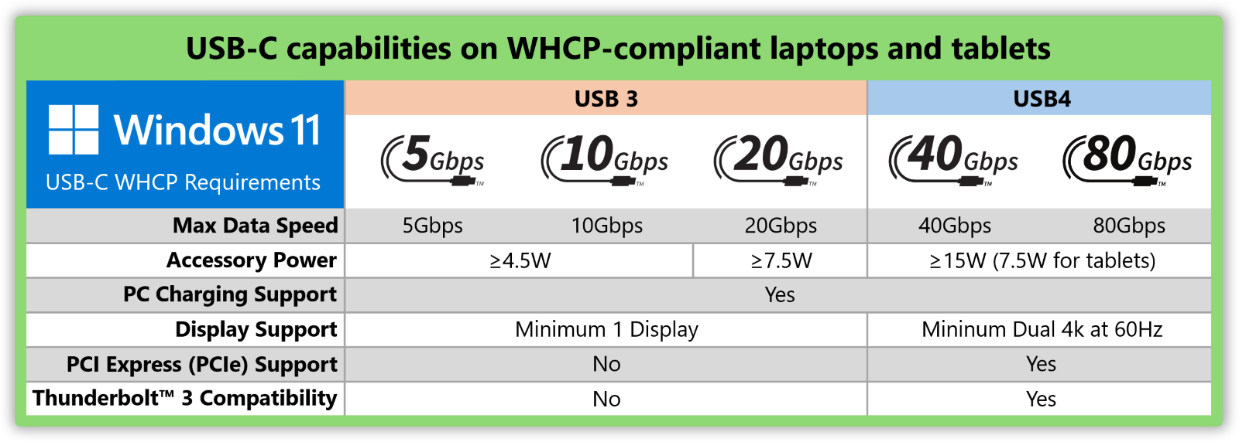
Microsoft’s baseline requirements for USB-C and USB4 ports on Windows PCs.
Credit:
Microsoft
According to Microsoft, all USB-C ports must include “PC charging support” and support for a minimum of one external display, plus the ability to supply at least 4.5 W of power to a connected accessory. Microsoft doesn’t mandate the use of higher 10, 20, 40, or 80Gbps transfer speeds or a specific USB-PD wattage level, nor does it require all USB-C ports to support connecting external PCI Express devices like external graphics docks. But at a bare minimum, users should expect USB 3.x speeds, display output, and charging support from any USB-C port in any Windows laptop built by one of the major OEMs.
Microsoft says that Intel still handles certification for its Thunderbolt specification, and that Thunderbolt 4 and 5 ports still handle a superset of all USB-C capabilities, including support for PCI Express devices, 40 or 80Gbps transfer speeds, support for two or more external 4K displays, and up to 15 W of power for external accessories. That said, any ports that advertise 40 or 80Gbps USB4 support will also be required to support Thunderbolt 3-certified accessories.
Herding cats
The WHCP program provides automated testing tools that PC companies can use to ensure that their new systems work as expected with Windows, and Microsoft can use data from the program to detect and solve issues across the entire Windows ecosystem. For example, the new WHCP requirements mandate that USB-C ports use Windows’ built-in USB drivers, which means that fixes for problems that arise can be distributed across all Windows systems via Windows Update rather than requiring additional effort on the part of the PC builder.
[ad_2]
Source link


