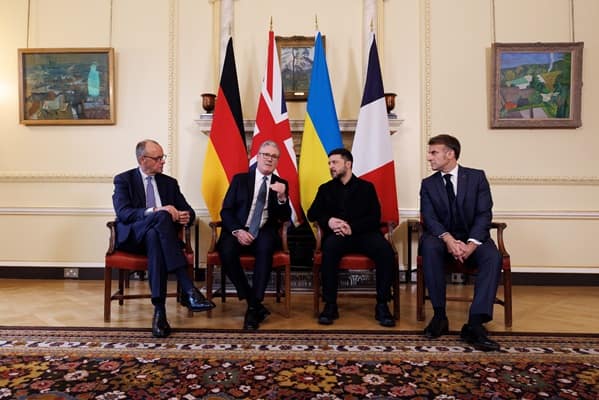
Russian Senator Alexey Pushkov has publicly questioned the rationale for European participation in negotiations over the Ukraine conflict, highlighting tensions between Washington, Brussels, and Moscow over the shape of diplomatic engagement.
Writing on Telegram, Pushkov criticised Polish Foreign Minister Radosław Sikorski, French President Emmanuel Macron, and EU foreign policy chief Kaja Kallas, arguing that European leaders have offered “no serious answers” for why they should be involved in talks already led by the United States.
Pushkov suggested that EU ambitions risk “derailing even the fragile negotiations that are already underway,” framing European efforts as symbolic rather than substantive.
Read more related news:
UK to hunt down Putin’s secret ‘shadow fleet’
Sikorski, speaking at the Munich Security Conference, had earlier called for EU countries to be admitted to the negotiating table, noting that the bloc provides the bulk of military aid to Kyiv and thus has a strategic stake in the conflict. Pushkov’s response underscores Moscow’s longstanding narrative that Western institutions, particularly the EU, are overreaching in their role, and that US-led diplomacy is sufficient from the Kremlin’s perspective.
Analysts note that Pushkov’s comments serve a dual purpose: domestically, they reinforce a narrative of Russian self-sufficiency and distrust of European influence; internationally, they signal that Moscow views EU intervention as a potential complicating factor in the fragile peace process.
This tension illustrates the broader geopolitical dynamics at play, where US leadership is being challenged by European powers seeking a more direct role, while Russia continues to assert leverage by framing European involvement as unnecessary or obstructive.
The debate over European participation also reflects wider questions about the future of transatlantic cooperation, NATO cohesion, and the EU’s strategic autonomy in conflicts where US interests are preeminent. How Brussels and Washington reconcile these positions could shape the trajectory of any forthcoming peace settlement and the broader post-war security architecture in Europe.


