[ad_1]
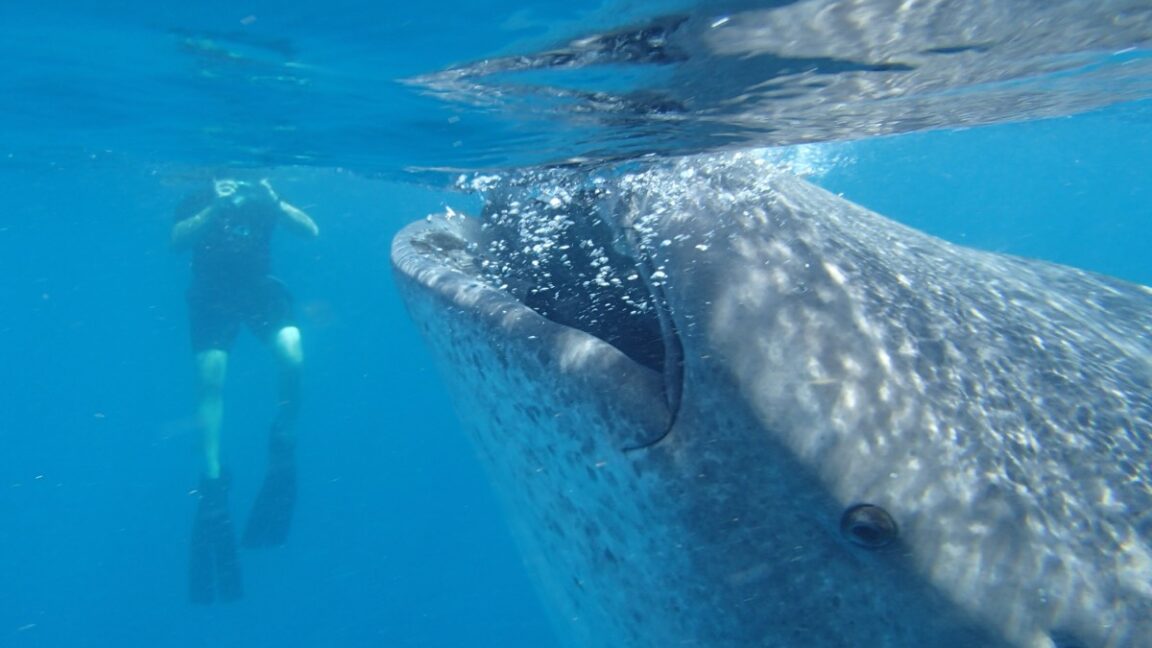
The ocean runs on size
McClain officially launched MOBS as a passion project while on sabbatical in 2022 but he had been informally collecting data on body size for various marine groups for several years before that. So he had a small set of data already to kick off the project, incorporating it all into a single large database with a consistent set format and style.
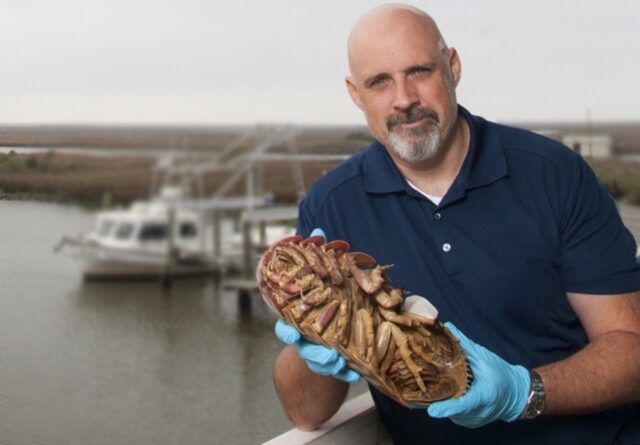
Craig McClain holding a giant isopod (Bathynomus giganteus), one of the deep sea’s most iconic crustaceans
Credit:
Craig McClain
“One of the things that had prevented me from doing this before was the taxonomy issue,” said McClain. “Say you wanted to get the body size for all [species] of octopuses. That was not something that was very well known unless some taxonomist happened to publish [that data]. And that data was likely not up-to-date because new species are [constantly] being described.”
However, in the last five to ten years, the World Register of Marine Species (WoRMS) was established with the objective of cataloging all marine life, with taxonomy experts assigned to specific groups to determine valid new species, which are then added to the data set with a specific numerical code. McClain tied his own dataset to that same code, making it quite easy to update MOBS as new species are added to WoRMS. McClain and his team were also able to gather body size data from various museum collections.
The MOBS database focuses on body length (a linear measurement) as opposed to body mass. “Almost every taxonomic description of a new species has some sort of linear measurement,” said McClain. “For most organisms, it’s a length, maybe a width, and if you’re really lucky you might get a height. It’s very rare for anything to be weighed unless it’s an objective of the study. So that data simply doesn’t exist.”
While all mammals generally have similar density, “If you compare the density of a sea slug, a nudibranch, versus a jellyfish, even though they have the same masses, their carbon contents are much different,” he said. “And a one-meter worm that’s a cylinder and a one-meter sea urchin that’s a sphere are fundamentally different weights and different kinds of organisms.” One solution for the latter is to convert to volume to account for shape differences. Length-to-weight ratios can also differ substantially for different marine animal groups. That’s why McClain hopes to compile a separate database for length-to-weight conversions.
[ad_2]
Source link


