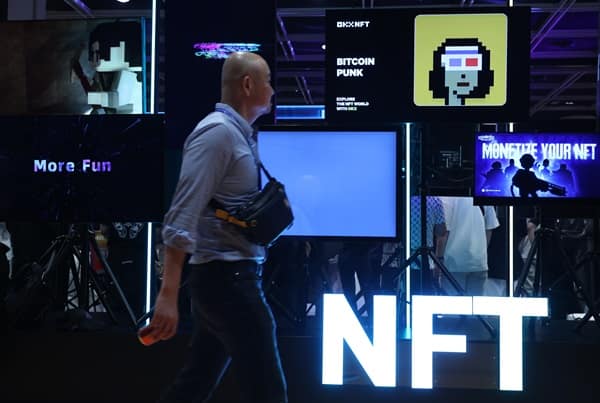
Remember back in 2021 when everyone thought a cartoon monkey was the peak of human financial evolution? Well, we have come a long way since then. If you are reading this in 2026, you already know that the “NFTs are dead” crowd was mostly wrong. They were just looking at the wrong things. While the hype around speculative art might have cooled, the actual tech behind digital ownership has grown into a massive, sturdy engine for the global economy.
Let us look at some numbers because they tell a story that is hard to ignore. As we move through early 2026, the global NFT market size is hovering around $86.23 billion. That is not a small number. In fact, it is growing at a compound annual rate of nearly 41.8%. Even more interesting is where that money is going. While art still exists, gaming NFTs alone generated over $21 billion last year. We are seeing a shift from “buying a picture” to “owning an asset with a job to do.”
Building a marketplace today is not about copying OpenSea. It is about creating a specialized hub where users can trade everything from virtual real estate to fractional shares of a real-world vintage car. This article breaks down the entire development process so you can understand what happens under the hood without getting a headache.
Finding your corner of the digital world: Market research and niche selection
You would not open a store that sells “everything” without a billion-dollar marketing budget. The same applies to NFTs. The biggest mistake founders made in previous years was trying to be a generalist. In 2026, the winners are the specialists.
Before you write a single line of code, you need to decide what your platform actually does. Are you helping gamers trade skins? Are you a bridge for Real-World Assets (RWA) where people trade tokenized deeds for physical property? Or maybe you are focusing on “Phygital” goods – where a digital token comes with a physical hoodie or a pair of sneakers.
The strategy phase is about looking at the gaps. For instance, the sports NFT sector is currently focused on “moments,” but there is a huge opening for “utility” memberships where the NFT acts as a lifetime ticket to games. Researching your audience is the compass that keeps your project from sailing into a void. You need to know if your users are crypto-natives who love complex DeFi features or regular folks who just want to buy a collectible using their credit card.
Our blockchain team advice: Do not just follow the trend of the month. Look for industries where ownership is currently messy, like digital music rights or event ticketing. These are the places where an NFT marketplace provides real, undeniable value.
The engine room: Choosing your tech stack and blockchain
Now we get into the heavy lifting. Choosing your blockchain is like choosing the foundation for a skyscraper. If you pick the wrong one, the whole thing might sink when things get busy.
Ethereum is still the big player because it is incredibly secure and has the most developers. However, the “gas fees” (the cost of doing a transaction) can still be a pain during busy times. This is why many are moving toward Layer-2 solutions like Polygon, Arbitrum, or Base. These sit on top of Ethereum and make things much cheaper and faster while keeping the security.
On the other side, you have Solana. It is lightning fast and costs pennies to use. In 2026, Solana has become the home for many gaming projects and mobile-first marketplaces. Then there is the rising star, the TON blockchain, which is integrated directly with Telegram. This is a huge deal because it puts your marketplace in the pockets of millions of people who already use the app.
Blockchain Comparison for 2026
| Feature | Ethereum (Mainnet) | Solana | Layer-2 (Polygon/Base) |
| Transaction Speed | Slow (15 TPS) | Very Fast (65k+ TPS) | Fast (Up to 10k TPS) |
| Cost per Trade | High ($5 – $50+) | Ultra-Low (<$0.01) | Low ($0.01 – $0.50) |
| Developer Ecosystem | Massive | Growing Rapidly | Large & Versatile |
| Best For | High-value Art / RWA | Gaming / High Frequency | Retail / Brands |
Aside from the blockchain, you need a place to store the actual files. You do not store a 50MB video directly on the blockchain because it would cost a fortune. Instead, we use decentralized storage like IPFS or Filecoin. These act like a permanent, distributed hard drive where the file stays safe even if your main website goes down.
Tech stack components
- Frontend: React.js or Vue.js for a smooth, interactive interface.
- Backend: Node.js or Python to handle user accounts, metadata, and site logic.
- Smart Contracts: Solidity (for Ethereum/L2s) or Rust (for Solana).
- Database: PostgreSQL or MongoDB to index the blockchain data so your search bar actually works.
Did you know? Many modern marketplaces are now “multi-chain.” This means a user can buy an NFT on Ethereum using funds they have on Solana without even realizing they are switching networks. This is called “cross-chain liquidity” and it is a game-changer for 2026.
Features that people actually use: Designing the experience
A storefront is just the tip of the iceberg. If your marketplace is hard to use, people will leave faster than you can say “gas fee.” In 2026, user experience (UX) is everything.
The first thing you need is a “Frictionless Onboarding” process. In the old days, you had to download a weird browser extension and write down twelve secret words just to buy a $10 sticker. Today, we use “Account Abstraction.” This allows users to sign up with their email or Google account. Behind the scenes, a wallet is created for them, but they never have to see the technical mess.
Another must-have feature is a powerful search and filter system. If you are selling thousands of gaming items, users need to sort by “Level,” “Power,” “Rarity,” or “Element.” Without good filters, your marketplace is just a messy pile of digital junk.
Core features checklist
- Custom Storefront: An attractive landing page showing trending drops and top collections.
- Advanced Filters: Let users find exactly what they want in seconds.
- Integrated Wallet Support: Support for MetaMask, Phantom, and social logins.
- Auction & Fixed Price Sales: Multiple ways for creators to sell their work.
- Creator Dashboard: A simple place for artists or brands to upload their assets and track sales.
- Royalties: Automatically ensuring the original creator gets a cut of every future sale.
Use this hack: Add a “Price History” chart for every item. Buyers in 2026 are much more data-driven. Showing them exactly how the value has changed over time builds trust and encourages them to hit that “Buy” button.
The brains of the operation: Smart contract development
Smart contracts are the heart of your marketplace. They are pieces of code that live on the blockchain and handle the actual trading. When someone buys an NFT, the smart contract checks if they have enough money, takes the funds, transfers the token to the buyer, and sends the payment to the seller. All of this happens automatically without a middleman.
For your NFT marketplace development solutions, you will likely use standards like ERC-721 or ERC-1155. The former is for unique one-of-a-kind items, while the latter allows for “semi-fungible” items, like a game where 500 players own the same type of sword.
Security is the biggest concern here. If there is a tiny bug in your smart contract, a hacker could drain all the NFTs or the money in the platform. This is why you must get a professional audit. An audit is when a third-party team of security experts tries to break your code to find weaknesses before you go live. It is expensive, but it is much cheaper than losing your reputation and your users’ money.
Important to remember: Smart contracts are permanent. Once they are “deployed” to the blockchain, you cannot just go back and fix a typo. You have to get it right the first time, or use “upgradeable” contract structures which add a layer of complexity but offer a safety net.
Making it look good: UI/UX design
In 2026, the “crypto look” (lots of dark mode and neon) is a bit played out. Modern users want clean, professional, and accessible designs. Your marketplace should look as good as any high-end e-commerce site.
Mobile support is no longer optional. Most people discover new NFT drops on social media through their phones. If they click a link and your site looks broken on mobile, you have lost them. We recommend a “Mobile-First” approach where you design the phone experience first and then expand it for desktop screens.
You also need to think about accessibility. Can someone with vision impairments navigate your site? Are the buttons big enough to tap easily on a small screen? These small details are what separate a “project” from a “business.”
Feature breakdown table
| Feature | Importance | Complexity | Why you need it |
| Social Login | High | Medium | Reduces barriers for non-crypto users. |
| AI Recommendations | Medium | High | Helps users discover items they actually like. |
| Fiat On-ramp | High | Medium | Allows buying with credit cards/Apple Pay. |
| Real-time Bidding | High | Low | Creates excitement and drive prices up. |
| 3D Preview | Low/Med | High | Essential for metaverse items and avatars. |
Did you know? Using “Micro-interactions” – like a small animation when a bid is placed – makes the platform feel alive. It gives users immediate feedback and makes the whole experience more satisfying.
Bringing it to life: Development and testing phases
The actual coding part usually follows an “Agile” process. This means we build small pieces of the marketplace, test them, and move to the next thing. We do not just build the whole thing in a dark room for six months and then launch it.
The first step is building the Minimum Viable Product (MVP). This is the simplest version of your marketplace that actually works. It might only support one blockchain and fixed-price sales, but it lets you get real users on the platform to see what they like.
Testing is where most projects fail. You need to test on a “Testnet” – a fake version of the blockchain where the money isn’t real. You should simulate high traffic to see if the site crashes and check every possible user flow. What happens if a user’s internet cuts out mid-purchase? What if they try to bid $0.00? You need to have answers for all of these scenarios.
Our blockchain team advice: Always set up a bug bounty program after you launch. Offer a reward to developers who find security flaws. It is a great way to keep your community engaged and your platform safe.
Counting the cost: Budget and timeline
How much does it cost to build an NFT marketplace in 2026? It is a bit like asking “how much does a house cost?” It depends on whether you want a tiny cabin or a mansion.
For a basic, high-quality marketplace with standard features, you are looking at a budget between $50,000 and $150,000. If you want a complex, multi-chain platform with AI-driven recommendations and RWA integration, the price can easily go over $300,000.
In terms of time, a custom build usually takes 3 to 9 months. If you are in a rush, you can use “white-label” solutions. These are pre-made marketplace templates that you can customize. This can get you to market in as little as 2 to 8 weeks, but you will have less control over unique features and scalability.
Estimated timeline
- Discovery & Design: 4-6 weeks
- Smart Contract Coding: 6-8 weeks
- Frontend & Backend Integration: 8-12 weeks
- Security Audit & Testing: 3-5 weeks
- Deployment & Launch: 2 weeks
The extra miles: Insights and future-proofing
If you want your platform to survive until 2030, you need to look at the upcoming trends. AI is currently being used to verify the authenticity of NFTs, ensuring that no one is selling a stolen image. We are also seeing “Dynamic NFTs” that change over time. Imagine a game character NFT that gets scars as it goes through battles – that is the kind of stuff that keeps users coming back.
Another big area is “Fractional Ownership.” Instead of one person owning a $1,000,000 piece of digital real estate, 1,000 people can own a $1,000 share of it. This makes high-value assets accessible to everyone, which is the whole point of the blockchain revolution.
Lifehack: Do not ignore the community. Building a Discord or a Telegram group is just as important as the code. A marketplace with no community is just a lonely website in a very large ocean.
Why turn to a trusted vendor?
Building a marketplace is a complex journey with a lot of moving parts. It requires a mix of creative design, solid engineering, and deep blockchain knowledge. Our team at PixelPlex has been in the trenches since the early days of Web3, helping businesses turn their digital visions into reality. We decided to put together this detailed guide because we believe that the next wave of NFT innovation will come from builders who focus on real utility and great user experiences.
If you have a concept you want to bring to life, the PixelPlex blockchain development team would be glad to assist you. Whether you need a full custom build, a security audit for your smart contracts, or just some strategic advice on which blockchain to choose, we are here to help you navigate the 2026 landscape.


