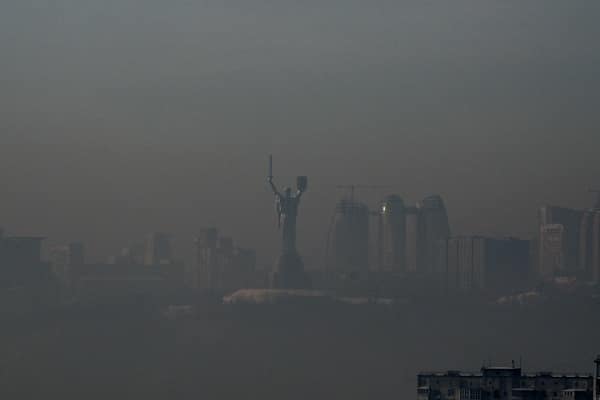
As winter deepens across Ukraine, Vladimir Putin’s strategy has become brutally clear.
Unable to break Ukrainian resistance on the battlefield, Russia has once again turned to targeting civilian energy infrastructure in an attempt to fracture the spirit and endurance of the population, just as it did last winter, and the winter before.
Power stations, substations, heating networks and transmission nodes are no longer incidental damage; they are deliberate targets, including Nuclear facilities.
The irony is stark. These are the same civilians Putin claimed he would “protect” when launching his invasion, instead, he is now spending billions on missiles, drones and logistics not to defeat the Ukrainian military, but to plunge ordinary families into darkness and cold.
It is a campaign of attrition aimed squarely at civilians, designed to exhaust and ultimately conquer.
Kyiv’s mayor, Vitali Klitschko, has issued some of the most forceful warnings yet about the humanitarian fallout. Describing the situation as bordering on catastrophe, he told The Times that “Russians want to create a humanitarian catastrophe in our native city, to make people freeze in winter.”
Repeated strikes, he warned, have devastated Kyiv’s energy system and left thousands of homes without heating.
A brief moment inside Kyiv’s central railway station captures this reality in stark contrast:
As air raid warnings echo and power infrastructure is attacked outside, an elderly woman plays classical music inside the station, a quiet act of dignity amid disruption.
Klitschko also confirmed that around 600,000 people have left Kyiv since the beginning of January, many following his advice to temporarily relocate to areas with more reliable heat and power as infrastructure continues to falter under sustained attack. Beyond the capital, the broader humanitarian impact remains staggering. According to the United Nations High Commissioner for Refugees, as many as 5.7 million Ukrainians have registered as refugees in other countries since the invasion began, with many more internally displaced within Ukraine itself, including myself.
This strategy of targeting infrastructure is neither cheap nor efficient. Russia is burning through vast stockpiles of missiles and drones, many sourced or assembled with foreign components to achieve effects that are temporary and often rapidly repaired by Ukrainian engineers working under fire. Each strike represents enormous cost for limited, reversible gain. Yet the Kremlin persists, because the objective is psychological as much as physical, to convince Ukrainians that resistance will only mean endless hardship.
I have written previously about the lived reality of these conditions here:
The reality of Ukrainians living in ‘apocalyptic’ conditions as the lights go out
What makes this moment particularly dangerous is the broader political backdrop. While Russia wages an economic and humanitarian war against Ukrainian civilians, the Trump administration has signalled a willingness to “normalise” relations with Moscow. This rhetoric, whether intentional or not, risks diluting the very real suffering being inflicted. Normalisation sends a message that missile strikes on cities, energy blackouts and forced displacement are somehow negotiable or forgettable.
For Ukrainians enduring freezing apartments and intermittent power, this disconnect is jarring. Missiles do not pause for diplomatic theatre. Energy grids do not repair themselves because political leaders choose to move on. Winter has always been a weapon in Russian military thinking. What is different now is the clarity of intent and the scale of civilian targeting, rarely mentioned, and even more rarely acted upon, by those paid to raise these issues.
Putin’s war was never about saving people. It remains about breaking them, and hoping the world looks away long enough for the cold to finish what Russia’s army could not.


