[ad_1]
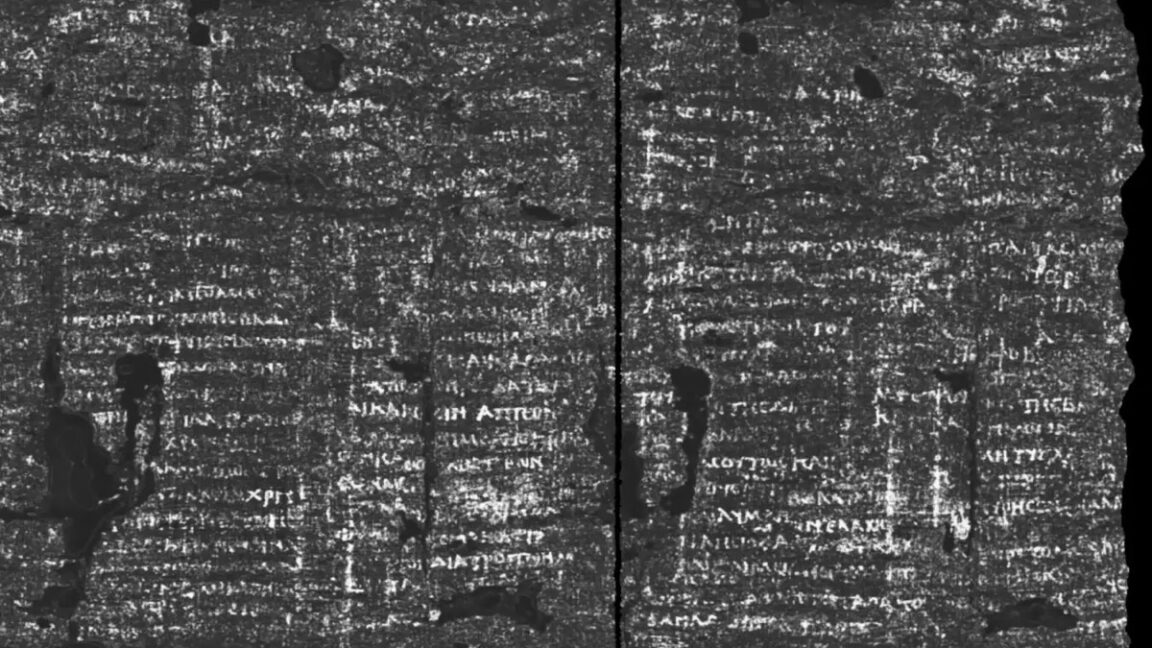
It’s a regrettable reality that there is never time to cover all the interesting scientific stories we come across each month. In the past, we’ve featured year-end roundups of cool science stories we (almost) missed. This year, we’re experimenting with a monthly collection. February’s list includes dancing sea turtles, the secret to a perfectly boiled egg, the latest breakthrough in deciphering the Herculaneum scrolls, the discovery of an Egyptian pharaoh’s tomb, and more.
Dancing sea turtles
There is growing evidence that certain migratory animal species (turtles, birds, some species of fish) are able to exploit the Earth’s magnetic field for navigation, using it both as a compass to determine direction and as a kind of “map” to track their geographical position while migrating. A paper published in the journal Nature offers evidence of a possible mechanism for this unusual ability, at least in loggerhead sea turtles, who perform an energetic “dance” when they follow magnetic fields to a tasty snack.
Sea turtles make impressive 8,000-mile migrations across oceans and tend to return to the same feeding and nesting sites. The authors believe they achieve this through their ability to remember the magnetic signature of those areas and store them in a mental map. To test that hypothesis, the scientists placed juvenile sea turtles into two large tanks of water outfitted with large coils to create magnetic signatures at specific locations within the tanks. One tank features such a location that had food; the other had a similar location without food.
They found that the sea turtles in the first tank performed distinctive “dancing” moves when they arrived at the area associated with food: tilting their bodies, dog-paddling, spinning in place, or raising their head near or above the surface of the water. When they ran a second experiment using different radio frequencies, they found that the change interfered with the turtles’ internal compass, and they could not orient themselves while swimming. The authors concluded that this is compelling evidence that the sea turtles can distinguish between magnetic fields, possibly relying on complex chemical reactions, i.e., “magnetoreception.” The map sense, however, likely relies on a different mechanism.
[ad_2]
Source link


