[ad_1]
The upside of SpaceX’s architecture is that, with refueling, Starship can theoretically ferry payloads of 100 metric tons or more to the Moon or Mars, significantly more capacity than any other rocket. The ships could be refueled over and over again, and routinely transit between Earth and destinations in space, making all sorts of fascinating missions possible.
Some time next year, SpaceX plans to launch a pair of Starships into orbit using its two side-by-side launch pads in Texas. The ships will dock together in orbit and test technologies to transfer cryogenic propellants, which has never been done in space at this scale. This demonstration is a precursor to future Artemis mission campaigns, when Starships must launch in rapid succession from multiple pads.
“There’s no doubt that the Human Landing System is critical path for for Artemis III,” said Lori Glaze, acting deputy associate administrator for NASA’s exploration systems development division, referring to the Artemis program’s first lunar landing mission.
Artemis III is officially scheduled for launch in September 2026, but it’s likely to delay at least a couple of years due to the readiness of Starship and new commercially-developed spacesuits to protect astronauts walking on Moon’s surface. Ars has previously reported that NASA and SpaceX are assessing alternative mission profiles for Artemis III in case the Starship lunar lander faces longer delays.
“The pacing item is the rate at which SpaceX can launch the systems that can fuel the depot, so that it’s prepared to fuel Starship for a lunar landing,” Glaze said last week. “So the real key there is them being able to get to a rate where they can launch at a rapid enough cadence.”
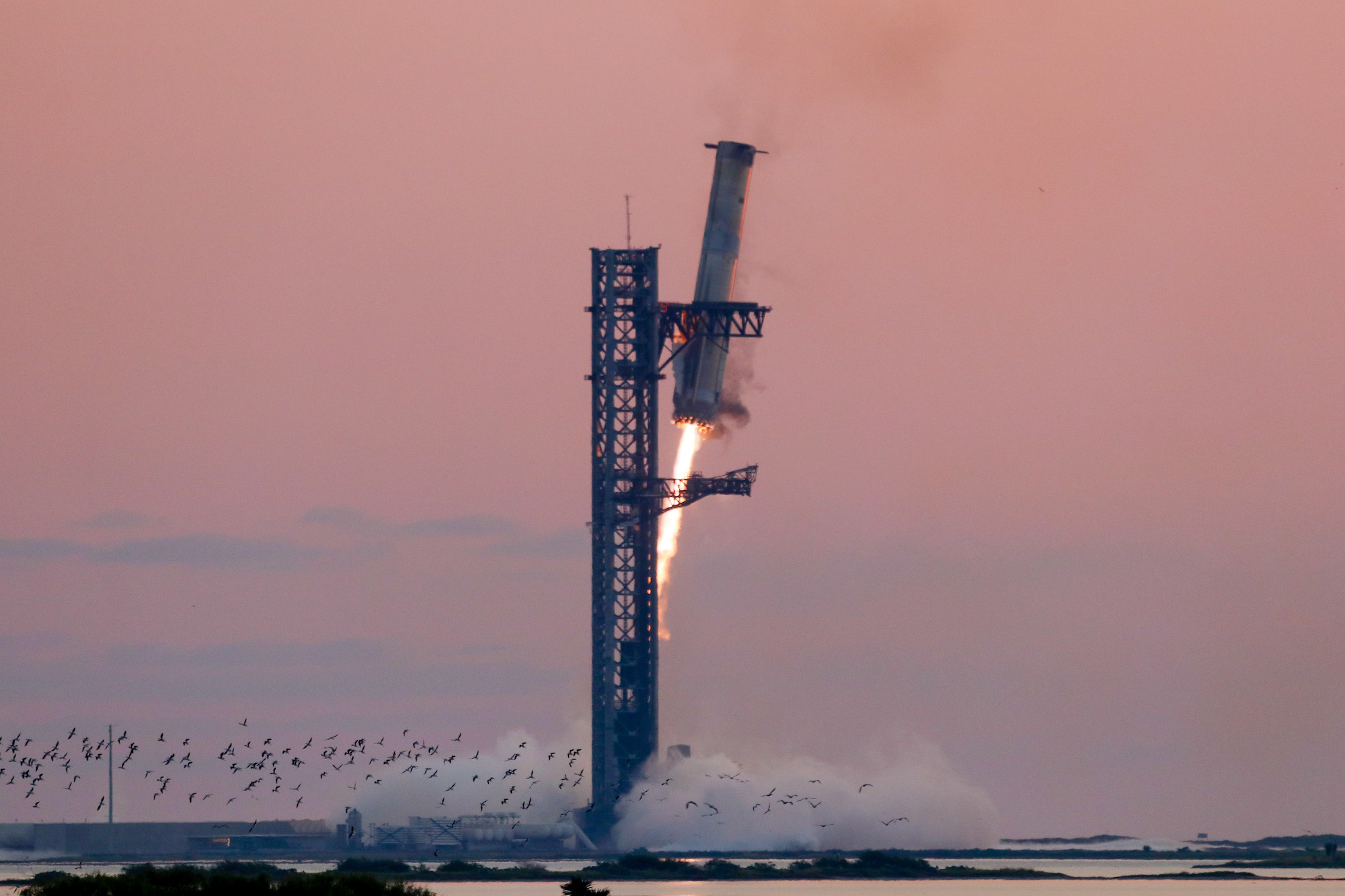
Multiple launch pads in Texas and Florida will allow SpaceX to ramp up its Starship launch cadence. Regular catches of the booster and ship will also be important for SpaceX to launch more often. That’s why, although NASA’s wasn’t directly involved in Sunday’s flight, agency officials were watching closely.
NASA Administrator Bill Nelson lauded Sunday’s successful test flight.
“Congratulations to SpaceX on its successful booster catch and fifth Starship flight test today!” Nelson posted on X. “As we prepare to go back to the Moon under Artemis, continued testing will prepare us for the bold missions that lie ahead—including to the South Pole region of the Moon and then on to Mars.”
“Thank you, sir! Looking forward to serving NASA in returning humanity to the Moon,” Musk replied.
[ad_2]
Source link


