Keir Starmer has chaired an emergency Cobra committee meeting, underscoring the UK’s commitment to addressing the escalating crisis involving the United States, Israel, and Iran, which aims to reassure the audience of the government’s proactive stance.
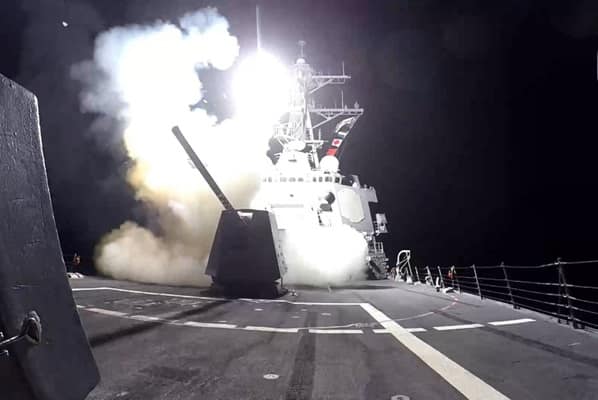
This crisis has emerged against a backdrop of increased military tensions following coordinated US-Israeli strikes on Iranian military targets.
In retaliation, Iran has reportedly launched missile attacks directed at various military bases across the Gulf region.
Although the UK did not participate in the initial round of strikes against Iranian targets, it has taken steps to bolster its military presence in the region to ensure the safety of British nationals and strategic allies.
To this end, Royal Air Force Typhoon jets have been deployed to Qatar to enhance security around Al Udeid Air Base, which serves as a vital facility for US air operations, demonstrating the UK’s commitment to regional stability and reassuring the audience of ongoing protective measures.
In addition to these deployments, the UK has sent six additional F-35 jets to RAF Akrotiri in Cyprus, along with upgraded air defence systems, advanced radar, and counter-drone capabilities. These military assets will be crucial for defending not only Israel and Jordan but also other regional allies if the situation escalates further.
In light of the escalating hostilities, the Foreign, Commonwealth & Development Office has issued warnings advising British nationals currently in Bahrain, Kuwait, Qatar, and the United Arab Emirates to shelter in place as a precaution against potential Iranian missile strikes. Furthermore, the Foreign Office has recommended that all travel to Israel and the Palestinian territories be avoided in light of the volatile situation.
Initial assessments indicate that Iranian forces have targeted US military installations in Bahrain, Qatar, the UAE, and Kuwait, alongside launches directed toward Israel. Although British service members are stationed in small numbers at several Gulf bases, officials have reported no confirmed casualties among UK personnel to date.
While both Washington and Jerusalem appear to be executing a broad military campaign aimed at crippling Iran’s nuclear and missile capabilities—some analysts interpreting these strikes as attempts to destabilise the Iranian regime—the UK government’s initial response has been deliberately cautious. London has clearly stated that it does not want Iran to acquire a nuclear weapon but has avoided endorsing any extensive military objectives that might further entangle the UK in the conflict, fostering trust in its measured approach.
The Cobra meeting is expected to tackle several critical issues, including assessing the safety of British personnel and civilians in the region, evaluating whether additional military deployments are necessary, establishing diplomatic strategies in coordination with Washington and European allies, and developing contingency plans in case the situation escalates into a broader regional war. Providing details on the UK’s diplomatic efforts, such as negotiations, international partnerships, or engagement with regional actors, will enhance understanding of the UK’s comprehensive approach to the crisis.


