[ad_1]
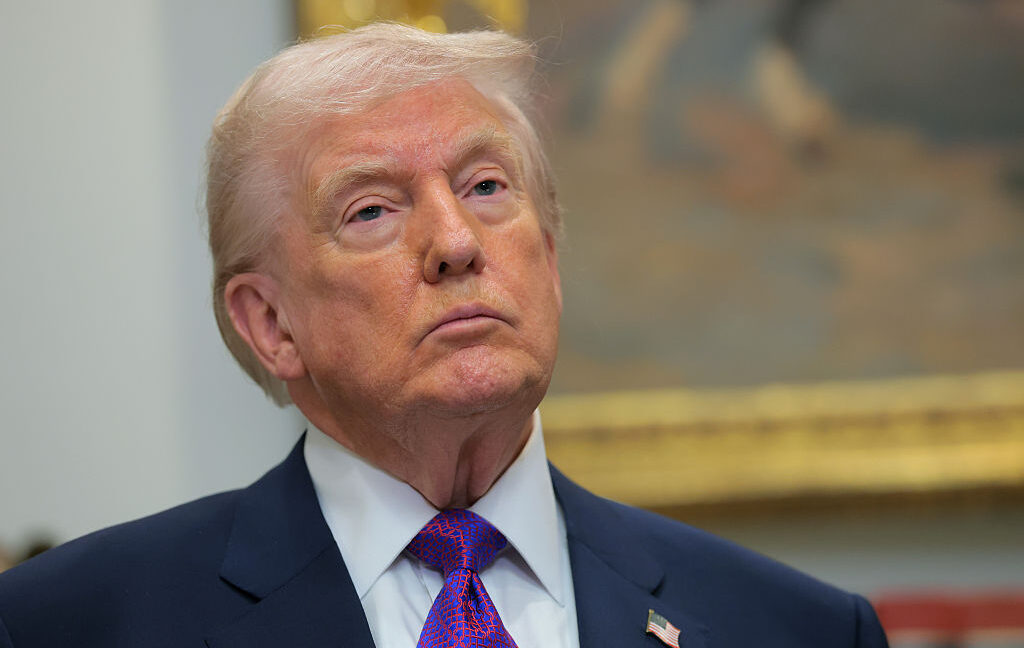
The Supreme Court ruled Friday that Donald Trump was not authorized to implement emergency tariffs to ostensibly block illegal drug flows and offset trade deficits.
It’s not immediately clear what the ruling may mean for businesses that paid various “reciprocal” tariffs that Trump changed frequently, raising and lowering rates at will during tense negotiations with the United States’ biggest trade partners.
Divided 6-3, Supreme Court justices remanded the cases to lower courts, concluding that the International Emergency Economic Powers Act (IEEPA) does not give Trump power to impose tariffs.
Chief Justice John Roberts wrote the opinion and was joined by Justices Neil Gorsuch, Amy Coney Barrett, Elena Kagan, Sonia Sotomayor, and Ketanji Brown Jackson. They concluded that Trump could not exclusively rely on IEEPA to impose tariffs “of unlimited amount and duration, on any product from any country” during peacetime.
Only Congress has the power of the purse, Roberts wrote, and the few exceptions to that are bound by “explicit terms and subject to strict limits.”
“Against that backdrop of clear and limited delegations, the Government reads IEEPA to give the President power to unilaterally impose unbounded tariffs and change them at will,” Roberts wrote. “That view would represent a transformative expansion of the President’s authority over tariff policy. It is also telling that in IEEPA’s half century of existence, no President has invoked the statute to impose any tariffs, let alone tariffs of this magnitude and scope. That ‘lack of historical precedent,’ coupled with ‘the breadth of authority’ that the President now claims, suggests that the tariffs extend beyond the President’s ‘legitimate reach.’”
Back in November, analysts suggested that the Supreme Court ruling against Trump could force the government to issue refunds of up to $1 billion. This morning, a new estimate from economists eclipsed that number, Reuters reported, estimating more than $175 billion could be “at risk of having to be refunded.”
This story is breaking and will be updated.
[ad_2]
Source link


