[ad_1]
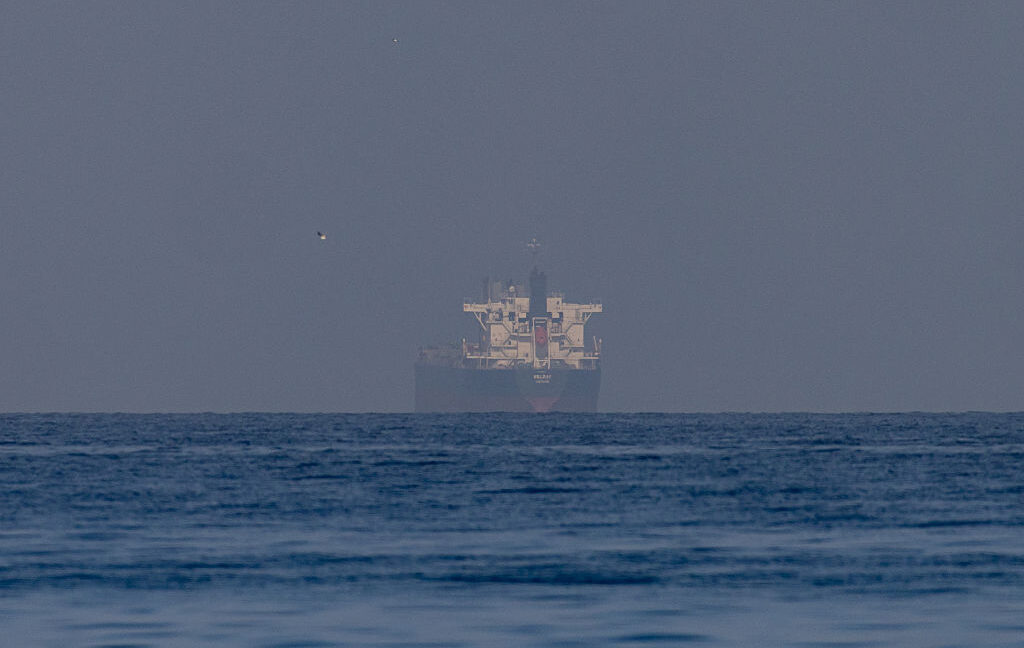
Allowing Iran to continue to control the crucial waterway is likely to be highly unpalatable to Gulf states including Saudi Arabia, Qatar, and the UAE.
It also raises questions for Opec+, the oil producers’ group, with analysts warning that handing Iran control of Hormuz could fundamentally alter the balance of power within the organization by giving Tehran a potential veto over rival members’ exports.
Ali Shihabi, a commentator close to the Saudi royal court, said the kingdom would demand “unimpeded” access to global markets.
“Allowing Iran any form of control over the strait would be a red line,” Shihabi said. “The priority has to be unimpeded access through the strait.”
On Wednesday Saudi Arabia’s key East-West pipeline, which the kingdom has been using to reroute oil exports to the Red Sea, was struck by a drone, according to people familiar with the matter, despite the ceasefire.
Around 175 million barrels of crude and refined products are currently loaded onto 187 tankers in the Gulf, according to Kpler data—which could now start to move, depending on what happens in the strait.
Industry executives estimate that 300 to 400 ships are waiting to exit the Gulf as soon as it is possible to pass safely, with one describing it as a “car park.”
Several traders said they thought the situation in the coming days would resemble the system that has developed over the past fortnight, in which a handful of ships that have been approved by Iran are allowed to pass on a specific route.
During the conflict this was largely limited to vessels that had generally done business with Iran and that were not connected to the US, Israel, or Gulf states that had provided staging for attacks.
Martin Kelly, head of advisory at maritime intelligence group EOS Risk, said that there was “no way” that the backlog of ships waiting to get out could be cleared in two weeks.
Around 10 to 15 ships might be able to transit the strait per day, as the process was “quite time-consuming,” he said, down from 135 ships before the war.
Additional reporting by Andrew England.
© 2026 The Financial Times Ltd. All rights reserved. Not to be redistributed, copied, or modified in any way.
[ad_2]
Source link


